The case

Trump and the FCC block James Talarico's interview on CBS: new interpretation of the equal-time rule

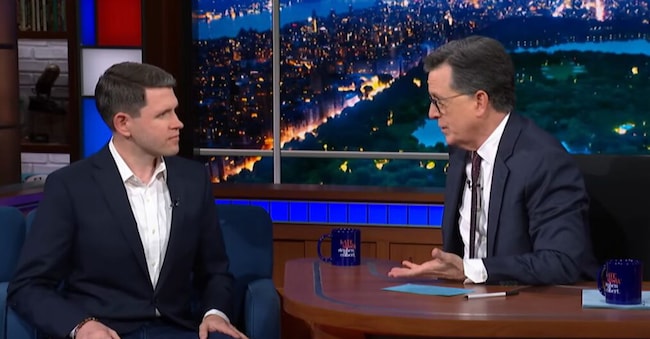
Stephen Colbert accuses CBS of blocking an interview with Democratic candidate James Talarico following new Federal Communications Commission guidelines on equal time
by Silvia Martelli

Stephen Colbert e James Talarico

3' min read

Translated by AI
Versione italiana

3' min read

Translated by AI
Versione italiana

New front of tension between the White House and American television. Stephen Colbert has publicly accused his network, CBS, of blocking the airing of an interview with James Talarico, Democratic candidate for the Senate in Texas, following new indications from the Federal Communications Commission (Fcc) headed by Brendan Carr, appointed by Donald Trump's administration.

The episode marks the first case in which an evening talk show changes its programming to comply with the new interpretation of the so-called 'equal-time rule', the rule that requires broadcasters using public frequencies to offer equal opportunities to candidates competing for the same office.

Loading...

The interview stopped in the studio

During Monday's episode of his programme, The Late Show with Stephen Colbert, the host said that the network's lawyers informed him "in unequivocal terms" that the previously recorded interview with Texas Congressman James Talarico would not be aired. Talarico is running in the Democratic primary to challenge Republican Senator John Cornyn.

Early voting in Texas began on Tuesday, which made the issue of candidate balance even more delicate. According to Colbert, the decision was made in light of new guidelines issued in January by the FCC, which warned broadcasters: talk shows broadcast on local broadcast networks can no longer automatically be considered exempt from the obligation to provide equal space to opponents.

CBS, in a note, rejected the anchor's reconstruction, stating that it had not 'prohibited' the interview, but had provided legal guidance on the risks of violating the rule, and presented several options for fulfilling the possible equal time obligation.

Tightening the talk show exemption

Historically, the FCC has recognised an exemption for 'bona fide news' programmes, such as television news programmes. In 2006, a ruling had also included Jay Leno's 'Tonight Show' interviews among these. For years, the big networks therefore took it for granted that evening talk shows also fell under the exception.

With the new interpretation, Carr challenged this assumption, arguing that many broadcasts were used for 'purely partisan' purposes and that broadcasters should return to strict compliance with the equal opportunities obligation.

The decision comes amid growing tension between the Trump administration and some of the leading faces of late night, who are often critical of the president. Trump himself has recently publicly attacked other presenters, including Bill Maher, while the FCC has launched audits of programmes such as ABC's The View.

Since the 'equal time' obligation only concerns over-the-air broadcasts, Colbert chose to publish the interview with Talarico on the programme's YouTube channel. A move that highlights an increasingly sharp divide between the regulation of traditional networks and the digital ecosystem, which is not subject to the same constraints.

Within the first few hours of publication, the video exceeded 1.7 million views, compared to significantly lower numbers recorded by other segments of the same episode: a clear sign that the public perceived the affair as a political, as well as a media case.

Industrial and political implications

The affair takes on added weight in light of the ongoing industry dynamics. CBS's parent company, Paramount, is engaged in delicate strategic operations that require the green light from federal authorities. In this context, any friction with the regulator can have consequences that go beyond a single episode of a talk show.

Colbert, who will leave the programme's helm in May - officially for economic reasons related to the late-night crisis - called the FCC's clampdown an attempt to 'silence anyone who says anything negative about Trump on television'.

For the American media system, this is a crucial test: redefining the boundary between entertainment and political information, at a time when talk shows have become, for millions of viewers, a major source of commentary and interpretation of current events.

Copyright reserved ©
Loading...

Brand connect

Loading...

Newsletter

Notizie e approfondimenti sugli avvenimenti politici, economici e finanziari.

Iscriviti