White House

TACO: the new acronym defining Trump's protectionist strategy

The nickname that infuriated the US president: 'Trump Always Chickens Out'

by Silvia Martelli

Pool via CNP / POOL

3' min read

3' min read

"Trump Always Chickens Out". This is the definition that is making the rounds on Wall Street and in the international media, summarised in the acronym "TACO". A sarcastic nickname, but one with a definite weight in the debate on US President Donald Trump's trade policies.

Coined by Financial Times journalist Robert Armstrong, the moniker in fact points the finger at a now recognisable strategy: announcing tariffs and egregious protectionist measures, only to withdraw or soften them in the face of market consequences or international reactions.

Loading...

The term spread in the media debate after an article published on 2 May in the newsletter Unhedged, signed by Armstrong himself. What triggered the analysis was yet another episode of 'tariff backtracking': duties initially set at 145% against certain Chinese products were revised to 30% within a few days, with soothing statements by Washington that ended - at least temporarily - the new trade escalation.

The phenomenon, analysts observe, repeats itself with some regularity. First the announcement: tariffs, threats to the EU, tightening of imports from Mexico. Then, the slowdown: more conciliatory statements, postponements, open negotiations. It is this sequence that has made 'TACO' not just an ironic label, but a veritable behavioural paradigm in investors' forecasting models.

Wall Street laughs, the White House does not

The nickname resonated immediately on Wall Street, where traders adopted it lightly, but also with some utility: the effect of the announcement followed by the retreat now has a quantifiable impact on market indices. In some cases, as with the threatened tariffs on Europe, the mere expectation of a retreat has dampened the selling.

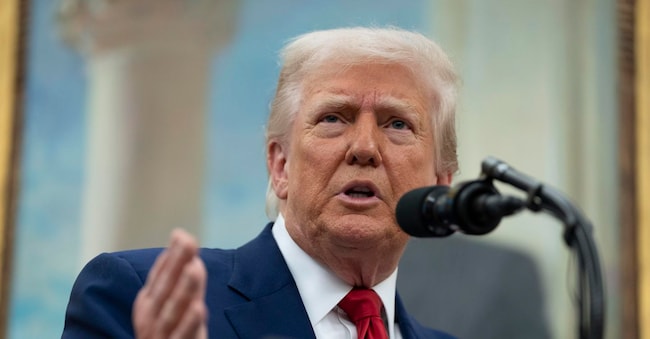
Different, and decidedly less ironic, was Trump's reaction. On Wednesday, during a press conference at the White House, a journalist questioned him directly about the meaning of the acronym. Visibly annoyed, the president replied dryly: 'That's an unpleasant question. Don't ever say that word again', refusing to go into the matter. Shortly afterwards, his spokesmen branded the term a 'baseless journalistic provocation'.

Foreign press relaunches (and ironises)

.

The episode also resonated outside the United States. In Canada, the CBC picked up on the origin of the nickname with an interview with Armstrong himself, who clarified the ironic but informative intent of the term, explaining that 'markets have learned not to take Trump's tariff threats too seriously, because they often don't materialise'.

Trump definito "taco trade" si irrita con la stampa: "Io non mi tiro indietro"

In Europe, too, various newspapers - from the British Guardian to Les Echos in France - have devoted space to the case, pointing out how the umpteenth clash between Trump and the press reflects a well-established dynamic: that of a leader who, in the face of public criticism, tends to delegitimise the media rather than responding on the merits of the remarks.

A difficult (and strategic) relationship with the media

The TACO case is not isolated, but is part of a broader conflictual relationship between Trump and the world of information. Since his first term in office, the former president has made the war on 'fake news media' a key component of his communication, turning traditional media - and in particular newspapers such as the New York Times, the CNN and the Washington Post - into constant targets of his political narrative.

This hostility, far from being merely reactive, has turned out to be a political weapon: every journalistic attack is presented as evidence of a media conspiracy, galvanising the electoral base and shifting attention away from the merits of criticism. Even in the case of 'TACO', economic-financial irony has turned into another opportunity to fuel anti-media rhetoric.

Trump irritato per essere definito "taco-trade" sui dazi: Ridicolo, io non mi tiro indietro

But the episode raises deeper questions. In a global context where trade policies have immediate effects on markets, business confidence and diplomatic relations, the predictability - or worse, the volatility - of presidential decisions becomes an element of systemic risk. And if investors learn to bet on the 'bluff', the effectiveness of the threat is reduced.

This is also why, perhaps, TACO hit the nail on the head: because behind the humour, there is an economic - and political - diagnosis that the Trump team cannot afford to ignore.

Copyright reserved ©
Loading...

Brand connect

Loading...

Newsletter

Notizie e approfondimenti sugli avvenimenti politici, economici e finanziari.

Iscriviti