The announcement

Trump announces: Coca-Cola will use cane sugar in the US. But for the American agricultural industry it is a shock

The company does not fully confirm, but promises news, while syrup manufacturers suffer stock market slumps

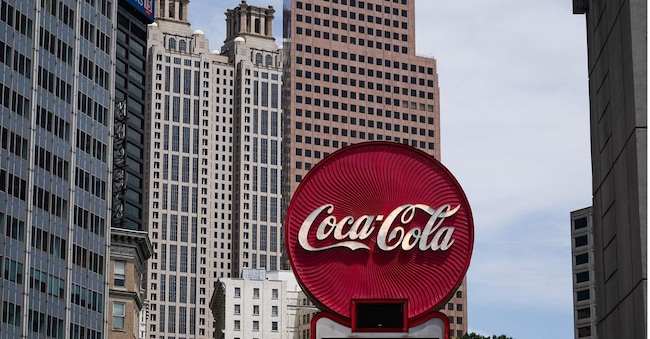
 Gli uffici Coca-Cola ad Atlanta, in Georgia. (Photo by Elijah Nouvelage / AFP)

2' min read

2' min read

Donald Trump is back to shake up US industrial politics. In a post on Truth Social, the US president said he had convinced Coca-Cola to replace high-fructose corn syrup (HFCS) with "real cane sugar" in drinks sold in the US. 'It's simply better,' Trump wrote, crediting himself with the change.

The Atlanta-based multinational has not officially confirmed a total reformulation of the recipe. It did say in a note that it 'appreciates the President's enthusiasm' and that 'further details on innovative new proposals in the Coca-Cola range will be shared soon'.

Loading...

A return to the past?

.

The use of cane sugar in Coca-Cola drinks is not new: it is the basis of the so-called 'Mexican Coke', also popular in the US for its 'more authentic' taste. In the USA, however, since the 1980s the standard version has been sweetened with HFCS, a cheaper, stable and sweet corn derivative, but also very controversial in terms of public health.

The change announced by Trump comes at a time of particular attention by the administration to ultra-processed foods. The Secretary of Health, Robert F. Kennedy Jr., has repeatedly called corn syrup 'ubiquitous and harmful', although in the past he has been equally harsh towards refined sugar in general, calling it 'poison'.

The effects on the market

.

The announcement had an immediate impact on the markets. Shares of Archer Daniels Midland and Ingredion, among the leading producers of corn syrup, lost 6.3% and 8.9% respectively in after-hours trading on Wednesday. They are still trading negative on Wall Street today.

Coca-Cola shares remained stable, waiting for more details that may come on 22 July, the day set for the publication of quarterly results.

On a geopolitical and economic level, the move could have major repercussions. The US produces about 30% of its sugar from cane, mainly in Florida and Louisiana; the rest comes from beets or imports, subject to quotas and tariffs. The Corn Refiners Association sharply criticised the proposal, speaking of 'thousands of jobs at risk', falling farm incomes, and increased imports of sugar from abroad.

The Trump era 2.0

.

This announcement, more symbolic than operational at the moment, shows how Trump's second term is attempting to intervene directly in American corporate dynamics, touching deep cultural (and sometimes symbolic) chords.

This is not the first time that the former tycoon has tried to influence the choices of a consumer goods giant: back in 2021 he had threatened boycotts against Coca-Cola for its opposition to restrictive voting laws in Georgia. However, he had never stopped drinking Diet Coke, a soft drink of which he is famously an avid consumer - so much so that he had a 'Diet Coke button' in the Oval Office. (On the Resolute Desk, the presidential desk in the Oval Office, during Trump's first term he had a small red button installed inside a wooden box. It was not, as one might think, an emergency button: pressing it immediately brought a waiter a can of Diet Coke on a silver tray).

Ultimately, the 'sugar war' could become the next front in Trumpian industrial policy: less processed, more 'Made in America'. Provided the Diet Coke red button keeps working.

Copyright reserved ©

Brand connect

Loading...

Newsletter

Notizie e approfondimenti sugli avvenimenti politici, economici e finanziari.

Iscriviti