Spending review on aid

US will burn 500 tonnes of biscuits for Afghan and Pakistani children

These are the consequences of the closure of Elon Musk's Department of Government Efficiency disbanded Usaid. Irreversible decision despite the efforts of Secretary of State Marco Rubio

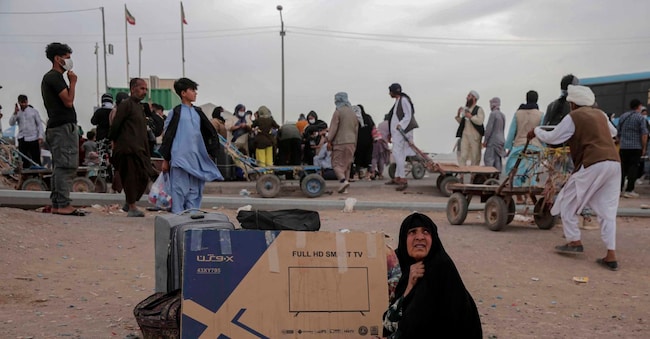
Rifugiati afghani, che sono tornati dal vicino Iran, si riuniscono in un campo temporaneo al confine di Islam Qala, provincia di Herat, Afghanistan, il 10 luglio 2025. L’Afghanistan è alle prese con una crisi umanitaria mentre l’Iran intensifica la deportazione dei rifugiati afgani. Il governo talebano ammette la mancanza di risorse per sostenere questi rimpatriati, in un contesto di turbolenza economica e riduzione degli aiuti internazionali ()Epa/Samiullah Popal)

3' min read

3' min read

Five months after the start of the unprecedented dismantling in US history of foreign aid programmes, the Trump administration has given orders to incinerate the food instead of sending it to people abroad in need.

This video on the investigation by Hana Kiros of the US magazine The Atlantic.

Loading...

Nearly 500 tonnes of emergency food stored in Dubai - enough to feed about 1.5 million children for a week - are soon to expire, according to former and current government employees with direct knowledge of the food rations in question.

Within a few weeks, two of these sources told journalist Hana Kiros, the food, destined for children in Afghanistan and Pakistan, will become ashes (the sources the journalist spoke to for this article requested anonymity for fear of professional repercussions),

Towards the end of the Biden administration, the Usaid (United States Agency for International Development) ahad spent about $800,000 on these high-energy biscuits, a current and a former employee of the agency told Kiros. The biscuits,which contain the nutritional requirements of a child under the age of five, are a temporary solution, often used in situations where people have lost their homes due to a natural disaster or fled a war before aid organisations were able to set up a kitchen to take them in.

Why the biscuits were not delivered

.

In January 2025, in fact, the Trump administration - reports The Atlantic - issued an executive order that halted practically all US foreign aid; knowing that the biscuits were due to expire in the next few weeks, federal employees sent Usaid officials repeated requests to ship the biscuits as long as they were useful, according to the reconstruction of the two Usaid employees heard by Kiros.

Usaid, in fact, purchased the biscuits with the intention of having them distributed by the World Food Programme and, under previous circumstances, staff could have delivered them to the UN agency, writes The Atlantic.

But since Elon Musk's Department of Government Efficiency disbanded Usaid, and the State Department absorbed the agency, no aid money or items can be transferred without the approval of the new US foreign aid chiefs.

Those responsible

From January to mid-April, the responsibility fell to Pete Morocco, who worked in several agencies during the first Trump administration; it then passed toJeremy Lewin, a young law graduate who was originally appointed by the Doge and now holds positions at both Usaid and the State Department. Two Usaid employees told Kiros that the staff members who sent the notes requesting permission to transfer the food never received a response and did not know whether Morocco or Lewin ever received them (The State Department did not answer his questions about why the food was never distributed.)

In May, Secretary of State Marco Rubio told representatives of the House Appropriations Committee that he would ensure that food aid reached its intended recipients before it deteriorated, The Atlantic reports. But by then, the order to incinerate the biscuits (which Kiros reviewed) had already been sent. Rubio insisted that the administration take American responsibility for continuing to save foreign lives, including through food aid.

But in April, according to Npr, the US government eliminated all humanitarian aid to Afghanistan and Yemen, where, according to the State Department, providing food risks benefiting terrorists (the State Department provided no similar justification for withdrawing aid to Pakistan).

Even if the administration had been unwilling to send the biscuits to the countries originally planned, other places - for example Sudan, where war is fuelling the world's worst famine in decades - could have benefited.

Instead, the biscuits in the Dubai warehouse continue to approach their expiry date, after which their vitamin and fat content will begin to deteriorate rapidly. At this point, the UAE policy even prevents the biscuits from being reused as animal feed. The biscuits are being used as animal feed.

In the coming weeks, the food will be destroyed at a cost of $130,000 to American taxpayers (in addition to the $800,000 used to buy the biscuits), according to federal aid workers with whom Kiros spoke.

"Many of the aid workers I spoke to," Kiros concludes, "reiterated that they had never before seen the US government simply give up food that could have been successfully used.

Copyright reserved ©

Brand connect

Loading...

Newsletter

Notizie e approfondimenti sugli avvenimenti politici, economici e finanziari.

Iscriviti