
Trump controls the past to shape the future

3' min read
3' min read
25 April has become the most political of the non-religious holidays celebrated in our country. No one questions the appropriateness and legitimacy of remembering on 1 May the struggles and sacrifices made to protect workers and improve working conditions. And, apart from a few scattered monarchists who unearth suspected frauds in 1946, no one opposes the celebration of the birth of the Republic. On the other hand, the Liberation, around which for decades a bi-partisan consensus had been built, has been stirring up controversy for some years now, even bitter controversies, in which consolidated interpretations are revised and the very roots of the Italy reborn after the Twenty Years of Fascism and the Nazi occupation are sometimes questioned.
Under observation, in particular the role of the partisans in what is now often described as a civil war from a war of liberation in which the sides are ethically equal, the violence in the months following the end of hostilities and in particular the foibe, and the sincerity of the promise made by the PCI with the Salerno turning point to accept certain fundamentals of liberal democracy such as complete freedom of worship.
History is necessarily an evolving discipline, reflecting the emergence of new sources and the spread of new theoretical approaches and research tools. It is almost always written by the winners, is often selective and depends on the quality of the sources - for instance, according to the director of Yad Vashem, most of the testimonies collected from the Holocaust memorial are inaccurate to say the least. Therefore, contributions that challenge the canon, interrogate the new doxa of wokism and cancel culture and stimulate historiographical debate are welcome. More problematic, on the other hand, is revisionism, which not only serves clearly political objectives and rests on methodologically fragile foundations, but above all fuels the theses of conspiracy and the plurality of historical truths.
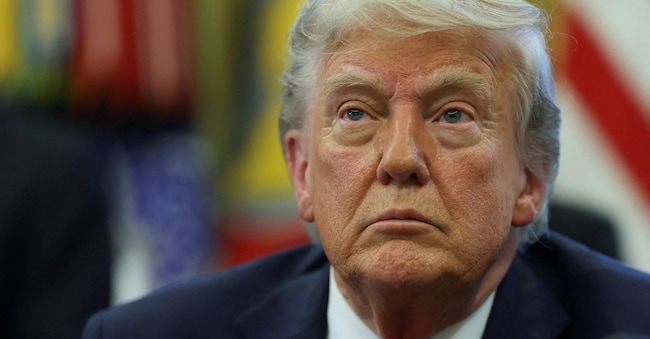
Donald Trump is among those who are clear about the connection between controlling the past - even without making great efforts to know it - and shaping the future. One of the 129 Executive Orders issued in the first 80 days of his second term is entitled Restoring Truth and Sanity to American History and promotes an interpretation free of references to race, gender and religion, particularly next year in the context of the celebration of the 250th anniversary of Independence. In the meantime, the Smithsonian Institution, on which the American Art Museum and the National Museum of African American History and Culture, among others, depend, has already suffered major cuts following a visit by Elon Musk. The administration has also cancelled more than a thousand grants from the National Endowment for the Humanities.
The 47th president, let us be clear, did not invent anything. Equivalent strategies of rewriting history are underway in all totalitarian and authoritarian regimes, including the illiberal democracies of Europe. To give but a few examples, China has banned the use of the term Tibet, replaced by the Xizang Autonomous Region, and thus any reference to Tibetan history and culture; in Russia, textbooks, written by politicians and not scholars, offer a narrative in which Russia is perpetually under threat of aggression from the diabolical West; and in Budapest, the statues of Imre Nagy, the reformist leader who was a victim of the 1956 Russian invasion, were the victims of the rewriting of history.


