
Trump's duties change the geography of air cargo
The trade war is revolutionising global routes, with Chinese e-commerce goods poised to jump into new markets, Europe in the lead

4' min read
4' min read
The sword of Damocles of the Trump administration's duties weighs like a boulder on world trade and on one of its main means of transport: air transport, which after the surge following the pandemic was returning to more stable levels. In recent months, there has been a rush to deliver goods before the announcement of the new duties on 2 April on 'Liberation Day', with the inevitable consequence of an increase in the cost of transporting goods, net of duties: the spot price per kilogram of goods transported by air from Europe to the United States has risen by 22% in a year and by 5% in the last four weeks up to 6 April, the latest survey available from Xeneta, an international logistics analysis company.
For the cargo sector, it is not only the risk of tariffs that is weighing on the cost of goods. The market is bracing itself for a 'seismic shake-up' after Washington promised to remove, as of 2 May, the 'de minimis' rule, the exemption for smaller shipments (up to USD 800) from duties and strict customs controls for imports from China and Hong Kong. This exemption has contributed in recent years to a huge increase in demand for airfreight from Chinese online retailers who promise delivery of products to customers within five days: in one month, the spot price per kilogram to transport goods by air between China and the US increased by up to 68%, an increase 'due to a mix of factors,' explains Niall van de Wouw, chief airfreight officer at Xeneta. The main ingredient is the suspension of de minimis exemptions, but we can say with some degree of certainty that the 2 April duties also put upward pressure on prices'.
Chinese operators have reacted to the threat of trade war by repositioning trade flows towards other markets, starting with Europe, where an invasion of Asian e-commerce products is taking place. These flows have also been felt in Italy and in particular at the Malpensa hub, which accounts for 60% of national cargo transport, where 728,000 tonnes transited in 2024, up +9% compared to 2023, exceeding pre-Covid levels, goods transported both on all-cargo flights and in the hold of passenger flights.
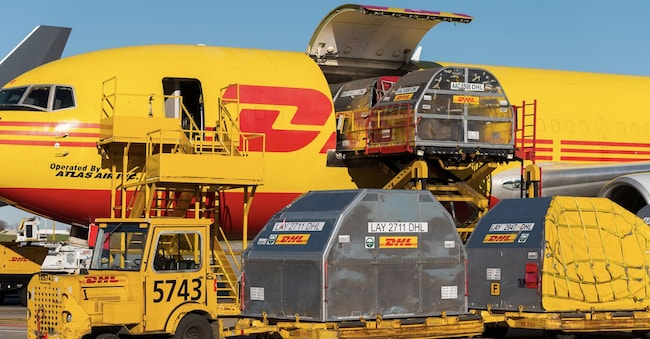
"For the current year, the trend is positive with the exception of January, and the quarter closed in line with 2024 levels. In particular, the month of March 2025, with 70,000 tonnes transported and an increase of over 3%, mainly imports, was the highest monthly figure in the history of Malpensa - explains Francesco Raschi, cargo & real estate director of Sea Aeroporti di Milano -. The reason is linked to Chinese e-commerce, which is growing at a fast pace in Europe and Italy". It is the Chinese platforms, such as Temu and Shein, that use dozens of flights a day to Europe and about fifty to the United States to transport goods purchased online, goods that travel where they find available air capacity: scheduled flights, charters, full cargo flights. This trend is destined to grow if the Chinese confirm their commercial repositioning by increasing general cargo, which at Malpensa alone accounts for two thirds of the goods transported compared to the express cargo handled by international operators such as Dhl and Amazon.
In the face of international trade tensions, air cargo is showing resilience and growth forecasts for 2025 have not been adjusted so far: Iata, the international airline association, expects air cargo volumes to grow 5.8% year-on-year this year, reaching 72.5 million tonnes in 2025, buoyed by e-commerce and Red Sea-related demand. According to Iata, cargo revenues are expected to reach USD 157 billion or 15.6% of total airline revenues in 2025. Demand for cargo aircraft is also growing: Airbus expects an increase of 1,140 aircraft in this category by 2043.


