
Trump insists: another 70 billion for Ice and action on migrants
First step in the Senate to give additional resources to agents over the next three years. The White House wants to overcome the Democrats' blockades by May

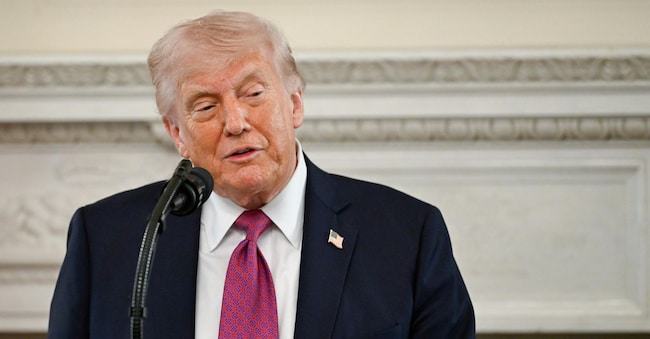
The Republican majority in Congress, and the administration of Donald Trump, are back on the charge to fully fund large agencies and anti-immigration operations. The Senate took the first, significant steps by narrowly approving a resolution allocating $70 billion for the next three years, the remainder of Trump's term in the White House. The beneficiaries: ICE, the Immigration and Customs Enforcement, and Border Patrol, the border guards, engaged, with tactics in the storm for their aggressiveness, in raids against illegal immigrants and undocumented immigrants and in mass deportations, the president's priority.
The legislative process is not over: in order to overcome the filibuster of the Democratic opposition, the Republicans in the Senate adopted a parliamentary budget manoeuvre called reconciliation, which, for bills with verified impact on revenues and deficits, allows a simple majority vote instead of at least 60 out of 100 senators. US conservatives can count on 53 seats. However, after the motion has already been passed and the details of the proposal have been worked out, the green light is needed from technical authorities in the Senate. Dissident Democrats or Republicans can also submit a flurry of amendments, in the Senate as well as in the House. The House must in turn pass the measure, by a simple majority but amidst resistance: in addition to the progressive objections, there are those of the radical Republicans, who would like to attach other initiatives dear to them to the measure, such as crackdowns on voting rights and identity requirements at the ballot box.
The Republicans, however, have bet on being able to send the bill to Trump by the end of the month, who has set 1 June as an ultimatum. The Senate had tried to separate the anti-immigration funds from the rest of the appropriations, but the House refused the separation, promising a yes only together with the release of the budget of Ice and Border Patrol. The White House has recently resorted to decrees and extraordinary resource transfers to overcome paralysis of essential services such as airports.
The Democrats had crippled immigration funding by demanding agency reform, with more oversight of the judiciary, investigations into the work and conditions in detention centres, elimination of agents' masks, and a ban on arrests in schools and churches. The rebellion was sparked by the killing of two US citizens by federal agents in Minneapolis, which shocked the country by exposing a long series of abuses. Trump was forced to replace the head of the Border Patrol and Homeland Security Secretary Kristi Noem.
The administration's investment in anti-immigrant campaigns, however, remains on the agenda and does not stop at the regular budget. The 70 billion now at stake adds up to 170 billion over four years of exceptional resources under the so-called One Big Beautiful Bill, the tax reform passed by Congress and Trump in 2025. Ice alone receives at least 75 billion from this bill, which it can manage flexibly, with an indication to spend 45 on special prisons and 30 on 10,000 new agents. Before Trump, the Ice budget was 8-10 ten billion a year.


