
Trump: ‘Russia has lost control of the diesel industry’
The US President discusses Moscow’s difficulties regarding oil refineries, whilst the Kremlin spokesperson criticises Washington over sanctions

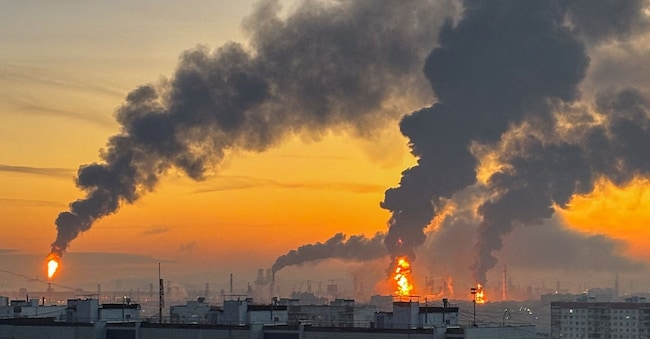
Donald Trump changes his tune, yet again: ‘Because of the war with Ukraine, Russia has lost control of its diesel industry,’ he wrote on Truth Social. He was referring to the ‘many refineries destroyed’ or put ‘temporarily out of action’ by attacks from Kyiv: ‘This absurd and endless war with Ukraine must end.’
The message comes on the eve of the meeting with Volodymyr Zelensky at the General Assembly of the United Nations and just eight days after the US President himself called for a “halt to attacks on Russian diesel facilities”, because the shortage was ‘harming the world’. Trump had made these remarks when diesel prices in the United States had risen above six dollars a gallon, in a market already shaken by the war with Iran.
The crackdown on diesel
The Russian refining sector has lost room for manoeuvre since Ukraine stepped up its attacks on storage facilities, oil pipelines, ports and ships. On 26 June, Zelensky authorised 40 days of operations to ‘influence the aggressor state’ and Vladimir Putin initially spoke of ‘a certain shortage’ of fuel, only to later admit to having suffered ‘real damage’ amounting to ‘around 1 per cent of GDP’ on the sidelines of the Shanghai Cooperation Organisation summit in early September.
According to the International Energy Agency, in the first eight months of 2026, a refinery was attacked on average every three days. By June, processing had fallen to 3.95 million barrels a day – a 25 per cent drop year-on-year and the lowest level in over twenty years – and in July Moscow was forced to ban diesel exports. By mid-September, three of the six largest production plants – Kirishi, Volgograd and Norsi – were either shut down or operating at reduced capacity. These six plants account for around half of the country’s total diesel production.
Trump’s comments come after a weekend in which Ukraine launched more than a thousand drones against Russia. The attack coincided with the final day of the Duma elections – the first since the 2022 invasion and the first to be extended to the four Ukrainian regions illegally occupied and annexed by Moscow. Following the vote, Russian government spokesperson Dmitry Peskov accused Kyiv of attempting to disrupt the election and declared the attempt a ‘failure’.

