
Trump lifts sanctions on Iranian ports and is banking on ‘swift negotiations’
The memorandum is due to be signed in Switzerland on Friday, followed by the start of talks on Hormuz and the nuclear issue. The US President criticises Netanyahu: ‘Too many deaths in Lebanon’
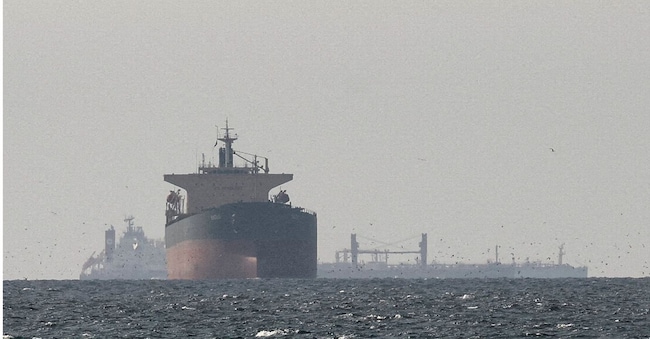
The United States has lifted the military blockade of Iranian ports. This is the first concrete step – confirmed by the government in Tehran – towards the full reopening of the Strait of Hormuz. And it is the clearest evidence yet that Donald Trump is banking on negotiations with the Ayatollahs’ regime, which are set to begin following the signing of the memorandum of understanding on Friday in Switzerland.
Speaking at the G7 summit, the US President expressed great optimism regarding the crisis in the Middle East: “Iran,” he said, “wants to reach an agreement. They need to get back to business, so I think we’ll reach a conclusion fairly quickly; in the meantime, they’ve already started clearing mines from the Strait.”
“The naval blockade was lifted before the official signing,” said Iran’s Deputy Foreign Minister, Majid Takht-Ravanchi, who described the end of the blockade as “one of the key conditions for starting negotiations”.
The memorandum of understanding between the United States and Iran is to be signed on Friday at the Burgenstock resort in the canton of Nidwalden on Lake Lucerne, in Switzerland. It is a short, very general document setting out a ceasefire and the reopening of the Strait of Hormuz. However, it defers to negotiations over the next two months any discussion of the issues over which the US and Israel sparked the war: Iran’s nuclear programme, Iran’s military support for armed militias in the region, international sanctions against the regime in Tehran, and the freezing of Iranian assets abroad. Over the course of these three and a half months of war, the closure of the Strait of Hormuz – with the resulting global energy crisis – and Israel’s offensive against Hezbollah in Lebanon have further inflamed the region.
Trump, however, seemed eager to reveal the contents of the memorandum, reiterating that ‘what matters most of all is that Iran has renounced nuclear weapons’. The US President said that “within a couple of days” he would make public the full text of the memorandum reached with Iran. He also hinted that, to avoid misinterpretations, he might read out the full text of the memorandum himself in front of the cameras.


