
20 April 2026
War breaking news. Lagarde: 'Energy shock huge, but ECB needs more information to act'
US Vice President Vance expected in Islamabad tomorrow for negotiations with Iran. Nyt: "Tehran will be there". Second round of Israel-Lebanon talks on Thursday
For feedback, please contact
english@ilsole24ore.com
 Aggiungi Il Sole 24 Ore
ai preferiti su Google
Summary by points
- Lagarde: huge energy shock, ECB decision still needs data
- Tehran delegation plans trip to Islamabad tomorrow
- Lebanon: Netanyahu, "condemn act of vandalism of Jesus statue in Lebanon"
- Media, new Israel-Lebanon negotiating round Thursday
- Tehran, we will go to Islamabad if there are positive signals
- Trump: "Iranian oil tanker struck and seized"
- IEA, global oil demand will contract by 80,000 barrels per day in 2026
20 April 2026Pinned update
Lebanon: Netanyahu, "I condemn act of vandalism of Jesus statue in Lebanon"
Israeli Prime Minister Benjamin Netanyahu commented on the act of vandalism against a Statue of Jesus in Lebanon by an IDF soldier, saying he was "shocked and saddened" after viewing the documentation. Netanyahu called the soldier a 'criminal' and clarified that a criminal investigation into the incident is underway. In a post published in English on X, he said: 'I condemn the act in the strongest terms. The military authorities are investigating the matter and will act with the utmost severity against the criminal'.
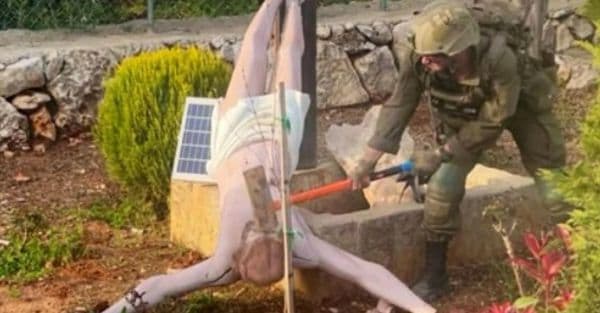
Un soldato israeliano usa una mazza per colpire la testa di una statua di Gesù crocifisso caduta da una croce: l'immagine circola sui social media, oggi l'esercito israeliano ha fatto sapere che è autentica - L'ANSA NON NE DETIENE I DIRITTI PER I QUALI SI RIMANDA ALLA FONTE @LTC_Shoshani+++
20 April 2026
Middle East, over 1,000 cyber attacks since the beginning of the war. Israel, the Emirates and Iran hardest hit

There are not only wars that are fought on the ground, as there are also those that develop through other channels. Internet, for example, is one of them. Since 28 February, the day of the start of the attack by the United States and Israel on Iran, there have been 1,245 cyber attacks involving 99 different threat actors and 14 countries.
These are just some of the data collected by Hackmanac, the platform that monitors and analyses the computer threats globally. Numbers that were examined during the webinar 'AI, NOW: the new game of geopolitics', promoted by the AI Think Tank of Assintel, the digital business association of Confcommercio.
20 April 2026
Trump: blockade will remain until a deal is reached, they lose $500 million a day
There will be no lifting of the US blockade on Iranian ports in the absence of an agreement with Iran. Assuring this, on his social Truth, is US President Donald Trump. The blockade, which we will not lift until there is an 'AGREEMENT', is completely destroying Iran. They are losing $500 million a day, a figure that is unsustainable for them, even in the short term,' he wrote in a message sharply criticising the US media's coverage of the conflict.
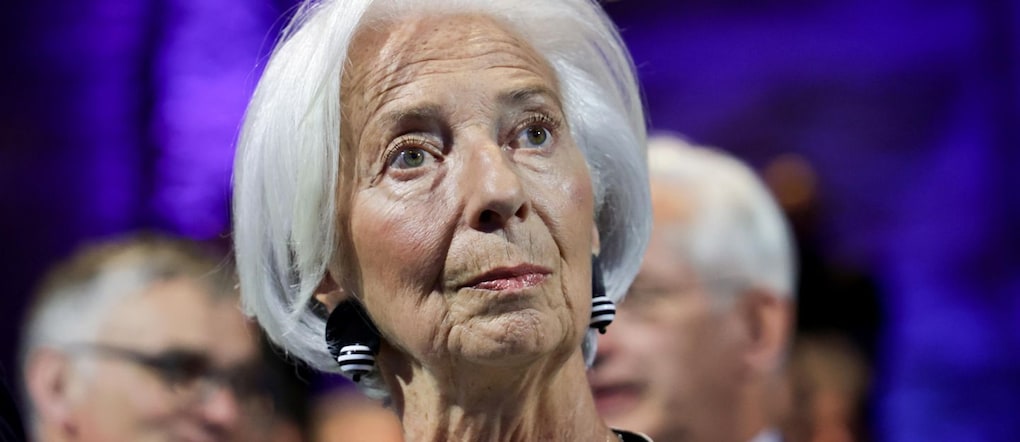
epa12902993 La presidente della Banca centrale europea (BCE) Christine Lagarde partecipa al ricevimento annuale dell’Associazione federale delle banche tedesche a Berlino, in Germania, il 20 aprile 2026. Il ricevimento annuale dell’Associazione delle banche tedesche è un evento di networking di alto livello che riunisce i leader dei settori bancario, politico e finanziario. EPA/FILIP SINGER EPA
Ask the editorial team
Have questions or feedback about this article? Contact our editorial team.
20 April 2026
Trump: I am winning the Iran war big time
"I'm winning a war, and big time, things are going great, our Armed Forces have been amazing." This was stated by Donald Trump on his social Truth attacking 'fake news' for their coverage of the conflict. "The anti-American fake news media is rooting for Iran to win, but that will not happen, because I am in charge! Just as these unpatriotic people used every ounce of their limited strength to fight me during the election, they continue to do so now with Iran," he highlighted. (
20 April 2026
Merz: situation remains tense but hope for end of war
German Chancellor Friedrich Merz sees a glimmer of hope in the war with Iran. "The situation remains tense, especially in the Middle East," Merz said during the annual reception of the Association of German Banks (BdB) in Berlin. "The events of the last hours give us some hope that it may end soon," Merz said further, stressing that k impact of this war on growth and economic development in Germany depends significantly on its duration and intensity.
20 April 2026
Trump: 'I am not under pressure at all'
"I read the Fake News that I am under 'pressure' to conclude a deal. This is not true! I am not under pressure at all, although everything will take place in a relatively short time! Time is not my opponent'. This is what Donald Trump assures regarding the possibility of a deal with Iran. "The only thing that matters is that, finally and after 47 years, we clean up the mess that other presidents have allowed to degenerate, because they lacked the courage or foresight to do what needed to be done with regard to Iran," the US president says on Truth, reiterating that "we are fully committed to the enterprise, which will be accomplished in the right way." Trump then accuses the Democrats, "weak and pathetic" and "all traitors" of wanting to "belittle" the military successes achieved in Iran.
20 April 2026
Trump: my Iran deal is better than Obama's
"The deal we are making with Iran is better than Barack Obama's nuclear deal." This is stated Donald Trump on his social Truth, emphasising that if the deal is there it will "potent peace and security for Israel, the Middle East, Europe, America and the whole world".
20 April 2026
Hormuz remains almost stationary, glimmers of US-Iran talks
The Strait of Hormuz continues to move at the pace of the crisis. MarineTraffic's images show that between Saturday and Sunday, traffic alternated between brief windows of recovery and new deadlocks, a sign of how exposed the passage remains to developments in the truce between the United States and Iran. On Saturday, after the Iranian announcement of the reopening of the strait and as the possibility of new talks began to circulate again, there was a temporary increase in movements.
20 April 2026
Telephone call between the foreign ministers of Iran and Pakistan
Ahead of the second round of talks on the Iran crisis scheduled to take place in Islamabad, Iranian Foreign Minister Abbas Araghchi and his Pakistani counterpart Mohammad Ishaq Dar in a phone call "stressed the importance of continuing the dialogue and engaging as soon as possible to resolve all outstanding issues in order to promote peace and stability in the region". The two heads of diplomacy agreed to 'maintain close contact'. It reads in a statement issued by Pakistan's Ministry of Foreign Affairs.
20 April 2026
Telephone call between Qatari Prime Minister and Oman Foreign Minister
Telephone conversation between the Qatari premier and foreign minister, Sheikh Mohammed bin Abdulrahman bin Jassim Al Thani, and the head of Omani diplomacy, Badr bin Hamad Al Busaidi. The talks took place at the initiative of Oman, Doha specified. It focused on developments in the region, particularly in view of the planned new round of talks between the US and Iran in Pakistan. Al Thani and Al Busaidi spoke about the 'ceasefire between the US and Iran' and the work to 'reduce tensions' and promote 'peace and security' in the region. Highlighted, they concluded from Doha, was "the need for all parties to respond to the ongoing mediation work".
20 April 2026
Heightened security in Islamabad for possible US-Iran talks
Pakistan is preparing for a second round of peace talks between the United States and Iran, just days before the expiry of the ceasefire in the Middle East, although everything still seems uncertain. Among the main knots is the American blockade of Iranian ports, further complicated by the seizure of an Iranian ship that allegedly tried to circumvent it, resulting in a furious reaction from Tehran. According to various media in the country, the lifting of the US blockade would be a precondition for negotiations. In Islamabad, the capital, security was nevertheless reinforced in view of the delegations' arrival. In the city's 'red zone', home to Parliament, the Supreme Court, the main government offices and foreign embassies, the two main hotels have been evacuated as a precaution.
20 April 2026
Crosetto, UN mandate would be better but I must choose pragmatically
"I was the first to talk about the need for a UN mandate, I have total confidence that it would be much better, but it can be blocked in the security council by the first person who gets up. If I have to choose pragmatically between the need to secure Hormuz with an international coalition with 30 or 50 nations, without a UN mandate, because that crisis enters every home, I do it even without a UN mandate, which I would like at all costs but which maybe gets blocked by Russia for some reason." This was said by Defence Minister Guido Crosetto at the presentation of the book by Action Secretary Carlo Calenda.
20 April 2026
Lagarde: huge energy shock, ECB decision still needs data
The shock to energy supply 'is huge' with an estimated net loss of 13 million barrels per day before the US blockade of the Strait of Hormuz intervened, but 'so far we have not seen a sufficient rise in energy prices to put us clearly in the adverse scenario'. This was said by ECB President Christine Lagarde in Berlin. "The double uncertainty, about the duration of the shock and the magnitude of the (inflationary) repercussions, ed. requires us to gather more information before drawing any clear monetary policy conclusions," Lagarde said.
20 April 2026
Egypt: 'We hope for a second round of meetings between the US and Iran'
Egyptian Foreign Minister Badr Abdelatty expressed hope for a second round of negotiations between the US and Iran, hoping "it will contribute to reaching agreements that will consolidate the ceasefire, ease tensions and end the war". He said this when meeting the UN Secretary General's personal envoy for the Middle East, Jean Arnault, in Cairo today as part of a tour of the region. The minister congratulated the UN envoy on his recent appointment to head UN efforts to promote security and stability in the Middle East and wished him every success in his new role. The meeting allowed for an exchange of views on the situation in the region and Egypt's efforts to support negotiations between the US and Iran aimed at reaching an agreement to promote calm and de-escalation.
Abdelatty also dwelt on the serious repercussions of the war on freedom of navigation, supply chains, food security, international trade and energy security, in light of rising energy and oil prices. Arnault, for his part, reported a ministry spokesperson, 'expressed his deep gratitude to Egypt for its role in supporting security and stability and reducing tensions in the region' and 'reiterated the United Nations' support for Egypt's efforts to restore security and stability in the region'.
20 April 2026
Macron: 'On Hormuz a mistake on both sides'
French President Emmanuel Macron denounced a "mistake on both sides" on the issue of the Strait of Hormuz. "It is likely that, following the American decision to maintain a targeted blockade of the Strait of Hormuz (...) the Iranian authorities have changed their initial position (...) It is a mistake on both sides," Macron told a press conference in Gdansk, Poland.
20 April 2026
Lebanon: Israeli drone raid in the south, 3 injured
A raid attributed to an Israeli drone struck the Qaaqiyet el-Jisr area in south Lebanon. This was reported by the Lebanese newspaper L'Orient Le Jour, which spoke of three wounded, people who were "near a car" at the time of the reported operation.
20 April 2026
Card. Pizzaballa: indignation at desecration of Jesus statue
No tolerance for the heinous act of a soldier of the IDF, the Israeli Defence Forces, filmed and gone viral on social media as he repeatedly hit the head of a crucified Jesus statue with a club. The desecration that took place in the Christian village of Debl, in southern Lebanon, aroused the reprobation and outrage of the international community. Deep indignation and condemnation was also expressed by the Assembly of Catholic Ordinaries of the Holy Land (AOCTS) in a communiqué signed by Cardinal Pierbattista Pizzaballa, Latin Patriarch of Jerusalem and president of the same body of bishops, eparchs, exarchs and religious leaders of Latin, Melkite, Maronite, Armenian, Syro-Catholic and Chaldean rite and coordinates pastoral activity in Israel, Palestine, Jordan and Cyprus, promoting dialogue and addressing issues related to the common good and the protection of minorities.
"This act," the text reads, "constitutes a grave affront to the Christian faith and is in addition to other reported episodes of desecration of Christian symbols by IDF soldiers in southern Lebanon". Not only that, "it also reveals a worrying gap in moral and human formation, in which even the most basic reverence for the sacred and for the dignity of others has been seriously compromised". The Assembly therefore calls for "immediate and decisive disciplinary action, a credible process of accountability and clear guarantees that such conduct will neither be tolerated nor repeated".
In the face of this umpteenth act of violence and offence, Cardinal Pizzaballa, on behalf of all the members of the Assembly, however, reiterates the "unassailable" significance of the cross, yesterday, today, tomorrow and always, and the warning that comes from that symbol in the midst of bombs and rubble. "As St Paul the Apostle declares: 'Far be it from me to boast except in the cross of our Lord Jesus Christ' (Gal 6:14). For believers, the Cross remains a source of dignity, hope and redemption, and an invitation to overcome violence through sacrificial love. It is precisely in this light that the Church continues to proclaim that true peace cannot be born of violence, but must remain, in the words of Pope Leo XIV, unarmed. A peace that invites us to put the sword back in its scabbard'.
Hence also a new call for a cessation of hostilities and war in the Holy Land and throughout the Middle East, a region now plagued and destroyed by an inhuman conflict, 'and to embark on a path where peace is manifested through moderation, dialogue, responsibility and respect for the sacred and for every human life'.
20 April 2026
Moscow: 'With peace we will resume construction of the nuclear power plant in Iran'
Rosatom plans to resume construction of new units at the Bushehr nuclear power plant in Iran as soon as peace returns to the Middle East. This was stated by the CEO of the Russian state nuclear company, Aleksej Likhachev. "Our most important task, as soon as peace returns to the region, is to restart construction as quickly as possible and proceed with the construction of the plant," Likhachev said, quoted by the Ria Novosti news agency. Rosatom completed the relocation of more than 600 people, including employees of the nuclear power plant and their families, to a safe place, while 20 volunteers remained on site.
20 April 2026
Milei in Israel: 'You cannot live with those who try to kill you'
"You cannot live with those who try to kill you". This was stated today by the president of Argentina, Javier Milei, in further support and alignment with the Israeli government of Benjamin Netanyahu in the context of the war launched against Iran and Hezbollah in Lebanon. The Argentinean leader spoke thus in a speech at Tel Aviv's Bar-Ilan University on the second day of an official visit to Israel, his third since taking office in December 2023. Milei, who had recently claimed to be 'the most Zionist president in the world', also met today with Israeli PresidentIsaac Herzog, who presented him with the 'presidential medal of honour' in recognition of his commitment to defending the State of Israel. Earlier, the ultra-liberal leader had announced in Jerusalem with his counterpart Netanyahu the signing of the 'Isaac Agreements', which - like the 'Abraham Agreements'" promoted by US President Donald Trump between Israel and Arab countries - aim to create a "strategic framework designed to strengthen cooperation between Israel, Argentina and related countries in the Western Hemisphere in defence of freedom and democracy and against anti-Semitism, terrorism and drug trafficking". The Argentine President's visit will end on Tuesday with his participation in the ceremony marking the 78th anniversary of Israel's independence, during which - according to an announcement by the Argentine presidency's press office - "he will be the first foreign president to have the honour of lighting one of the torches in the traditional ritual".
20 April 2026
Emirati official: Tehran delegation in Islamabad in the coming hours
Pakistani leaders have intensified contacts with Iran and the United States, hinting that talks in Islamabad may be held soon and the Iranian delegation will also be there. This is reported by Al Jazeera, which quotes former Pakistani ambassador to the UAE, Jamil Khan. "Things are accelerating," Khan said. "In the next 24-48 hours, the issues will be addressed and the Iranian delegation will be there." Iran had put Lebanon at the top of its list of demands, calling for it to be included in the ceasefire and, therefore, linking its negotiations with the US to Israel's war in Lebanon, the diplomat noted. Khan said that Trump resolved the issue "in a very smart way", creating a separate track for negotiations and thus separating the two conflicts. Khan then predicted thatIran's enriched uranium will be the focus of the next round of negotiations, including its dilution and disposal.
20 April 2026
Pezeshkian: 'US seeks our surrender but we will not submit'
The Iranian president, Masoud Pezeshkian, has returned to criticise the US, accusing it of sending 'unconstructive and contradictory' signals aimed at achieving the Islamic Republic's 'surrender'. "A deep historical distrust of the US government remains in Iran," Pezeshkian wrote in X, reiterating that Tehran does not intend to give in to pressure: "Iranians do not submit to force," he stressed.
پایبندی به تعهدات منطق موجه هر نوع گفتگوست. علاوه بر بیاعتمادی تاریخی عمیقی که در ایران نسبت به پیشینه رفتار و عملکرد دولت آمریکا وجود دارد، رویکرد غیرسازنده و متناقض مسئولین آمریکا در روزهای اخیر حاوی یک پیام تلخ است: آنها خواهان تسلیم ایرانند. مردم ایران زیر بار زور نمیروند. https://t.co/JCbZM63sdH
— Masoud Pezeshkian (@drpezeshkian) April 20, 2026
20 April 2026
Iran: phone call between Araghchi and Lavrov
The Iranian Foreign Minister, Abbas Araghchi, had a telephone conversation with his Russian counterpart, Sergei Lavrov. This was reported by the Tehran Foreign Ministry, according to which the two discussed the latest regional and international developments.
20 April 2026
Tehran delegation plans trip to Islamabad tomorrow
An Iranian delegation is making preparations to reach Islamabad tomorrow for peace negotiations with the United States. This was indicated - as reported by the New York Times - by two senior officials of the Islamic republic with knowledge of the plans.
Mohammad Bagher Ghalibaf, the influential political and military figure leading the talks, will be present if Vice President JD Vance is also present, the two officials said.
The US vice-president, according to the latest rumours relayed by CNN, is scheduled to leave Washington for Pakistan tomorrow and, in view of the long flight time, the Iranian delegation would have plenty of time to travel from Tehran.
20 April 2026
Russia reopens flights to UAE and fly over Tehran
Russia's Federal Agency for Air Transport, Rosaviatsiya, responsible for civil aviation, has lifted restrictions on flights to the United Arab Emirates and overflying Iran, imposed since the beginning of the war in the Middle East. Ria Novosti reports this, citing a statement from the Federal Agency. "Rosaviatsiya, taking into account the position of the Ministry of Transport and the Ministry of Foreign Affairs, revoked the recommendations to Russian airlines to suspend ticket sales for flights to and from the UAE. Restrictions on Russian airlines' flights through Iranian airspace have also been lifted,' the agency reported.
20 April 2026
China: US and Iran create conditions for ships to transit Hormuz
"The situation in the Strait of Hormuz is delicate and complex. We express concern about the forced interception of the ship in question by the United States. We hope that the parties concerned will strictly abide by the ceasefire agreement with a responsible attitude, avoid an escalation of tensions and create the necessary conditions for the resumption of normal transit through the strait." This was stated by Guo Jiakun, spokesman for the Chinese Foreign Ministry.
20 April 2026
Trump: 'I would like to participate in talks but it is not necessary'
Donald Trump would like to take part in deals with Iran in person, but he does not think it is necessary. Responding to those who asked him whether fighting will resume immediately if there is no agreement, Trump said: 'If there is no agreement, I expect it.
20 April 2026
Iran: no change in Tehran's decision not to participate in negotiations
Iran's decision to not participate in the negotiations "has not changed" despite US President Donald Trump's announcement that an American delegation is on its way to Pakistan. This was pointed outby the Iranian news agency Tasnim, according to which Iran's participation is "conditional on the fulfilment of certain preconditions", starting with the question of the naval blockade which constitutes "a fundamental obstacle" to the negotiations.
In addition to the issue of the naval blockade, there are other excessive demands from the US side that "do not show a clear perspective" in view of the possible new talks, Tasnim added, according to which Tehran believes that as long as the US "comes to the negotiating table with the same miscalculations that led to their heavy defeat on the military field, the negotiations will only be a waste of time." "Iran," Tasnim continues, "also believes that media reports on the negotiations may be misleading and is ready to face a military confrontation and inflict further punishment on the US.
20 April 2026
Trump: 'Highly unlikely to extend ceasefire with Iran'
Donald Trump told Bloomberg news agency that an extension of the ceasefire with Iran is 'highly unlikely' unless an agreement is signed. The ceasefire expires on Wednesday, Trump highlighted.
20 April 2026
Trump: 'If Iranians won't be in Pakistan, that's OK'
Donald Trump is unsure about the participation of Iran's delegation in Pakistan's negotiations with the US and, to a specific question from Pbs News, replied that he did not know.
"I mean, they should be there. We had agreed to be there, even though they say otherwise. But no, it was all arranged. And we'll see if they'll be there or not," said the American president, "If they won't be there, that's OK too."
20 April 2026
Cnn: talks in Islamabad scheduled for Wednesday
A second round of talks between US and Iranian delegations is scheduled for "Wednesday" in Islamabad, but the situation remains fluid. This is what sources familiar with the plans tell CNN, according to which Vice President JD Vance is scheduled to leave Washington for Pakistan on Tuesday. The White House told the American network that they "expect the delegation to leave soon, but it is unclear when". All of this news, CNN itself points out, comes after Donald Trump confirmed to the New York Post that the delegation of American negotiators, led by Vice President JD Vance, the tycoon's envoy Steve Witkoff and son-in-law Jared Kushner, is "en route" and will be "there tonight, Islamabad time". Meanwhile, Fox News journalist Maria Bartiromo reported on live TV that she had spoken with the US president, who - she said - expects 'Iran to sign an agreement tomorrow night in Pakistan'.
20 April 2026
Trump: 'It was not Israel that convinced me on war but 7 October'
"It was not Israel that convinced me about war with Iran, but the results of 7 October, which reinforced my lifelong conviction that Iran can never have a nuclear weapon." This was stated in a post on Truth Social by US President Donald Trump. The White House chief went on to reiterate his accusation of pundits and 'fake news' of telling 'lies' and spreading 'rigged' polls, just like the 2020 presidential election was rigged. Just like the results in Venezuela, which the media does not like to talk about, the results in Iran will be surprising," Trump added, "And if Iran's new leaders (regime change) are smart, Iran can have a great and prosperous future.
20 April 2026
Iranian Sources: Tehran Welcomes Presence in Islamabad
A senior Iranian official told Reuters that Tehran is positively considering its participation in potential peace talks with the United States, but that no final decision has yet been made. The Iranian official said that Pakistan, as mediator, is making positive efforts to end the US blockade and ensure Iran's participation in the talks.
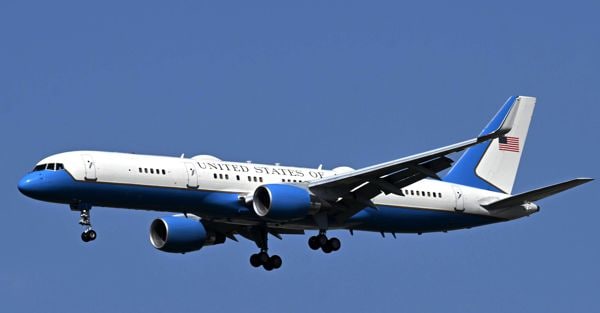
epa12902572 Un aereo del governo statunitense si prepara ad atterrare alla base aerea di Nur Khan a Rawalpindi, in Pakistan, il 20 aprile 2026. Con l'avvicinarsi della scadenza del cessate il fuoco, i negoziatori statunitensi stanno tornando a Islamabad per un secondo ciclo di colloqui, nonostante un portavoce del Ministero degli Esteri iraniano abbia dichiarato che Teheran non ha intenzione di partecipare. EPA/STRINGER
20 April 2026
Netanyahu: 'Israel has not yet finished the job'
Israel "has not yet finished the job" in Iran. This was stated by Israeli Prime Minister Benjamin Netanyahu during a War Memorial Day ceremony in Jerusalem. The Times of Israel reports. The world recognises Israel's determination to defend itself and "to defend humanity from barbaric fanaticism", he said. Israel and the United States, Netanyahu added, 'are carrying the entire Western civilisation on their shoulders'.
20 April 2026
Kallas: 'Two-state solution firm, both sides must act'
"After years of war, we have to be honest about the fact that the needle of the two-state solution has not moved much. Yet it remains the most viable path to a war-free Middle East'. This was stated by EU High Representative Kaja Kallas in her speech at the meeting of the Ad Hoc Liaison Committee (Ahlc) on Palestine. "For the two-state solution to have a real chance, both sides must act," the EU diplomacy leader continued, calling on Israel to stop settlement expansion, punish settler crimes and release the withheld tax revenues to the Palestinian Authority. At the same time, "the Palestinian Authority must proceed with reforms," Kallas continued. In Gaza, "Hamas' refusal to disarm remains a major obstacle to peace," he adds, stressing that the Palestinian police and the International Stabilisation Force "must deploy in Gaza as soon as possible to prevent further consolidation of power by Hamas."
20 April 2026
Netanyahu: Iran rose up to destroy us with atomic weapons
Israel's Prime Minister Benjamin Netanyahu said today, during the opening ceremony of the Day of Remembrance for Fallen Israeli Soldiers and Victims of Terrorism, that "today we have the strength and spirit to counterattack our enemies. Iran rose up against us to destroy us with atomic bombs, but we acted and foiled the murderous plot. Like a lion cub, the people rise up, like a lion roars'.
20 April 2026
Kallas: "Total stop EU-Israel agreement? First evaluate other measures"
"The member states have put on the table the suspension" total "of the association agreement between the EU and Israel, which requires unanimity. At the same time, we already have other measures on the table, some of which require a qualified majority. First we have to assess whether it is possible to proceed in this direction to put pressure on Israel'. This was said by the EU High Representative, Kaja Kallas, at the end of the double meeting on the two-state solution in Brussels, on the eve of the European foreign ministers' meeting in Luxembourg.
20 April 2026
Lebanon, parliament president: 'US working to extend truce'
The United States is working to extend the cease-fire in Lebanon. This was stated by the Speaker of the Beirut Parliament, Nabih Berri, to the Saudi daily 'Asharq al Awsat'.
The newspaper reported that Berri refused to reveal his position on direct negotiations with Israel, which are reportedly being planned by the Lebanese president.
20 April 2026
Trump insists: 'Tehran get rid of nuclear weapons, it has great potential'
At the heart of the talks with Iran is a non-negotiable demand: Iran must abandon any plans to develop nuclear weapons. "Get rid of nuclear weapons. It is very simple. There will be no nuclear weapons," he explained in an interview with the New York Post, adding that Iran has the potential to prosper if it complies. "It could be a wonderful country, it really could be," the tycoon said.
20 April 2026
Moscow, 'Faithful to the Anchorage Accords with the US'
Russia remains committed to the agreements reached during the August 2025 meeting between the Russian and US presidents, Vladimir Putin and Donald Trump, in Anchorage, Alaska. This was stated by Russian Deputy Foreign Minister Evgheny Ivanov at a seminar. "Russia remains loyal to the agreements reached at the highest level during the Russian-US summit in Alaska," Ivanov was quoted by the Ria Novosti news agency as saying.
20 April 2026
Trump: 'Energy Secretary on fuel prices is wrong'
US President Donald Trump has contradicted US Energy Secretary, Chris Wright, that fuel prices may not return to pre-Iran war levels before next year. "I think he's wrong, he's completely wrong," Trump said in a telephone interview with the US news outlet The Hill. Instead, the US president believes that prices will come down "as soon as" the war in the Middle East "ends".
20 April 2026
Trump: talks should be there, no one is playing games
"The talks should take place. I assume no one is playing games at this point." Donald Trump told the New York Post regarding the talks between Iran and the United States. JD Vance, Steve Witkoff and Jared Kushner "are going, will arrive in the evening in Islamabad," Trump added, reiterating his readiness to meet with the Iranian leadership should the opportunity arise. "I have no problem meeting with them," he said.
20 April 2026
Iran: phone call between Araghchi and Pakistani counterpart, focus on ceasefire
The Iranian Foreign Minister, Abbas Araghchi, and his Pakistani counterpart, Muhammad Ishaq Dar, had a telephone conversation to discuss regional developments and ceasefire issues. This was reported by the Tehran Foreign Ministry, while a short while ago, US President Donald Trump announced that a US delegation led by Vice President Jd Vance is heading to Islamabad. The Iranian government has not yet clarified whether it will participate in a new round of negotiations with the US.
20 April 2026
Trump, Vance and the US delegation in Pakistan in a few hours
The US delegation led by JD Vance is en route to Pakistan and is expected to land in a few hours. Donald Trump told the New York Post.
20 April 2026
Confindustria: scenario worsens, energy shock already in place

Rising energy prices, falling confidence and expectations, rising sovereign rates: first impacts of war. Worsening scenario. These are the first words of the Congiuntura Flash analysis by the Centro studi di Confindustria. Oil prices are high, despite the fragile truce in the Middle East war. The impact of the energy shock can already be read in many data on the Italian economy: household confidence is falling, anticipating a slowdown in consumption; sovereign rates are rising; expectations on industry, which was trying to recover, are falling; services are also slowing down. Investments are holding up, which are still supported by the NRP in the first three months of 2026.
20 April 2026
Tehran reopens its two main civil airports
Iran has reopened the two main civil airports in Tehran, the Imam Khomeini and Mehrabad airports, the country's aviation authority said in a statement quoted by Isna, after the closures caused by the war with the United States and Israel. The note added that, "starting Saturday", passenger flights will be possible from 10 airports across Iran.
20 April 2026
Hezbollah: 'We will tear down the Israeli yellow line in Lebanon'
In an interview with Afp, Hezbollah deputy Hassan Fadlallah assured that the Lebanese Shia movement will "break down the yellow line through resistance". "Any buffer zone or defensive line established by the Israeli army will be taken down," Fadlallah said, pointing out that "no one in Lebanon will be able to disarm the resistance". Regarding the new round of direct negotiations with Israel, scheduled for Thursday, the Hezbollah MP called on Lebanese President Joseph Aoun to "renounce new talks with Tel Aviv".
20 April 2026
Media, new Israel-Lebanon negotiation round on Thursday
Israel and Lebanon will hold a second round of negotiations on Thursday. Israeli broadcaster Kan 11 reports this, citing diplomatic sources, without specifying the location of the meeting between the parties.
20 April 2026
Russia: in favour of all mediation efforts on Middle East situation
Russia welcomes all mediation efforts on the situation in the Middle East, as Moscow shares the same goals. This was stated by Russian Deputy Foreign Minister Evgeniy Ivanov.
"We welcome all mediation efforts aimed at facilitating the resolution process. The Russian initiative to resume dialogue on the creation of a collective security system in the Gulf area, with the participation of all regional states concerned and the support of international mediators, is also aimed at resolving this issue,' Ivanov told the Pan-Russian Municipal Forum.
Russia opposes the resumption of acts of aggression by the US and Israel against Iran and Lebanon, the Moscow diplomat added.
20 April 2026
Poland: 'IDF killed Palestinians and hostages'. Israel: 'Beware of irresponsible statements'
Polish Foreign Minister Radosław Sikorski commented on footage showing an IDF soldier intent on destroying a statue of Jesus. On X, he wrote: 'It is good that Minister Gideon Sa'ar quickly apologised, he had reason to do so'. He added: 'This soldier should be punished, but they should also be taught this during training. The IDF soldiers themselves admitted to committing war crimes. They did not only kill Palestinian civilians, but also their own hostages." Saar replied to Sikorski, stating that "what he wrote shows ignorance and a profound lack of understanding. Unfortunately, in every war, innocent people are injured, especially when terrorists use the civilian population as human shields. But there is no Western army that fights terrorism with greater precision and based on more accurate intelligence information than the Israel Defence Forces'. He added: "In fact, European citizens directly benefit from the results of IDF operations. I suggest that instead of preaching morality to others, you personally condemn the shameful anti-Semitic demonstration we witnessed last week in the Polish parliament. One must beware of irresponsible statements that can lead to dangerous situations'.
20 April 2026
Lebanon, Netanyahu: 'I condemn damage to Jesus statue, Christians thrive here'
"Yesterday, like the vast majority of Israelis, I was stunned and saddened to learn that an IDF soldier damaged a Catholic religious icon in southern Lebanon. I condemn the act in the strongest terms. The military authorities are conducting a criminal investigation into the matter and will take appropriately severe disciplinary measures against the perpetrator'. This is what Israeli Prime Minister Benjamin Netanyahu wrote in a post on social X, after an image circulated on social media yesterday of an Israeli soldier destroying a statue of Jesus. "While Christians are being slaughtered in Syria and Lebanon by Muslims, the Christian population in Israel is thriving unlike elsewhere in the Middle East," Netanyahu's post continues, "Israel is the only country in the region where the Christian population and standard of living is growing. Israel is the only place in the Middle East that respects freedom of worship for all. We regret the incident and any pain it has caused believers in Lebanon and around the world."
20 April 2026
M.O., Kallas: do more to put the two-state solution back on the table
Middle East, Kallas: do more to put two-state solution back on the table
"We must do more to ensure respect for human rights and accountability, protect the Palestinian people and put the two-state solution firmly back on the table. This is the only way for Palestinians and Israelis to live in security, dignity and peace," said European Foreign Policy High Representative Kaja Kallas today, opening the meeting of the Global Alliance for the Implementation of the Two-State Solution.
"We have condemned unilateral actions, such as the expansion of settlements, which undermine the two-state solution, and we call on the government of Israel to reverse these decisions," Kallas specified.
20 April 2026
US boards and seizes Iranian ship in the Arabian Sea
US forces boarded and seized the Iranian-flagged merchant ship M/V Touska in the Arabian Sea after the destroyer USS Spruance disabled the freighter's propulsion with artillery fire. Courtesy: Centcom Source: Agenzia Vista / Alexander Jakhnagiev
20 April 2026
Pakistan Interior Minister meets Iranian Ambassador
Pakistan's Interior Minister Mohsin Naqvi today updated Iran's Ambassador Reza Amiri Moghaddam on preparations for the upcoming peace talks in Islamabad during a meeting in the capital. The ministry reports that both stressed the need for a sustainable solution through diplomatic channels to reduce regional tensions. The meeting came just hours after Naqvi briefed US Chargé d'Affaires Natalie Baker at the US Embassy on preparations for the talks. Naqvi was part of a delegation led by army chief Field Marshal Asim Munir that travelled to Tehran last week to advance the peace process. The Iranian ambassador reportedly appreciated Pakistan's positive and constructive role in easing tensions.
20 April 2026
Qatar reopens airspace, OK for gradual resumption of international flights
The Qatar Civil Aviation Authority announced the gradual resumption of foreign airline operations through Hamad International Airport, marking the reopening of the country's airspace to international carriers after extensive restrictions that began on 28 February. Flights in the region had been suspended or diverted following war-related tensions in Iran, which had led to the closure of airspace in several countries and the disruption of connections to Doha. The Authority explained that the decision came after a 'comprehensive assessment of the situation' to ensure full operations and safety. The reopening will be gradual and initially limited to certain companies.
20 April 2026
Pakistan sources, Tehran willing to participate in second round of talks
Iran is willing to participate in the second round of talks with the United States. This is according to two Pakistani officials, who said that the Iranian authorities have expressed their intention to send a delegation for a second round of talks in Islamabad this week. The officials, who spoke on condition of anonymity as they were not authorised to make statements to the media, said there is cautious optimism that delegations from both Iran and the US may travel to Islamabad. The sources also added that Pakistan will not release details of both sides' travel plans for security reasons and urged the media to avoid speculation about the timing of the talks, stressing that the process remains in flux.
20 April 2026
EU-Jordan: Costa hears King Abdullah, 'priority peace and stability Mo'
"Peace and stability in the Middle East is a priority for the EU, which works closely with our key partners in the region such as Jordan". This was stated by the President of the European Council Antonio Costa via social media, adding that in this spirit "it is always a pleasure to count on the wisdom of King Abdullah II", with whom he spoke by phone to reiterate that the EU "stands by its partners in these difficult times and supports all ongoing diplomatic efforts". "The full and unconditional reopening of the Strait of Hormuz remains a priority. We remain gravely concerned about the situation in Lebanon. The EU will continue to support the authorities to disarm Hezbollah as the only way to restore stability in Lebanon. We are ready to support the country with humanitarian and reconstruction aid,' Costa writes. "The situation in Gaza and the West Bank, including East Jerusalem, also remains a priority for us," he adds, amticipating that EU leaders "will engage with partners on the situation in the Middle East" at the informal summit in Cyprus, scheduled for this week.
20 April 2026
Iran, Ghalibaf against US deal opponents: 'They are extremists'
According to Iran International, the President of the Iranian Parliament, Mohammad Bagher Ghalibaf, sharply criticised opponents of a potential deal with the US during a meeting with his advisors. Ghalibaf, who also led the Iranian delegation in the latest negotiations with Washington, described figures such as Saeed Jalili, a member of Iran's National Security Council, and ultraconservative Iranian parliamentarian Amirhossein Sabeti as militia-like extremist actors who would destroy Iran. He added that the group is using state television and mobilising hardliners to intensify opposition to negotiations and a possible deal with the US. Finally, Ghalibaf expressed concern about his possible removal as parliamentary speaker and the possible ouster of Foreign Minister Abbas Araghchi from office.
20 April 2026
Indian oil tanker passed through the Strait of Hormuz at the weekend
India's Maritime Transport Ministry said the ship carryingcrude oil and 31 seafarers safely crossed the Strait of Hormuz on Saturday, the same day two other Indian ships were forced to turn back after receiving reports of gunfire from Iran. The ministry added that the ship is expected to arrive in Mumbai on Wednesday. It also pointed out that so farten Indian-flagged ships have safely crossed the strait.
20 April 2026
Islamabad: 'Preparations completed for second round of negotiations with US'
The Pakistani Interior Minister, Mohsin Naqvi, informed the Iranian Ambassador to Pakistan, Reza Amiri Moghadam, that preparations for the second round of talks between the US and Iran have been completed. This was reported in a post on X by the Interior Ministry in Islamabad. Stressing the "brotherly relations" between Pakistan and Iran, Naqvi reiterated that Islamabad favours a solution to the conflict between Washington and Tehran through dialogue. "A lasting solution to the conflict is a guarantee of stability and peace for the entire region," he pointed out.
20 April 2026
Controversy in Israel over restrictions on female soldiers' clothing
In Jerusalem last Friday, female soldiers were obliged to wear long trousers during the five-kilometre Jerusalem Marathon, despite the heat wave, while male soldiers were not required to do so and wore shorts. It is the latest incident, reported by the Israeli media, on the clothing restrictions on female soldiers that is causing controversy. "Unfortunately, in the current reality, it is taken for granted that their rights are different from those of male soldiers, apparently for reasons of modesty," the mother of a female soldier told Channel 12. Avigdor Liberman, chairman of the Yisrael Beytenu party, condemned the order, stating that "anyone who thinks that a female soldier wearing shorts is a problem is himself the problem. Yes to a Jewish state, no to coercion of the Haredi'. The episode occurred at a time of renewed criticism of religious coercion in the armed forces. Last week, writes the Times of Israel, the IDF court-martialled female soldiers and cut a third of their pay for wearing clothes deemed too skimpy when they arrived on base for leave. On social media, one of the mothers shared a photo of the ID card taken by her daughter, who had served as a commander in basic training for non-combat soldiers, together with some colleagues who were also finishing their military service. Three of the women in the photo were wearing a tank top, a short skirt and a short top, respectively.
20 April 2026
Lebanese President: 'Talks with Israel aim to stop hostilities'
"Negotiations with Tel Aviv are aimed at halting hostilities, ending the Israeli occupation in some regions of southern Lebanon and deploying the army within the borders recognised by the international community." This was stated by Lebanese President Joseph Aoun in a statement released by the presidency office. Ahead of new talks with Israel, Aoun also added that Lebanon's former ambassador to Washington, Simon Karam, will head the Beirut delegation in "bilateral negotiations" that will be "separate" from other ongoing discussions, referring to the diplomatic standoff between Iran and the United States.
20 April 2026
Lebanon Aoun, former ambassador Karam will lead delegation in negotiations
Lebanese President Joseph Aoun confirmed that the delegation tasked with negotiating with Israel will be led by former Ambassador Simon Karam, who previously handled talks with the Israelis under the ceasefire monitoring mechanism established in November 2024. "The bilateral negotiations will be conducted on behalf of Lebanon through a delegation led by Ambassador Simon Karam, and no one will participate in this mission in his place or in his stead," President Aoun said during a meeting in Baabda, according to a press release issued by the presidency. This was reported by L'Orient Le Jour.
20 April 2026
Hackmanac: 1,245 cyber attacks in 14 countries since start of war, Israel and Iran most affected
Since 28 February, the day the US and Israel began their war in Iran, there have been1,245 cyber attacks involving 99 different threat actors and 14 countries. Of these, Israel is the most targeted country in terms of the number of attacks (603), while Iran and United Arab Emirates record the highest average severity. The most affected sectors are government/military/law enforcement, finance and media. But potentially at risk are businesses all over the world, including European and Italian ones. These are some of the data from Hackmanac, a platform that monitors and analyses cyber threats on a global level, which emerged during the webinar 'Ai, now: the new game of geopolitics', organised by the AI Think Tank of Assintel, the association of digital enterprises of Confcommercio. Again according to Hackmanac's data, Cyber attacks have increased exponentially in recent years until reaching 17,770 in 2025, marking an increase of +113% over the previous year. This escalation is not a sudden phenomenon: from 2018 to 2025, the number of detected cyber incidents grew by more than eleven times, with a particularly marked acceleration from 2023 onwards (+184%). They manifest themselves through different types of activities: public and demonstrative actions; influence and information manipulation operations; cyber espionage activities; sabotage or disruption operations, with the aim of compromising the business continuity of services, supply chains and infrastructures. The impact of these attacks does not stop in areas of direct conflict. Italian and European companies are exposed indirectly: through dependence on large American technology providers, supply chain vulnerability, exposure to disinformation campaigns and geopolitically oriented phishing. The risks concern the business continuity of services, reputation, management under conditions of high uncertainty and knock-on effects on customers, suppliers and international partners. At the centre of Assintel's webinar is also the ambivalent role of artificial intelligence in the cyber war: on the one hand an offensive tool, to automate attacks, evolve malware, make phishing and social engineering more effective, on the other hand a fundamental defensive lever, thanks to its ability to detect threats in real time, automate responses, analyse vulnerabilities and anticipate risk scenarios.
20 April 2026
EU: 'Russia should not benefit from war in Iran, oil sanctions are justified'
"We understand that the exception that the US has again granted is limited in time and scope, only to cargoes already at sea". This was said by an EU Commission spokesperson asked about the new US extension to the stop to sanctions on Russian oil. "The Commission is convinced that the oil price cap and the EU sanctions against Russia remain fully justified and relevant," he added. "However, even in the current volatile situation in oil markets, the oil price cap has proven effective in reducing Russian oil export revenues while maintaining market stability. Russia should not benefit from the war in Iran, as we have said here many times'.
20 April 2026
Lebanon, President Aoun: talks with Israel separate from negotiations with Iran
Lebanese President Joseph Aoun told parliamentarians that the talks with Israel "are separate from any other negotiations", referring to the ceasefire talks between the US and Iran, specifying that he has "full hope that we will be able to save Lebanon".
According to Aoun, Lebanon is faced with two options: 'either the continuation of the war with all its humanitarian, social, economic and sovereignty repercussions, or negotiations to end this war and achieve lasting stability'.
"I have chosen the path of negotiation," Aoun was quoted by his office as saying, "and I have every hope that we will be able to save Lebanon".
20 April 2026
Xi hears Mohammed bin Salman: 'Passage to Hormuz must be guaranteed'
Chinese President Xi Jinping said that 'normal traffic' in the strategic Strait of Hormuz 'must be guaranteed'. This was reported by the state broadcaster Cctv, reporting on a phone call he had with the Saudi heir to the throne and 'de facto' leader of the Gulf monarchy, Mohammed bin Salman. In the conversation, Xi also reiterated that China 'supports an immediate and comprehensive ceasefire'.
20 April 2026
Tehran, no resistance on ship for crew relatives on board
The Iranian army gave an explanation as to why it did not react to yesterday's attack by US marines on an Iranian ship in the Gulf of Oman. The Khatam al-Anbiya central headquarters, which oversees the operations of the Iranian regular army and Revolutionary Guards, said it refrained from attacking the marines because crew members were on board the Touska. "Due to the presence of some family members of the crew, they faced difficulties in protecting their lives and ensuring their safety, as they were in danger at all times," a statement read.
Guerra in Iran e Medio Oriente, 20 aprile
Photogallery14 foto
20 April 2026
Iran: China, concern over Iranian ship seizure
China's Foreign Ministry today expressed concern over the US seizure of an Iranian-flagged merchant ship yesterday. 'We hope that all parties concerned will adopt a responsible attitude, respect the ceasefire agreement and avoid escalating tensions or intensifying contradictions,' said spokesman Guo Jiakun, 'the Strait of Hormuz is an international waterway and ensuring its free passage serves the common interests of the countries in the region and the international community. China finally called for the resumption of normal operation of the waterway.
20 April 2026
Iran: Kremlin, very fragile and unpredictable situation
Regarding the conflict in Iran, 'we believe that the situation is very fragile and unpredictable, but we hope that the negotiation process will continue and that this will help to avoid a further scenario of violence. This could have had far more negative consequences for both regional security and the global economy'. This was stated by Kremlin spokesman Dmitry Peskov and reported by the Russian news agency Interfax.
20 April 2026
Iran: US publishes video of Iranian ship boarding in Gulf of Oman
The US Central Command (Centcom) published in a social X post the video of the boarding of the Iranian-flagged ship Touska in the Gulf of Oman. "US marines departed from the amphibious assault ship USS Tripoli (LHA 7) aboard helicopters and flew over the Arabian Sea to board and seize the M/V Touska," the post reads, "The marines lowered themselves with ropes onto the Iranian-flagged ship on 19 April, after the missile-launching destroyer USS Spruance (DDG 111) had disabled the Touska's propulsion system because the merchant ship had failed to comply with repeated warnings from US forces over a six-hour period'.
20 April 2026
Iran: army, 'will take necessary measures after ship seizure'
Tehran will "take necessary measures" against US forces in response to the US Navy's seizure of an Iranian-flagged ship in the Strait of Hormuz. This was stated by Iran's central military command, Khatam Al-Anbiya, emphasising that the Revolutionary Guard forces were "ready to respond after American commandos raided the Iranian merchant ship". According to Khatam al-Anbiya's note, quoted by the Isna news agency, the Iranian forces had imposed 'self-imposed restrictions' due to the presence on board of family members of the crew who 'were in danger'
20 April 2026
Iran: Tehran, uranium transfer not discussed in any of the negotiations
"At no stage in the current or previous negotiations was the transfer of Iran's stockpile of enriched uranium to the United States or any other country discussed." This was stated by Iranian Foreign Ministry spokesman Esmaeil Baghaei, as reported by Iran International. "Just as our soil is sacred and important to us, enriched uranium is also important to us," he added.
20 April 2026
Media, the Netherlands activate plan against the energy crisis
In the Netherlands, the national plan for the energy crisis fuelled by the crisis in the Middle East was triggered. This is the first time it has been activated since its introduction after the shock of the war in Ukraine. Phase one - Dutch media report - has no immediate effect, but marks an increase in alertness, with the strengthening of supply monitoring and coordination with the most energy-intensive sectors, such as transport and agriculture. As the situation worsens, stronger measures are planned, including reduced speed limits on motorways and car-free Sundays. Premier Rob Jetten is expected to announce aid to curb the effects of high energy prices soon, including possible tax breaks for motorists.
20 April 2026
Tehran, we have not yet decided whether to participate in the talks
Iranian Foreign Ministry spokesman Esmaeil Baghaei said that Iran has not yet decided whether to participate in the new round of talks with the US.
20 April 2026
Tehran, 'if there are positive signals, we may go to Islamabad'
Ebrahim Azizi, chairman of the Iranian parliament's National Security Committee, opens up in an interview with Al Jazeera to Iranian presence at the talks in Islamabad but under certain conditions. Iran, he says, has decided to continue talks with the US, but this "does not mean negotiating at any cost" or accepting "any approach taken by the other side". Iran has set red lines, and these "must be respected", he said. Asked whether Iran will send a delegation to Islamabad, Aziz said it depends on whether Tehran receives "positive signals"
20 April 2026
Pezeshkian, 'use every diplomatic avenue to reduce tensions'
Iranian President Pezeshkian attempts to ease tensions after the weekend escalation between the US and Iran. "War is in nobody's interest and, while resisting threats, every rational and diplomatic path should be taken to reduce tensions," he said, according to state news agency Irna. The Iranian president added, however, that 'distrust of the enemy and vigilance in interactions are an undeniable necessity'.
Further reading

 The possible split between the political wing of the regime and the military wing in Iran
20 April 2026
Over 3,300 people dead in Iran as a result of war
The head of Iranian forensic medicine says that at least 3,375 people have been killed in the country's war against Israel and the United States. The figure was provided by Abbas Masjedi, head of the Iranian Forensic Medicine Organisation. Masjedi, quoted by the judiciary-linked Mizan news agency and other media, said that only four of the victims remain unidentified. His statements did not specify the breakdown of the victims between civilians and security forces, merely indicating that 2,875 were men and 496 women. Masjedi specified that 383 of the deceased were children aged 18 and under. The figures provided by Masjedi raised doubts as to whether they included members of the security forces, particularly in light of the intensity of the bombings that targeted military bases and arsenals in the country.
20 April 2026
Iranian media: 'Iranian drones attacked US ships'
"American terrorists a few hours ago attacked an Iranian container ship named Touska, which was headed to Iran from China in the Gulf of Oman. After the American attack, Iranian forces in turn attacked some American military ships with drones. Iran will respond to any action by the Americans with due retaliation'. This was written by the Iranian Tasnim agency.
20 April 2026
Iran official: 'For Mojtaba only slight leg injury'
Iran's new Supreme Leader Mojtaba Khamenei suffered a minor leg injury during Israeli-American air raids against his residential compound, according to a senior Iranian official. Iran International writes. Azim Ebrahimpour stated that Mojtaba Khamenei was inside the complex at the time of the attack and was slightly injured by the shockwave of a missile. He also stated that reports of other injuries were false and that speculation about his state of health was intended to be divisive.
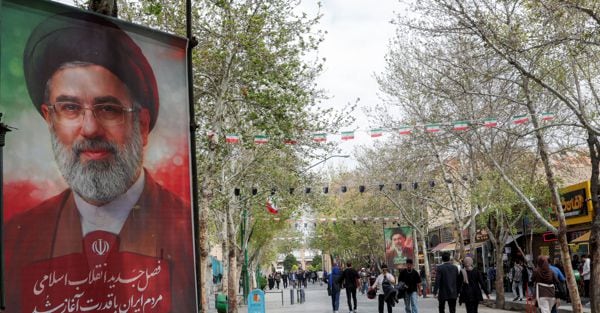
La gente passa davanti ai manifesti del nuovo leader supremo iraniano, Mojtaba Khamenei, affissi lungo una strada di Isfahan, in Iran, il 24 marzo 2026. REUTERS/Alaa Al Marjani
20 April 2026
Ghalibaf: 'Finance should not be influenced by US bureaucracies'
Parliament Speaker Mohammad Bagher Ghalibaf warned financial market participants against being influenced by the 'bureaucracy of US officials' ahead of the reopening of the oil market. "Trading oil digitally by following the vibrations is like hedging against fluctuations in government bonds during the Strait of Hormuz crisis," he said on his X account, adding, "Both are a house of cards, which only works on paper." "Difference: oil at least has a benchmark Brent contract. Government bonds? Vibrations to no end. Eucrbrdt Gp index," added the head of Iran's negotiating team in Islamabad talks with the US.
20 April 2026
Crosetto, ships in Hormuz? Better with UN but also without OK Parliament says yes
"There is a push by the international community to secure Hormuz and ensure that free and peaceful navigation of goods can resume at full speed. Italia, which has one of the best navies in the world, could think about mine-hunting assets. For 20 days I have been telling the head of Defence and the Navy to be ready with two ships. But to send them we need the end of hostilities, because nobody wants to enter a war'. Thus Guido Crosetto,Minister of Defence, in an interview with Il Corriere della Sera. As for the fact that it will take years for the flow of oil and gas to return to what it was before the conflict, the minister explained: 'But no, once you have guaranteed security, the ships move. The flows could resume immediately, almost as fast as before. For the damaged liquid gas plant in Qatar, on the other hand, it could take up to three years. The question is when it will be possible to send the ships. The international community will only be able to enter Hormuz after the truce, so as not to be in a war zone. And the Italia government will go through the parliamentary vote, which for us is a due, obligatory, fundamental step'. In the meantime, the opposition is asking for a clear UN mandate: 'The first country to ask for UN intervention, months ago and on my explicit declaration, was Italia and not only for the war in Iran. I'm glad that the opposition is getting there too. I hope there will be a UN aegis, but I will not be formalised if there will be 42 nations with a mandate and a multilateral peacekeeping force. And I don't think that when faced with an international mission, Parliament can make any distinctions'.
20 April 2026
Tehran, we will go to Islamabad if there are positive signals
Whether or not Iran sends a delegation to Islamabad will depend on whether Tehran receives positive signals. This is what Ebrahim Azizi, chairman of the Iranian Parliament's National Security Committee, said when speaking to Al-Jazeera about the prospects of talks with the US. The MP, a former commander of the Islamic Revolutionary Guard Corps (IRGC), said that Iran has decided to continue talks with the US, but that this "does not mean negotiating at any cost" and accepting any "approach taken by the other side". Asked whether Iran would send a delegation to Pakistan, Aziz said: 'We have never feared the principle of negotiation. Perhaps today or tomorrow, after further evaluation, we will consider it likely, assuming a positive signal comes from the US negotiating delegation and the messages it has received from Iran'. Iran has set red lines and these 'must be respected', he concluded.
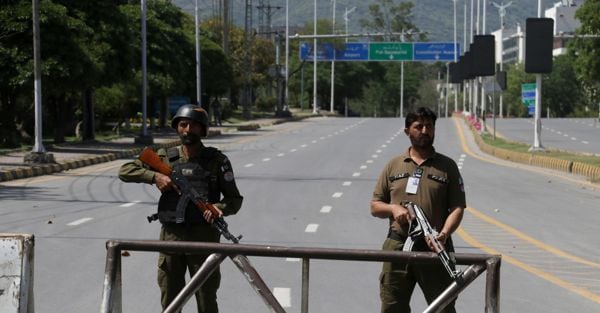
Il personale di sicurezza monta la guardia mentre il Pakistan si prepara ad ospitare un secondo ciclo di colloqui di pace tra Stati Uniti e Iran a Islamabad, in Pakistan, il 19 aprile 2026. Islamabad era sottoposta a rigide misure di sicurezza, con le principali strade chiuse al traffico e i trasporti pubblici sospesi, mentre il Pakistan si preparava ad ospitare un possibile secondo ciclo di colloqui di pace tra Stati Uniti e Iran. EPA/SOHAIL SHAHZAD
20 April 2026
Centcom releases video of Marines seizing Iranian ship
The US Central Command, Centcom, shared footage showing marines lowering themselves with ropes onto the Iranian-flagged ship Touska and taking control of the vessel. "US Marines descended from the amphibious assault ship USS Tripoli by helicopter and crossed the Arabian Sea to board and seize the M/V Touska,'' reads the Centcom's 'X' account as the naval blockade decided by US President Donald Trump continues.
U.S. Marines depart amphibious assault ship USS Tripoli (LHA 7) by helicopter and transit over the Arabian Sea to board and seize M/V Touska. The Marines rappelled onto the Iranian-flagged vessel, April 19, after guided-missile destroyer USS Spruance (DDG 111) disabled Touska's… pic.twitter.com/mFxI5RzYCS
— U.S. Central Command (@CENTCOM) April 20, 2026
''Marines lowered themselves with ropes onto the Iranian-flagged vessel on 20 April, after the missile-launching destroyer USS Spruance had disabled the Touska's propulsion following the merchant ship's failure to comply with repeated warnings from US forces over a period of six hours,'' Centcom writes in X, describing the operation. Iran promised retaliation.
20 April 2026
Iran: 'We will soon react to the blockade of our ship'
Iran promises to 'respond soon' to the US seizure of a cargo ship that was attempting to force a blockade in the Gulf of Oman. "The Armed Forces of the Islamic Republic of Iran will soon react and take retaliatory measures against this act of armed piracy and against the US military," Tehran's General Staff spokesman writes on Telegram, accusing the US of 'violating the ceasefire'.
20 April 2026
Trump: 'Iranian oil tanker struck and seized'
US President Donald Trump said that the US has seized an Iranian-flagged cargo ship near the Strait of Hormuz. This is the first interception since a naval blockade began last week. Trump claims the ship ignored warnings and was stopped by a US Navy destroyer.
20 April 2026
IEA, global oil demand will contract by 80,000 barrels per day in 2026
As the effects of the war in the Middle East continue to disrupt oil markets, the latest monthly report by the International Energy Agency (IEA) on oil markets shows how the severe supply shock is now weighing on global demand. According to the Report, global oil supply fell by 10% in March, to 97 million barrels per day, due to attacks on energy infrastructure in the Middle East and the collapse of maritime traffic through the strategic Strait of Hormuz.
To mitigate the immediate impact of these supply disruptions, consumers and refiners drew on oil stocks. However, where stocks are not sufficient to completely fill the gap, demand has taken a hit. In particular, petrochemical producers in Asia reduced production rates due to the depletion of raw materials. Households and businesses using liquefied petroleum gas (LPG) were also affected, while flight cancellations in the Middle East and parts of Asia and Europe led to a sharp drop in aviation fuel consumption. As a result, the IEA report predicts that global oil demand will contract by 80,000 barrels per day this year.
This contrasts with our previous forecast, prior to the outbreak of hostilities, which predicted global demand growth of 850,000 barrels. The report stresses that although the situation continues to evolve rapidly, the resumption of regular flows through the Strait of Hormuz remains the most important variable in relieving pressure on energy supplies, prices and the global economy. Even after the Strait reopens, it will take time for flows to normalise.
