Trade war

Trump imposes 25 per cent tariffs on heavy trucks: the impact on the trade war

New 25% tariffs on heavy trucks in the US: implications for the international trade war

by Luca Veronese - New York
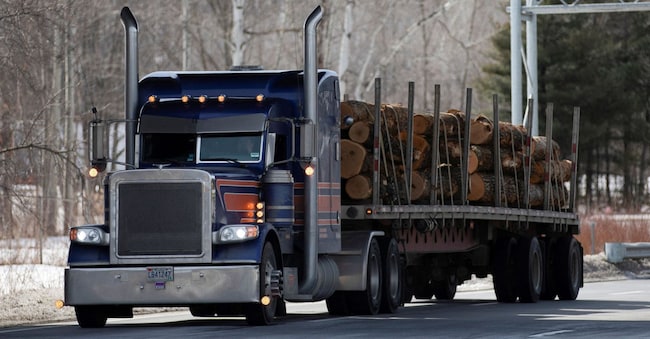
 Un camion per il trasporto del legname negli Stati Uniti

3' min read

Translated by AI
Versione italiana

3' min read

Translated by AI
Versione italiana

"As of 1 November, all heavy and medium-weight trucks entering the United States from other countries will be hit with 25% tariffs," wrote US President Donald Trump on social Truth.

The proposal has been the subject of an intense lobbying campaign by Detroit's incumbent automakers. Trump had initially declared last month that tariffs on heavy trucks would be implemented as of 1 October, but then extended the time frame by listening to appeals from manufacturers and importers concerned about the measure's impact on international trade.

Loading...

These tariffs on imports are also justified by the White House on 'national security grounds' and the need to protect groups producing on American soil from 'unfair external competition': the decision should benefit companies such as Peterbilt and Kenworth, owned by Paccar, and Freightliner, owned by Daimler Truck.

The Department of Commerce's charges against foreign manufacturers

Trump's announcement is linked to an investigation launched in April by the U.S. Department of Commerce into heavy truck imports. This investigation, conducted under Section 232 of the Trade Expansion Act, allows for the imposition of import taxes on goods considered essential to national security.

The investigation focused on medium- and heavy-duty trucks weighing over 4,500 kg and their components, with the Department of Commerce claiming that a 'small number' of foreign suppliers accounted for the majority of US imports due to 'predatory trade practices'.

The Agreements with the European Union

Under the trade agreements reached with Japan and the European Union, the US has accepted 15% tariffs on light vehicles, but it is unclear whether they will also be applied to larger vehicles. The Trump administration has also allowed manufacturers to deduct the value of US components from the tariffs paid on light vehicles assembled in Canada and Mexico.

Larger vehicles include everything from delivery trucks, rubbish trucks, utility trucks, public transport, shuttle buses, school buses, tractor-trailers, semi-trailers, and heavy-duty professional vehicles.

The US Chamber of Commerce had previously urged the Commerce Department not to impose new tariffs on trucks, noting thatthe top five importing countries are Mexico, Canada, Japan, Germany, and Finland, "all of which are allies or close partners of the United States and pose no threat to US national security".

The unresolved knots with Mexico

Mexico is the largest exporter of medium- and heavy-duty trucks to the U.S. A study released in January found that imports of these large vehicles from Mexico have tripled since 2019, now reaching about 340,000 units, according to government statistics.

According to the North American Free Trade Agreement Usmca, medium and heavy trucks are exempt from tariffs if at least 64 per cent of the value of a heavy truck comes from North America, through components such as engines and axles, raw materials such as steel, or labour for assembly.

The tariffs could also affect Stellantis, the parent company of Chrysler, which manufactures heavy Ram trucks and commercial vans in Mexico. Stellantis had lobbied the White House not to impose high tariffs on its trucks produced in Mexico.

Swedish Volvo Group is building a $700 million heavy-duty truck factory in Monterrey, Mexico, which is scheduled to go into operation in 2026. According to the US International Trade Administration, Mexico is home to 14 manufacturers and assemblers of buses, trucks and road tractors, and two engine manufacturers.

Mexico attempted to oppose the new tariffs, declaring to the Department of Commerce in May that all Mexican trucks exported to the US contain an average of 50 per cent US components, including diesel engines.

Last year, the US imported almost USD 128 billion worth of heavy vehicle components from Mexico, accounting for about 28% of total US imports.

A sector in difficulty

Tariffs threaten an industry that is already being impacted by tariffs on steel and aluminium as well as stricter environmental regulations. New import taxes could increase the prices of vehicles used in several sectors, including shipping, construction and municipal services.

But supporters of the measure say it will help strengthen domestic production. "Trump's planned tariffs on imported heavy trucks are a big win for American workers and large US manufacturers," said Nick Iacovella of the Coalition for a Prosperous America, a protectionist group. "This action will strengthen this vital industry and protect it from unfair foreign competition."

Copyright reserved ©
Loading...

Brand connect

Loading...

Newsletter

Notizie e approfondimenti sugli avvenimenti politici, economici e finanziari.

Iscriviti