
Trump's tariffs and the protection of consumers and rules

3' min read
3' min read
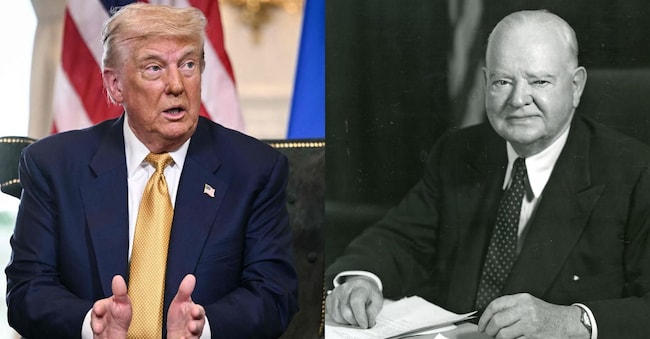
As of 1 August, the European Union, although it has not yet formalised the agreement in principle reached by Donald Trump and Ursula von der Leyen at the President's Scottish estate, expects the US to adopt the 15% across-the-board tariffs agreed last Sunday. In the meantime, the joint statement is slow in coming and criticisms of the understanding are emerging with increasing force. Beyond the highly unusual venue in which it took place, the handshake between Ursula von der Leyen and Donald Trump enshrines the largest 'unilateral trade protectionism' agreement in the post-World War II era. Considering also the other tariffs that will come into effect on 1 August, this is the largest increase in US trade tariffs since President Hoover's Smoot-Hawley Tariff Act of 1930.
It is worth remembering that on that occasion the significant increase in import tariffs, also as a result of retaliation by the affected countries, caused a sharp drop in international trade and contributed to deepening the American recession. The disastrous consequences for the economy led to a defeat for the Republicans in the subsequent elections and a substantial change of course in trade policy, in an effort to build a multilateral order based on a progressive reduction of tariff barriers within the framework first of the GATT and then of the WTO.
Despite the fact that it is clear to everyone that that order is in deep crisis, Trump's announcement on 'Liberation Day' on 2 April of generalised tariffs against more than forty countries did not seem an acceptable or viable path, so much so that the President himself, following the worst collapse of the American stock market since the crash of 2020, found himself forced to suspend the entry into force of the announced tariffs for ninety days. Since then it has become clear that President Trump's tariff announcements form the basis for negotiating agreements favourable to him and that many countries are prepared to follow this path instead of implementing retaliatory measures to which the US administration would respond with further tariff increases.
In the case of the EU, the European countries, which now criticise President von der Leyen, did not feel like running the risk of even higher tariffs, let alone a possible trade war, by adopting the logic of the 'lesser evil'. This logic is very dangerous for several reasons. Firstly, it legitimises Trump's strategy of arriving at bilateral agreements based on force in clear conflict with WTO rules. The American president, who on 2 April found himself having to reassure his voters after the sharp fall in the financial markets and the gloomy forecasts of recession, is now in the position of claiming in front of his voters agreements to open markets to American goods, to purchase energy and military equipment, and to waive the global minimum taxation of American multinational companies.
While protectionism will certainly come at a cost to the US economy that is bound to affect the President's consensus, the effects may not be as immediate as they appeared on 2 April due to these concessions. Secondly, justifying de facto protectionism on the basis of the existence of trade imbalances opens the way for further demands should the tariffs, as they most likely will, not help to substantially reduce the US trade deficit. The EU, which has set itself the goal of strengthening its open strategic autonomy, must champion a rules-based multilateral trade order and not contribute to alleviating the costs of US protectionist policies. This means, on the one hand, strengthening trade agreements with areas that share the rules of multilateralism and, on the other hand, truly enhancing its strategic autonomy by substantially increasing the European budget and boosting domestic demand.

