
Trump's tariffs push Canada into technical recession
Tensions with the US dampened exports and business investments. After the drop at the end of 2025, GDP fell by an annualised 0.1% in the first quarter. And the shock from the war in Iran is still to come

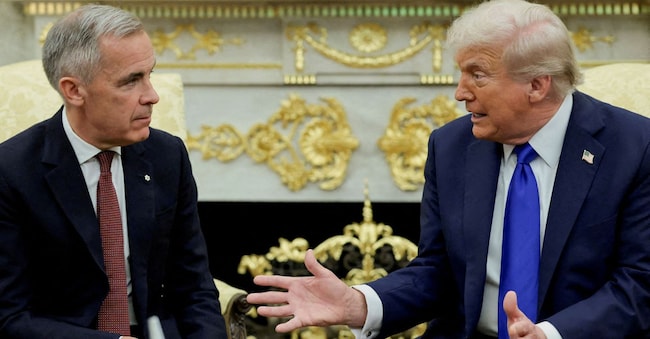
Uncertainty in trade and the tariffs battle unleashed by Donald Trump, even with neighbouring countries, pushed Canada's economy into a technical recession. Between January and March, Canadian GDP unexpectedly contracted for the second consecutive quarter: the 0.1% drop in activity - an annualised figure - was due to slowing exports and weak business and government investment.
The slowdown
Analysts had forecast a robust expansion of 1.5% annualised, in line with the Bank of Canada's growth forecast. The weakness in the first quarter followed a revised 1% contraction by Statistics Canada for the final quarter of 2025. Compared to the previous quarter, GDP for the first quarter of the year was unchanged.
Canada's economy had contracted two consecutive quarters, most recently during the Covid-19 pandemic in 2020. And previously during the oil shock in early 2015. "Overall, this is very weak data in several respects: it shows how uncertainty in international trade and tariffs continue to dampen growth, while consumers have few resources available for future spending," explains Katherine Judge, economist at Cibc Capital Markets.
The Canadian dollar fell to a morning low following the release of the Statistics Canada report, settling at C$1.3809 per US dollar. Canadian government bond yields fell to the day's lows, confirming outperformance against Treasuries, with the two-year yield down 7.7 basis points to 2.430%.
"There is no point in sugar-coating this disappointing result, as the economy has clearly struggled to grow since the start of the trade war, with overall growth further held back by the rapid demographic slowdown," says Doug Porter, chief economist at the Bank of Montreal. The lower-than-expected GDP figures also coincide with a weaker-than-expected labour market, painting a difficult picture for the Canadian economy, while US tariffs continue to put pressure on some businesses. 'Overall, this should really dampen rumours of a possible benchmark rate hike, as the economy is in no shape to bear higher rates,' Porter added.


