United States

Trump threatens to cut government contracts to Elon Musk: analysis of risks and economic implications

Trump threatens to revoke Musk's contracts, putting billions of dollars of public funding at risk. The financial and political implications at stake.

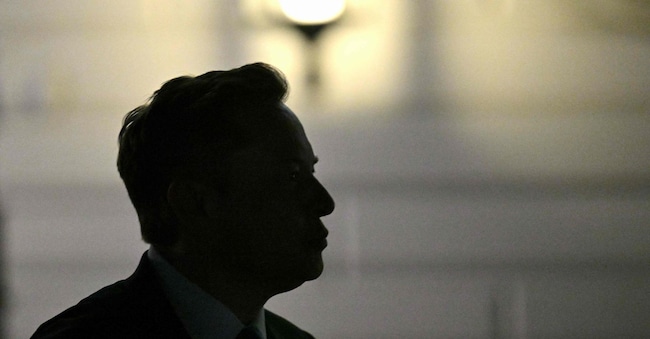
Elon Musk (Photo by ROBERTO SCHMIDT / AFP)

3' min read

3' min read

The relationship between Elon Musk and Donald Trump had first soured in March, when the New York Times announced that the billionaire head of the Doge, the Department of Government Efficiency, would attend a secret Pentagon meeting where potential plans to fight China would be discussed.

A chorus of controversy was raised and Trump was forced to deny that his privileged ally was present and that the meeting was about something else anyway, saying that he would never show those plans 'to a businessman who has business in China'.

Loading...

In the meantime, the US president had unleashed the tariffs war against the whole world and Musk, who has strong business interests, had first softly and then increasingly clearly criticised that decision. Then Politico's scoop anticipating: Musk will leave the doge. The White House had denied it, but the news was true: Musk left office and went back to his increasingly ailing companies around the clock.

The latest heavy rift a few days ago when Musk branded the 'big, beautiful bill' (the budget law so called by the government) 'a disgusting abomination' and claimed that the MPs who voted for it 'know they were wrong'. A harsh attack on the law wanted by Trump, who has so far tried not to go into direct confrontation.

Now comes the response, the president writes on his Truth social media site: "The easiest way to save money from our budget, billions and billions of dollars, is to end Elon's government contracts and subsidies".

Wp: to Musk $38 billion between carmaker, space and defence

And this is where Trump can really hurt Musk. In a 'Washington Post' analysis from last February, it is estimated that between car, space and defence, Musk's companies have received $38 billion in contracts, loans, subsidies, tax credits from the government over the years. Considerable help, especially at critical times, which has helped make Musk the richest man in the world.

Promised 100 contracts with 17 government agencies

.

Last year alone, Musk's companies were promised $3 billion for some 100 contracts with 17 government agencies.

But that is only part of the pie: two of Elon Musk's companies (Tesla and Space X) have concluded government contracts worth at least $15.4 billion in the last decade.

Almost all the money has been collected by Space X, which has federal contracts with Defence for $3.6 billion (now, for example, SpaceX's Starlink satellites, which provide broadband in rural areas, a $42 billion maxi-project, and which have contracts with the Pentagon, could also be at risk) and especially cwith NASA for $11.8 billion.

Sometimes the numbers do not match because the available figures only concern public contracts.

Since 2000, 'Bloomberg' calculates, SpaceX, one of the world's most valuable start-ups with a market value of $350 billion, has received more than $22 billion in unclassified contracts from the Department of Defence and NASA. There are, however, contracts that remain classified and concern defence and intelligence: the details are only press reports.

This is the case, writes 'Reuters', of the spy satellites developed by Space X for the National reconnaissance office, the spy satellite division of the Pentagon: the 'Wall Street Journal' wrote that that contract alone was worth USD 1.8 billion.

Then there is the legal chapter. Musk's companies are increasingly facing regulatory battles and overlapping federal investigations from across the government. His companies have been targeted in at least 20 recent investigations, for example into the safety of Tesla cars and environmental damage caused by Space X rockets.

Musk's companies lost power when the billionaire left office. As a government advisor, for example, Musk had challenged a regulation requiring SpaceX to obtain a permit to discharge large quantities of potentially polluted water from its launch pad in Texas.

Musk also stated that limiting this type of control could help SpaceX reach Mars sooner, 'as long as it is not stifled by bureaucracy,' he wrote in X.

Trump could also revoke Musk's top-secret authorisation, which the billionaire is granted under government contracts for SpaceX's work with NASA. This would make it very difficult for Musk to continue working with the government.

Contract termination: the risks

However, all this comes up against another consideration: cancelling government contracts can be a costly and politically risky manoeuvre. Most federal contracts include a clause allowing for 'termination for convenience', but this often involves the government reimbursing contractors billions in sunk or locked-in costs.

Copyright reserved ©
Loading...

Brand connect

Loading...

Newsletter

Notizie e approfondimenti sugli avvenimenti politici, economici e finanziari.

Iscriviti