
Trump threatens to leave NATO: how he can do it and what would happen
The path out of the Atlantic Treaty is complex and the president cannot decide alone. Without the US, the alliance would lose 60% of the budget

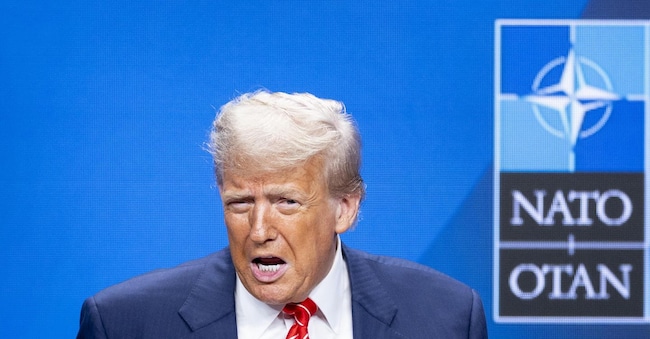
After the Israeli-American attack on Iran, US President Donald Trump returned to attacking NATO, going so far as to threaten the US exit from the Atlantic Alliance. This is not the first time that Trump has criticised NATO, which the tycoon considers a useless burden for the US, which is its largest financier. The US president said he was "disgusted" by the allies, who he called "cowards" especially after their refusal to participate in a military coalition to reopen the Hormuz Strait, and called NATO "a paper tiger". In this context, the White House threat seems more concrete than ever.
The process of leaving NATO
In practice, however, pulling out is a complex process for Washington. On paper, the treaty states that any member can leave NATO with one year's notice. And here there is a first anomaly: the notification to initiate this procedure must be delivered to the US government, the original promoter and guarantor of the Atlantic pact, which in this case would find itself in the paradoxical position of having to notify itself.
Apart from this formal curiosity, the biggest difficulties are on the domestic front. In 2024, in fact, the Biden administration passed the National Defense Authorization Act, which prevents the president from making such a decision alone. According to the law, an exit from NATO requires an affirmative vote of two-thirds of the Senate, or authorisation through a act of Congress.
In addition, the president must consult with the House and Senate Foreign Affairs Committees 'in relation to any initiative to withdraw the United States' from the alliance, and must notify the committees of 'any deliberations or decisions' on withdrawal 'as soon as possible, and in no case later than 180 days before undertaking the process'.
A difficult process to complete before the midterm elections in November 2026, which could leave the Republicans with an even less solid majority in the Senate. Should Trump find a way around the ordinary procedure, a dispute with the Supreme Court, which has already recently rejected the tycoon's tariffs, cannot be ruled out. In any case, US legislation has some grey areas on this issue and the exceptional nature of the situation makes predictions difficult.


