The agreement

Oil: Trump says US takes control of 65 billion barrels in Venezuela

Under the agreement, the United States would receive 55 per cent of the output from a joint venture with a private operator active in Venezuela. Venezuelan President Delcy Rodriguez described the deal as “historic”

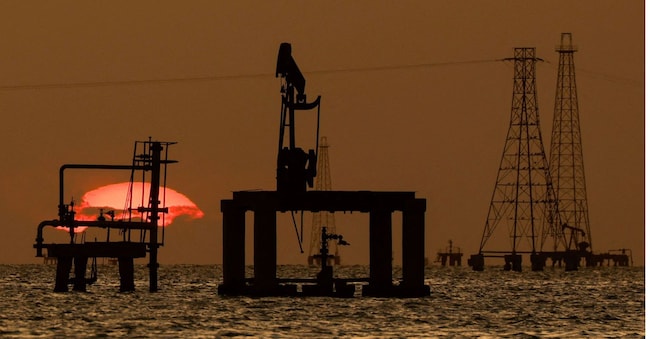
Un impianto petrolifero in Venezuela REUTERS/Leonardo Fernandez Viloria/File Photo REUTERS

3' min read

Translated by AI
Versione italiana

3' min read

Translated by AI
Versione italiana

Donald Trump has announced that the United States has reached an agreement with Venezuela that will grant Washington majority control over more than 65 billion barrels of the South American country’s proven oil reserves, in what the US President has described as ‘the biggest oil deal in the history of the world’.

“The United States of America has just concluded an agreement with Venezuela,” Trump wrote on social media, claiming that the deal – struck through a partnership with private operators – will guarantee the US majority control over a quantity of crude oil almost equivalent to the total volume of US proven reserves.

Loading...

According to a US official quoted by the New York Times, the agreement would grant the United States a 55 per cent share of the output from a joint venture with a private operator operating in Venezuela.

Venezuelan President Delcy Rodriguez described the agreement as “historic” and stated that it would have “a significant impact on the rebirth of our nation”. The plan is said to cover 17 oil fields, involve over $100 billion in investment and, according to Caracas, could generate $209 billion in tax revenue for Venezuela. “We are putting our immense reserves at the service of national development,” said Rodriguez.

However, the details of the agreement remain largely unknown and the text has not been made public. According to the Washington Post, the United States would acquire a controlling stake in a new joint venture holding 100-year concessions covering almost a quarter of Venezuela’s untapped oil reserves.

Trump claimed that the move ‘will substantially reduce petrol prices for all Americans’ and will not cost taxpayers anything. However, reactivating these oil fields could require investments running into tens of billions of dollars, given that many lack adequate infrastructure or have facilities that have fallen into disrepair following years of underinvestment and theft of equipment.

Secretary of State Marco Rubio stated that the agreement would bring “almost 100 billion dollars of private investment” to Venezuela, without specifying which companies had already made financial commitments.

Among those said to be involved in the operation is the Venezuelan businessman Alejandro Betancourt, whose company, North American Blue Energy Partners, has become one of the country’s leading private oil operators. Betancourt has been the subject of investigations into alleged money laundering in several countries and is the subject of a Swiss arrest warrant, although he has not been charged and his lawyer has denied any involvement in illegal activities.

The announcement comes as Chevron, the second-largest US oil company, is in advanced talks to significantly expand its operations in Venezuela. An agreement could be announced as early as next week.

Oil has become one of the central elements of the Trump administration’s policy towards Venezuela following the capture and removal from office of former President Nicolás Maduro in January. In the weeks that followed, Caracas amended its oil legislation to grant greater autonomy to foreign operators, scaling back the system of nationalisations established during the Hugo Chávez era.

Loading...

However, the agreement could face political and constitutional obstacles in Venezuela, where state control of oil resources has been a central feature of the country’s politics and identity for decades.

According to sources cited by the Washington Post, Caracas is also reportedly considering withdrawing from OPEC, of which Venezuela is a founding member – a decision that would be welcomed by the Trump administration as part of its plan to strengthen US control over energy flows in the Western Hemisphere.

Copyright reserved ©
Loading...

Brand connect

Loading...

Newsletter

Notizie e approfondimenti sugli avvenimenti politici, economici e finanziari.

Iscriviti