United States

Trump wants to extend the death penalty to drug traffickers: the Pike case reignites the debate

The governor has promised to expand the range of offences punishable by the death penalty. Tennessee has suspended executions following the Pike case, whilst a 2008 Supreme Court ruling leaves the issue of major drug traffickers unresolved.

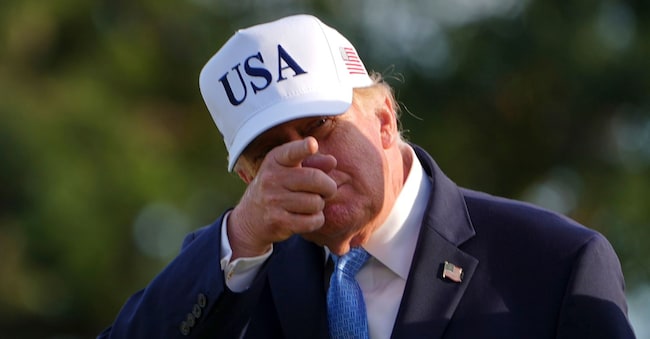
Il presidente Usa Donald Trump il 27 settembre 2026, a Medinah, Illinois. (Foto AP/Julia Demaree Nikhinson)      Associated Press/ LaPresse Solo Italia e Spagna APN

4' min read

Translated by AI
Versione italiana

4' min read

Translated by AI
Versione italiana

Whilst Tennessee is trying to work out how this could have happened administering the lethal injection twice to a condemned woman without managing to kill her, Donald Trump promises to expand the death penalty in the United States. “We will approve it for major drug traffickers, human traffickers and anyone who kills a police officer,” he said on the evening of Friday 3 October in Mobile, Alabama.

Christa Pike, aged 50, was convicted of participating in the torture and murder in 1995 of Colleen Slemmer, aged 19. On 30 September, she survived two doses of pentobarbital and was transferred to hospital in a critical condition. This is the second failed execution attempt in Tennessee since the start of the year: in May, Tony Carruthers’ execution was halted after around an hour and a half spent trying to establish a venous access. Republican Governor Bill Lee has therefore suspended executions for the remainder of 2026 and ordered an independent review. Frank Strada, Commissioner of the Department of Corrections, will step down from his post by the end of October.

Loading...
Usa, fallita l'esecuzione per iniezione letale di Christa Pike

To turn the announcement into law Trump will need Congress. The death penalty is already provided for at federal level for some of the offences mentioned by the President, under specific circumstances. In Mobile, however, the tycoon spoke more generally about ‘major drug traffickers’, without referring to the killing of a person and without elaborating on the proposal.

After all, the idea has been tempting the occupant of the Oval Office for years. Even during his first term, he had called for the death penalty for major drug traffickers, citing Asian countries that impose the death penalty for drug trafficking. In July 2020, it was his administration that resumed federal executions after a seventeen-year hiatus: in the six months that followed, 13 people were put to death, right up until the final days before Joe Biden’s inauguration.

Biden halted executions and commuted 37 of the 40 federal death sentences to life imprisonment without the possibility of parole. It took Trump just a few hours to reverse course once again. On 20 January 2025, the day he returned to the White House, he signed an executive order to fully reinstate the federal death penalty and asked the Attorney General to pursue it in cases permitted by law, starting with the murders of law enforcement officers. In the same document, he also entrusted him with the task of seeking cases through which to challenge the Supreme Court precedents that limit its application.

In April, the Department of Justice lifted the moratorium on federal executions and reinstated the pentobarbital protocol previously used during the first Trump administration. Other methods permitted by law have also been brought back into consideration, including the firing squad, whilst the Department has accelerated its review of cases in which the death penalty may be sought and announced a legislative proposal to be submitted to Congress.

This is where the Supreme Court comes into the picture. In 2008, the judges were presented with the case of Patrick Kennedy, who had been sentenced to death in Louisiana for the rape of his eight-year-old stepdaughter. The girl had survived. By five votes to four, the Court quashed the sentence and ruled that, for a crime against the person, the death penalty could not be imposed when the victim had not been killed.

The case of Kennedy v. Louisiana, however, did not concern offences against the State, and the judges expressly cited, amongst those on which they did not intend to rule, treason, espionage, terrorism and ‘drug kingpin activity’ (‘the activities of major drug traffickers’). That clarification did not authorise the death penalty for a drug trafficker who had not killed anyone; it simply left the issue outside the scope of the judgement.

Since then, that limit has not been tested. A law introducing the death penalty for major drug traffickers, regardless of whether a murder has been committed, could bring the issue back before the Supreme Court, whilst the Trump administration seeks new cases with which to challenge the precedents that limit the application of the death penalty.

In 2025, there were 47 executions in the United States, compared with 25 in 2024. As of 29 September this year, there had been 29 in six states. In May, 52 per cent of Americans considered the death penalty morally acceptable, according to Gallup, four percentage points down on the previous year.

Loading...

For Tennessee, Pike’s is also a back to the past. In 2022, Bill Lee had suspended executions after an independent investigation found repeated breaches of procedure, including checks on the drugs used for lethal injections. The state rewrote the protocol and, by the end of 2024, opted solely for pentobarbital – the drug administered twice to Pike without success. His lawyers argue that the intravenous access points did not function correctly and that some of the substance ended up in the tissues. The Department of Corrections states that the protocol was followed. It will now be up to the investigation ordered by the governor to establish what happened. Until then, no one will be executed in Tennessee. In Washington, however, Trump is working to extend the list of those who might be executed.

Copyright reserved ©
Loading...

Brand connect

Loading...

Newsletter

Notizie e approfondimenti sugli avvenimenti politici, economici e finanziari.

Iscriviti