
Trump’s axe and the Italian group stuck on the web

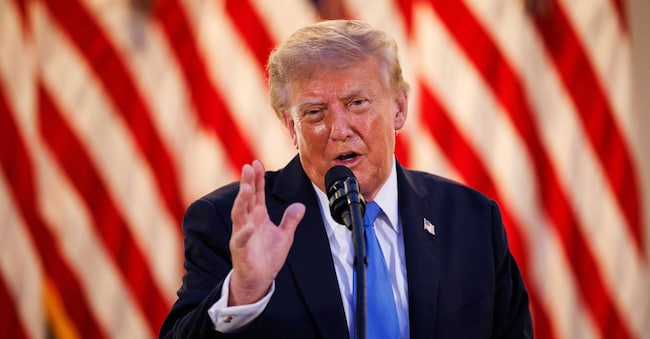
The US government has unilaterally decided to block the activities of an Italian association. Autistici/Inventati offers free internet services, guaranteeing maximum privacy and funding itself through donations from its members. Those managing its internet domains and those providing financial services have until 25 September to sever all ties with Autistici/Inventati. This applies worldwide. ICANN has already revoked access to the autistici.org domain. Banca Etica has suspended the organisation’s current account. Autistici/Inventati’s blogs, email and anonymisation services are used by thousands of third-sector organisations, community centres and movements in Italy and abroad which, as stipulated by the service’s terms and conditions, share the group’s anti-fascist, anti-racist, anti-militarist and anti-capitalist values of the group. Autistici/Inventati is now on the Office of Foreign Assets Control (OFAC) lists, alongside the UN Special Rapporteur on the Palestinian Territories, Francesca Albanese, and the judges of the International Criminal Court.The State Department and the Treasury Department of the government led by Donald Trump have condemned the association without appeal, under a provision introduced a few days after 11 September 2001 – which was intended to be temporary – designed to combat terrorism, including through economic sanctions. The group is on the list of Specially Designated Global Terrorists because, according to the US government, it provides IT services to violent far-left groups and to the PKK in Kurdistan. Those familiar with the group point out that whenever the judicial authorities have asked it to cease providing services to entities deemed illegal, Autistici/Inventati has always complied. Moreover, the group cannot access the content of communications exchanged by its users on its servers, precisely because of the technical design of the service. Furthermore, a platform is not liable for how users utilise it, in accordance with the principles of US law itself, based on Section 230 of the Communications Act of 1996.There is no need to share Autistici/Inventati’s values to wish to better understand such a complex issue, one that deserves more than the silence with which it has so far been met by the European authorities. Banca Etica has explained on its website that it must comply with the US government’s order to protect its account holders, who would otherwise be unable to use their credit cards or conduct international money transfers. However, it has called for strong action from the European authorities to reduce dependence on the US financial system and has condemned the political use of the OFAC lists, which in this case has been extended even to a mere technology provider. Indeed. Almost always, newspapers seek out the latest news. Here, however, what emerges is the continuation of trends that have developed throughout the first quarter of the 21st century. In many cases, the governments of Western democracies have succumbed to the temptation to become increasingly independent of the principle of the separation of powers. In this case, for example, the users of Autistici/Inventati may have done who knows what, but it is undisputed that the group was unable to defend itself in court and that the US government did not need to prove its allegations. A further sign of this continuity is the erosion of Europe’s digital and financial autonomy. There is no shortage of recent examples: in recent months, the US government has unilaterally suspended and reinstated Europeans’ access to Anthropic’s Mythos model and has forced Microsoft to hand over the emails and meeting minutes of certain Dutch civil servants, thereby forcing those who supply American technology to Europeans to be more loyal to the US government than to their European customers. Autistici/Inventati will devise technical solutions to continue offering their service. Meanwhile, others will call for the use of institutional tools to defend the fundamental rights of Europeans. The outcomes are uncertain, but they will certainly continue to demonstrate the need for a new strategy to safeguard Europe’s independence, encompassing regulations, innovation, funding, independent technical standards, new companies and firm democratic principles.


