
Trump: ‘Economic D-Day against Iran’. But there is a clash with China over the new sanctions
The US President: ‘All countries must work together to isolate Tehran.’ Beijing, the main buyer of Iranian oil: ‘A diplomatic solution is needed.’
From New York Luca Veronese
 Aggiungi Il Sole 24 Ore
ai preferiti su Google
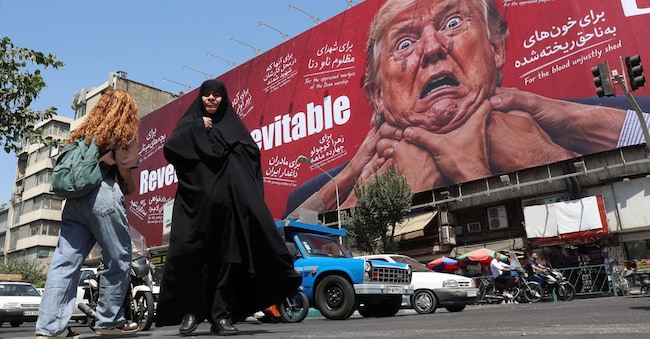
To bring Iran to its knees, Donald Trump has decided to unleash ‘an unprecedented economic war and isolation’. Nearly six months of military attacks and the blockade imposed by US forces on Iranian ports have failed to secure a surrender or even a willingness on the part of the regime in Tehran to negotiate a peace agreement: frustration and a lack of results have forced the US president to change strategy with a threat aimed at cutting off all economic channels from Iran to the outside world, whilst drastically tightening sanctions.
“Any country that allows its financial institutions, companies, airports or government bodies to provide any kind of lifeline to Iran will face enormous economic consequences,” Trump wrote on social media, announcing the policy shift. Whilst the costs of the conflict are rising, missile stocks are dwindling, and American citizens (including those in the ‘Make America Great Again’ (MAGA) base who voted for the tycoon) are increasingly voicing their opposition to the war in the Middle East.
The Tehran regime’s response was immediate. “Insisting on failed policies will only lead to further defeats and the hostility of the Iranian people,” said Iranian Foreign Minister Abbas Araghchi “The so-called ‘economic D-Day’, announced by Trump, is merely a diversion from the American crisis: unprecedented debt and rapidly rising interest costs,” added Araghchi, noting that “US economic terrorism threatens the global economy and worldwide sovereignty.”
Trump has not clarified what further economic sanctions will be imposed on a regime that has been under control for almost half a century, namely since the 1979 Islamic Revolution. All countries – according to the new US directives – will have to take greater care to block Iran’s access to currency exchange bureaux, money transfers, swap lines, shipping registers, front companies and channels for oil exports.
The White House is therefore calling its allies to order, insisting that they must stand alongside the US in the ‘economic war’, after they had refused to become involved in the conflict: “The time has come for our allies and the rest of the world to make a decision: you are either with us or against us,” said Treasury Secretary Scott Bessent.


