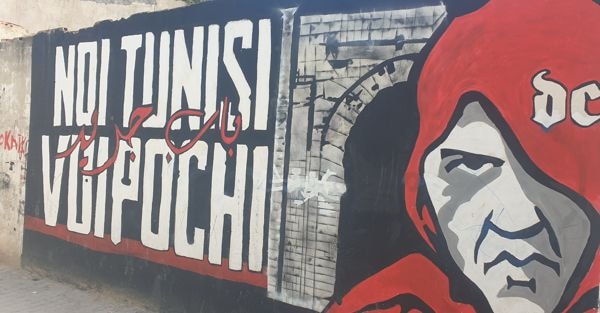
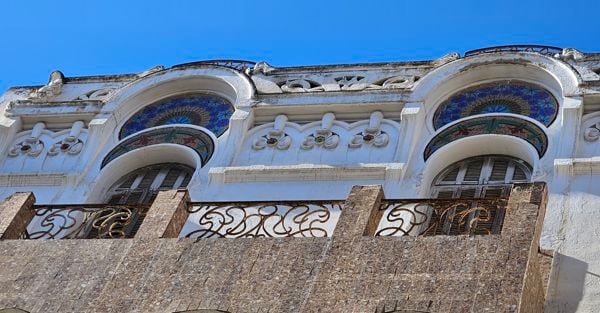
Tunis through its history
“Tunis, my love. A journey through the city of a thousand souls” by Leonardo Martinelli guides us through a country undergoing a difficult transition

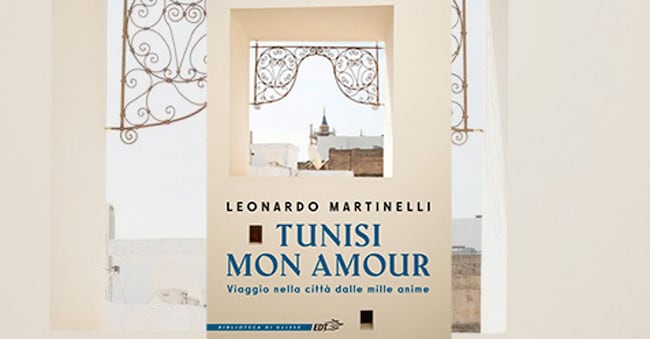
In the final decades of the last century, Tunisia was a favourite destination for Italian tourists: Hammamet, Sousse, Monastir, Djerba, the desert, Carthage, Sidi Bou Said, Tunis… An exotic getaway on our doorstep, plenty of sea and reasonable prices, with all-inclusive packages. Then the trouble began.
Jasmine Revolution
The 2011 Jasmine Revolution toppled the dictator Ben Ali, but it also ushered in a period of political instability, with the victory in the first democratic elections of the Ennahda Islamists, who were moderate in appearance only.
The terrorist attacks on the Bardo Museum
This was followed in 2015 by the terrorist attacks on the Bardo Museum and the attack on the beach at Sousse, which claimed the lives of dozens of European visitors. And then, of course, came Covid, just as visitor numbers were beginning to rise again. Meanwhile, Morocco has skilfully filled the gap left by Tunisia, focusing on its many cities – each with its own character – on security, and on an Islam kept in check by the state. But nothing lasts forever, especially in tourism, and everything that has been forgotten suddenly seems new again. And so, for some time now, Tunisia has been re-emerging on the European market, promoting itself with less focus on seaside holiday resorts and more on urban, cultural and creative tourism. And in this context, naturally, Tunis, the capital, is crucial.
It is to ‘his’ Tunis – where he has lived for some time – that Leonardo Martinelli, a veteran journalist and expert on North Africa, has dedicated a book which is at once a captivating travelogue, a highly informed and entirely first-hand guide, and a sociological analysis of a country undergoing a difficult transition. Martinelli is keen to emphasise the vitality of Tunis and how this stems precisely from the interplay of light and shadow. For example, a population that is generally very hospitable towards foreigners harbours strong racism towards sub-Saharan Africans, who scan the horizon towards Lampedusa whilst waiting to board a boat; and whilst he highlights the poignant beauty of many neighbourhoods and green spaces, he does not, for that reason, conceal the decay and the piles of rubbish.
The central theme, which runs through Martinelli’s entire diary, could be summarised as follows. Tunis has been a crossroads of peoples and destinies. Throughout history, many have passed through here: Berbers, Carthaginians, Romans, Vandals, Byzantines, Arabs, Spaniards and Turks. Finally, in 1881, France established its protectorate over the country, dashing long-held Italian aspirations. Yet even during the bitter era of European colonialism, Tunis remained surprisingly diverse. In the suburb of La Goletta, Jews, Maltese, Spaniards, Greeks, the French rulers and many, many Italians – mainly Sicilians – lived side by side: over one hundred thousand of them, more than the French colonisers.