
Tunisia remakes the water system. Spanish companies threaten to dominate
Plant construction and integrated cycle management: desalination, wastewater reuse, network digitisation, intelligent leakage monitoring. Opportunities for the Mattei Plan. But there is not only French competition
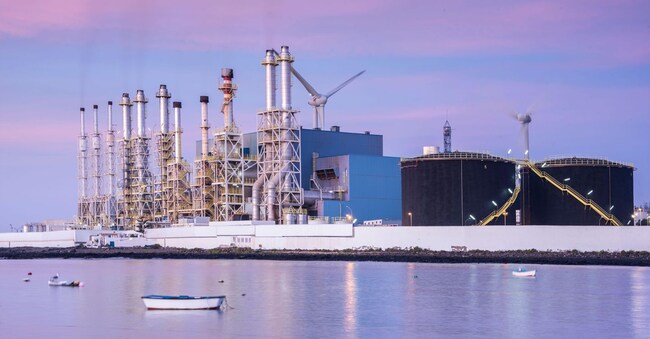
In the changing Mediterranean under the pressure of the climate crisis, population growth and geopolitical competition, Tunisia is turning into one of the most important infrastructure laboratories in the whole of North Africa. Not only because of its strategic position between Europe and Africa, but above all because the issue of water has now become a matter of national security. From Tunis to Gabes, via Sfax and the Medjerda basin, the country is facing one of the most profound reconfigurations of its water system since the end of independence. Distribution networks show very high levels of dispersion, reservoirs suffer from evaporation and silting, and the pressure on underground aquifers grows year after year. This is why the Tunisian water sector is becoming a battleground between large international groups, multilateral banks, local operators and new models of public-industrial partnership.
The game is no longer just about building plants, but about integrated management of the entire water cycle: desalination, wastewater reuse, digitisation of networks, intelligent leakage monitoring and infrastructure security. At the centre of the system remain two large public entities: the Société Nationale d'Exploitation et de Distribution des Eaux (SONEDE), responsible for water distribution, and the Office National de l'Assainissement (ONAS), which manages the sewerage network and treatment plants. Both operate in a complex situation: on the one hand they have to preserve the public nature of the service, on the other hand they need huge technological and financial investments to modernise obsolete networks.
Future projects
In recent years, the Tunisian government has gradually abandoned the idea of direct privatisation, preferring models of industrial cooperation, operating concessions and technological partnerships. This choice also reflects the country's new political framework, which is highly centralised but oriented towards maintaining state control over strategic assets. A galaxy of international operators is moving in this context. French groups maintain a historical presence, especially in the purification and engineering consultancy segments. Among the most active players are large players specialised in the management of urban water networks and wastewater treatment concessions. But Spain is the player to be monitored. At the same time, the weight of Spanish companies, now considered among the world's leading references in reverse osmosis desalination, is growing. Companies such as Tedagua, Acciona, GS Inima, Cox and Almar Water Solutions are consolidating their position in the area thanks to skills developed between Spain, the Persian Gulf and North Africa.
Among these, Tedagua represents one of the most present operators. The company, controlled by the Cobra group, has been selected together with the Egyptian group Orascom Construction and the Emirates company Metito for the mega desalination plant in Sfax, one of the most impressive water infrastructures. The plant, financed by the Japan International Cooperation Agency, will have an initial capacity of 100 thousand cubic metres per day, with the possibility of future expansion.
Cox's business model is also being watched closely by regional analysts. The Spanish group, active on a large scale in integrated water-energy management, is pushing an approach that combines desalination, photovoltaics and energy infrastructure. This formula is particularly interesting for North Africa, where the economic viability of plants will increasingly depend on the ability to integrate water production and renewable energy.

