
Turin, Links Foundation and Poli 'switch on' a quantum computer
Initiative launched with the National Metrological Research Institute (INRIM) - The aim is to develop an ecosystem involving 30 lecturers and researchers and 60 students

2' min read
2' min read
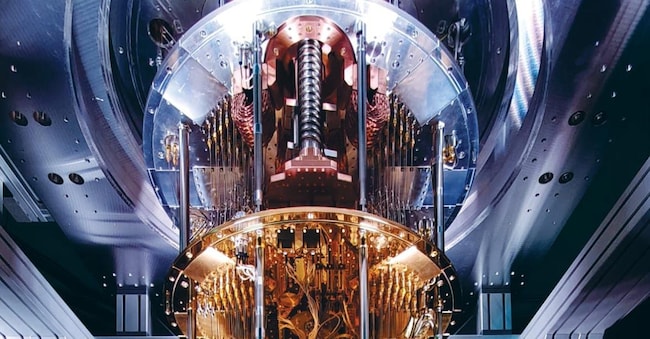
The Links Foundation, together with the Politecnico di Torino and the Istituto nazionale di Ricerca Metrologica (INRIM) will be powering one of Italy's first quantum computers in Turin. The three Turin-based institutions - Links was born out of the collaboration between Compagnia di Sanpaolo and the Politecnico itself - are strengthening their presence in High Performance Computing and co-investing in a five-qubit quantum system built by Finland's IQM Quantum Computers. This is an investment of around two million euro, one million for the hardware and one million for running costs over the years, with a strong impact because it already involves around thirty lecturers and researchers and about 60 students who have been enrolled in the Master's degree course in quantum computing or enrolled in the Quantum Engineering course at the Politecnico di Torino since 2023.
"This can become an attractive factor for the Turin area, it can attract students, researchers and companies that want to learn about and develop new applications using this type of machine," explains Marco Cantamessa, president of Links. "The key point remains the skills we have developed to use both the machine we will have in Turin and machines based on other quantum technologies, which can be used remotely. And then the possibility of making this ecosystem available to research teams and industrial partners'.
The machine will arrive at the beginning of 2025, will be installed in a dedicated laboratory within the Politecnico di Torino and will activate a series of international collaborations initiated by Links with MIT in Boston, FermiLab in Chicago and the main international operators working on quantum computing, including Quera. At the same time, the link with Cineca, for example, is crucial. "In association with quantum computing technologies, we are already working with Cineca to foster the integration of quantum technologies with those of High Performing Computing, and we collaborate with a broad network of partners that we will be expanding from time to time," anticipates Olivier Terzo, head of the project. Links specialises, Olivier Terzo goes on to explain, "in writing quantum algorithms, with an international positioning that prompted us to make this investment with a threefold objective: teaching, research and services.
The challenge, therefore, is to contribute, with this new infrastructure and the skills developed, to the transition from the 'classical' to the quantum world. 'These machines will make it possible to have applications capable of solving extremely complex problems that today would require decades of calculations to solve,' adds Olivier Terzo. There are already some collaborations on track in the Quantum Finance and Biomedical sectors, but the range of possible applications is set to widen thanks to the potential of a technology that promises to solve problems that were previously untreatable by algorithmic means.


