
Turin nominates itself as a laboratory city in Europe for autonomous driving
The City counts on its innovation ecosystem, existing experiments and the automotive supply chain - Dossier presented
Turin brings to the table its 'heritage' consisting of an ecosystem of 734 registered innovative start-ups, 3.7% of the national total, many of them in the AI, digital health, smart mobility and Industry 4.0; an R&D expenditure of EUR 3.1 billion, equal to 2.1% of the regional GDP; the presence of the AI4Industry (AI4I) Foundation, a national centre of competence on Artificial Intelligence for the manufacturing industry, based in Turin; an industrial fabric with 38.7% of manufacturing companies that have introduced innovations, either process or product.
The City of Turin and the Piedmont Region are therefore presenting their candidacy dossier in Brussels to be the first in Europe to test autonomous driving systems in the city for artificial intelligence applications in healthcare. The aim is to make Turin the European Union's laboratory city for autonomous driving experimentation and the regional health system for artificial intelligence applications in the diagnostic, organisational and telemedicine fields.
The document was presented to Roberto Viola, DG Communication, Networks, Contents and Technologies of the European Commission. The city is not starting from scratch, and the idea is to transform these experiences into a formal path within the European network of autonomous driving pilot cities, with the aim of hosting new phases of experimentation through real-life tests with AI governance models that will also allow the monitoring of vehicle flows.
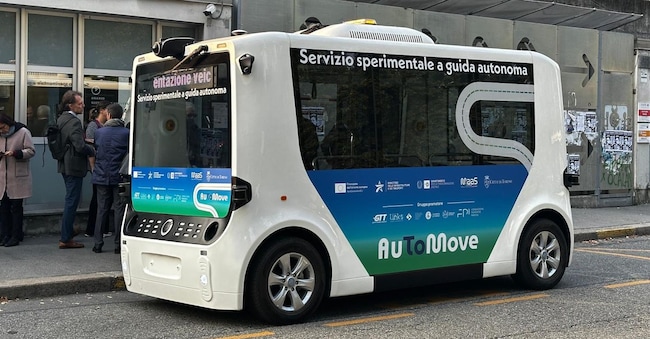
"The aim is to be the first city in Europe where a driverless car used for public service, i.e. a taxi or shuttle, is tried out on a public road, as is already the case with the experimentation in the area of the university campus," explains the President of the Piedmont Region, Alberto Cirio.
In the next few weeks, Europe will launch a call and Turin wants to intercept this strategic interest of the Commission, strengthened by the expertise in the field offered by the Politecnico and companies in the automotive industry. The model is represented by cities such as San Francisco or Denver, which have a public mobility service with driverless cars.


