
The ‘super fighter’ project gets underway in Turin. Two thousand jobs to be created
Edgewing, the consortium comprising Leonardo, the British firm BAE and the Japanese firm JAEIC, is launching its first development site. The aircraft will be manufactured at Caselle
by Lello Naso, correspondent in Turin
 Aggiungi Il Sole 24 Ore
ai preferiti su Google
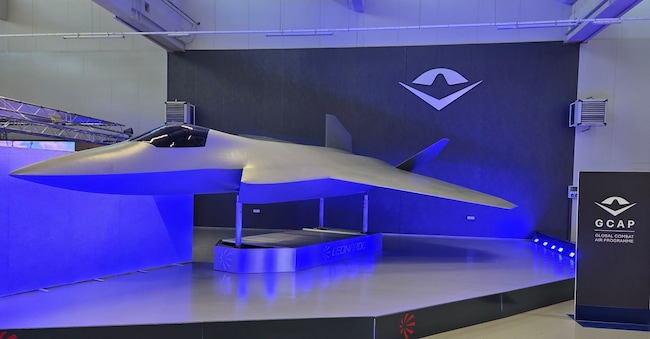
At Leonardo’s Corso Francia site in Turin, once the production hub of the Italian defence multinational and now the company’s research and development centre, Edgewing’s first engineers are already at work designing the next-generation GCAP fighter, the aircraft that will emerge from the 50-50 joint venture between Leonardo, the British firm BAE Systems and the Japanese company Japan Aircraft (JAEIC).
Following the establishment of Edgewing’s headquarters in England, the Turin site is the first operational component of the joint venture chaired by the British national Herman Claeen and led by the Italian managing director, Marco Zoff, formerly head of Leonardo’s aircraft division. The UK site at Warton and the Japanese site at Nagoya will follow shortly; together with Turin, these will contribute to the completion of the project and, subsequently, to its industrialisation. At all three sites – as is already the case in Turin – joint teams comprising staff from all participating countries will operate. The aim is to develop the aircraft as quickly as possible, by 2035. “We are ahead of schedule,” says Zoff, “thanks to a spirit of collaboration and an excellent climate of trust and information-sharing that has been established right from the outset of the project with our British and Japanese partners.”
In addition to the engineers and technicians already working in Turin, as the project progresses, more will gradually join them, until, when fully operational, a workforce of around one thousand, who will work in synergy with a further one thousand Leonardo staff directly involved in the aircraft programme, which is set to engage the entire defence and aerospace supply chain in Piedmont and Italy. This will take place during the initial development phase and subsequently during the production phase at Leonardo’s Caselle plant, which already houses the production lines for the Eurofighter – the fighter jet produced by the European consortium comprising Leonardo, BAE and Airbus.
“Gcap”, explains Zoff, “is not just an aircraft. It is a sixth-generation system of systems that will integrate all the technological expertise available across the various domains. As well as flying, with or without a pilot, it will serve as a high-tech hub for communication with land, sea and space operations, as well as a cyber platform. This is why choosing Turin as the design and production site was the most natural choice. All the necessary expertise and companies across the various supply chains are available here, as are the universities and research centres that are already involved in the project.”
The Piedmont defence and aerospace sector, in fact, with 5,200 employees at Leonardo and 1,100 at the joint venture with Thales Alenia Space, employs 14,500 people in total, including direct staff and those in related industries, and involves around 420 suppliers, 87 per cent of which are small and medium-sized enterprises. In 2025, the sector’s regional turnover stood at around 740 million. Leonardo’s investment in research and development alone accounts for 8.7 per cent of total research expenditure by companies in the region. These figures are set to rise thanks to the GCAP project.


