
Turkey attracts the Chinese car (more than Italy). Chery arrives after Byd
In July the agreement between Ankara and the Shenzhen giant. Attraction of the Customs Union with the EU and a favourable ecosystem with low labour costs

4' min read
Key points
4' min read
Turkey is reportedly close to securing an investment from Chinese carmaker Chery, having reached an agreement in July for an assembly plant and research and development centre with BYD, the world's leading producer of electric cars (battery and plug-in hybrid). This is a confirmation of the excellent relations between Ankara and Beijing, which are leading to closer ties with car manufacturers in the Middle Kingdom, looking for a suitable ecosystem to set up production facilities in a country that has a free trade agreement with the EU.
The latter is not a minor detail, because it makes it possible to circumvent the obstacle of European duties, additional tariffs decided in June and revised in August by the Commission but whose entity is still being defined (the first EU vote is expected on Friday). In the case of BYD and Chery, the planned tariffs are 17% and 21.3% plus the existing 10%. The Turkish official, who spoke to Reuters on condition of anonymity late Monday evening, did not specify which investment Chery and Ankara are discussing, nor whether there is a timeline for reaching a final agreement.
EU-Turkey Tariffs and Free Trade Agreements
Free trade agreements between the European Union and Turkey are mainly regulated by the EU-Turkey Customs Union, which has been in force since January 1996. This agreement allows the free movement of industrial goods between the two entities without customs duties, but also sets specific requirements regarding the origin of products. Looking at the United States, the case of the Volkswagens and BMWs that have been stuck at ports for several weeks since February waiting for Chinese-made parts to be replaced is well known.
The meeting between Erdogan and the president of Chery International
The Turkish presidency said Saturday that President Tayyip Erdogan met with Chery International chairman Guibing Zhang on the sidelines of an investment event in Istanbul. Industry and Technology Minister Mehmet Fatih Kacir also participated in the talks.
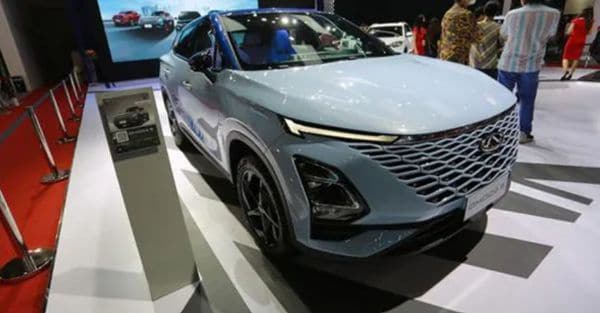
Chery intends to burn the candle at the seams and establish itself in the Old Continent in just three years, said the head of the company's two brands, Omoda and Jaecoo, for the Italian market, Kevin Cheng, recently. This year Chery started a joint venture in Spain and is launching its Omoda brand in Italy, he did not comment. China's leading car exporter (for 21 years running, just under a million in 2023) was among the favourites to strike a deal with the Italian government. But at the moment it is Dongfeng Motor that is the Dragon car manufacturer in the most advanced stage of discussions to open a plant in Italy. Although the political indications from Beijing, according to rumours, are to stall, waiting to understand the outcome of the negotiations with the EU on duties. Ankara announced on 8 July an agreement worth one billion dollars with BYD. The aim is to build an assembly plant in Turkey with an annual capacity of 150 thousand vehicles and an R&R centre. Five thousand employees are expected. Production should start by 2026.


