Social networks

Twitter, Musk's trial: 'This is how he tried to influence the sale'

Former shareholders' class action lawsuit over fake user tweets the tycoon published before acquiring the company in its final stages
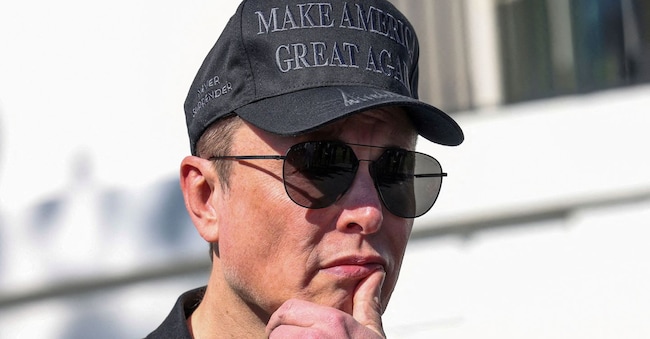
Alle battute finali la class action verso Musk degli ex azionisti di Twitter

3' min read

Translated by AI
Versione italiana

3' min read

Translated by AI
Versione italiana

Closing arguments in the trial involving Elon Musk pitted against Twitter shareholders, who claim that the wealthiest man in the world engaged in deceptive conduct that misled investors in an attempt to withdraw from the $44 billion deal for the buyout of the social platform in 2022.

The case is now in the hands of eight jurors who will decide whether Musk is responsible for defrauding investors with tweets and statements made in the months leading up to the purchase of Twitter.

Loading...

The civil suit in San Francisco concerns a class action filed shortly before Musk took control of Twitter, turning it into the current X, in October 2022, six months after he agreed to buy the troubled company for $44 billion, or $54.20 per share. The price represents a fraction of the Tesla ceo's fortune, now estimated at $837 billion.

Much of the trial focused on Musk's claims about the number of bots on Twitter. The Tesla patron testified, as he had long claimed, that Twitter had a much higher number of fake and spam accounts than the 5% stated in documents filed with regulators. He cited what he called a misrepresentation by Twitter about the number of fake accounts on its service as a reason to withdraw from the purchase.

After Musk tried to back out, Twitter resorted to the Delaware courts to force him to honour the original agreement. Shortly before the case went to court, Musk changed his mind again and agreed to pay what he had originally promised.

Mark Molumphy, the plaintiffs' lawyer,asked the jurors to hold Musk accountable and to compensate the thousands of investors who lost money as a result of the tweets sent by Musk, including one dated 13 May 2022 in which he stated that the deal was 'pending'.

"He knew what he was doing," Molumphy said. The plaintiffs allege that because Tesla's share price was falling and the Twitter purchase had become too expensive for Musk, he tweeted statements that caused the share price to plummet in the hope that he could renegotiate the deal at a lower price or get rid of it altogether. Musk's statements, the class action lawyer argued, were not an 'innocent mistake' or an impromptu 'stupid tweet', but were carefully calculated to drive Twitter's share price down.

Michael Lifrak, Musk's lawyer, however, countered that the plaintiffs had not presented "even a shred of evidence". He reminded the jury that, according to their instructions, not even motive and intent to commit fraud are sufficient to prove that fraud actually occurred.

Lifrak also stated that there is "no evidence" that the drop in Tesla's share price during the time the Twitter purchase was underway was the problem. Everyone "wants to pay less and not more," he said, adding that "you simply cannot say" that he wanted a lower price and therefore committed fraud.

The problem of bots and fake accounts on Twitter was nothing new at the time Musk negotiated the deal. In 2021, the company had paid $809.5 million to settle allegations that it had overestimated its growth rate and number of monthly users. Twitter had also reported its bot estimates to the Securities and Exchange Commission for years, while warning that those estimates might be too low.

But Musk claimed that the number was much higher, at least 20 per cent according to some analysts. To say that the number of bots was that high was like "saying the grass is green or the sky is blue," Musk said.

The former financial director of Twitter, Ned Segal, disputed this claim and stated on the witness stand that the number was actually closer to 1 per cent.

Asked whether Twitter had ever submitted false documents to the SEC reporting incorrect data on the number of spams, Segal said that it had not. However, he mentioned that the company once corrected its financial data after realising an error in the calculation of daily users. In 2017, Twitter claimed that it had mistakenly overestimated the number of monthly users because it included users from a third-party app that it should not have included.

Copyright reserved ©
Loading...

Brand connect

Loading...

Newsletter

Notizie e approfondimenti sugli avvenimenti politici, economici e finanziari.

Iscriviti