If studying becomes a job

Two out of three students approve Calabria's 'Reddito di Merito' and the 1,000 euro a month 'pay envelope'

The Region is launching a measure to reward the best performing university students and curb the brain drain. The amount varies according to grade average. An idea that young people like, even if not everyone agrees

by School Editorial

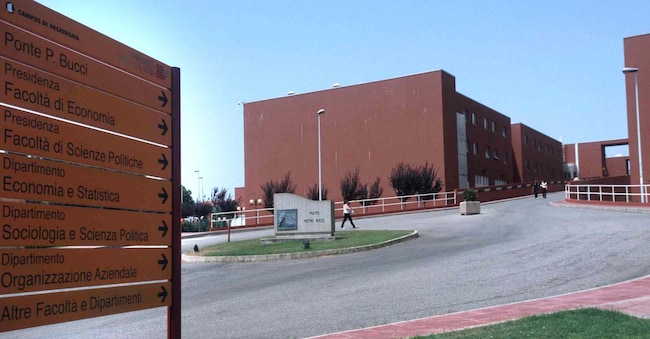
Università degli studi della Calabria Imagoeconomica

4' min read

Translated by AI
Versione italiana

4' min read

Translated by AI
Versione italiana

"Commit to school that studying is your job". How many young people have heard this phrase repeated by their parents? Now that statement is finally becoming a reality in Calabria through the payment of a cheque worth up to 1,000 euro a month. This is the so-called 'Reddito di Merito' (Income of Merit), a measure just launched by the Region, which has decided to put on the table an economic benefit that has few precedents in our country and serves mainly to curb the haemorrhaging of young brains towards the north of Italia, offering a concrete incentive to make them stay (and study) in the region.

The Launch

Officially launching the initiative was a memorandum of understanding signed between the President of the Region, Roberto Occhiuto, and the chancellors of the Calabrian universities, which promises to provide a real 'salary' to talents 'made in Calabria' who decide to train in local universities.

Loading...

Many students go to study outside the region

The reason for this choice? It's easy to say: according to data from the Ministry of Universities and Research, processed by Skuola.net, a contingent of 21,412 young people, or 37% of university students resident in the region, actually attend outside its borders. Placing it among the geographical areas most affected by this trend, although it is not the one that 'exports' the most students in absolute or percentage terms: these records belong to Puglia and Basilicata, respectively.

Initiative well received

But, perhaps, this is often not a spontaneous exodus. Neither for Calabrian students nor for those from the rest of Italia. It is enough to see what the response of those directly concerned was to the news of the measure's launch: the overwhelming majority promote the initiative with flying colours and would also like it in their own region. The Skuola.net portal went to delve into the details of how it works. And, at the same time, to observe the debate that immediately developed among the students.

What is the Income of Merit and who is entitled to it

The 'Reddito di Merito', as mentioned, is a monthly economic contribution intended for university students resident in Calabria who enrol in one of the region's three major universities (Unical in Rende, Magna Graecia in Catanzaro and Mediterranea in Reggio Calabria). But only to the best.
The allocation envisaged is, for the time being, 15 million euros per year: funds designed to transform merit into a real incentive for students' financial autonomy.
This is because, unlike traditional scholarships (which are linked to the ISEE indicator and family income), this measure aims, instead, to reward academic excellence alone. Translated: only those with the highest grades get the money.
But this is not the only disruptive feature of the measure. There is also its cumulability with other measures for the right to study: those who can benefit from the 'Income of Merit' do not lose access to the classic scholarship (if they meet the requirements, of course). The two benefits can therefore be added together, guaranteeing in some cases a very high level of economic support.

How much do you get? The three brackets of amounts and the parameters for falling into them

Not everyone, however, will receive the same amount. The monthly allowance varies according to the weighted average of exam grades. With the fundamental specification of being in order with the credits indicated in one's study plan. Three brackets are envisaged:
- Merit bracket 27: for students with a weighted average equal to or higher than 27 and up to 28 (excluded), the contribution is 500 euros per month;
- Merit bracket 28: for those with an average equal to or higher than 28 and up to 29 (excluded), the sum rises to 750 euros per month;
- Merit bracket 29: for those with an average from 29 upwards, the maximum sum of 1,000 euros per month is reached, destined for true excellence.

Freshmen will also be able to access the measure

The measure also includes new graduates - freshmen who have just enrolled at university - who have not yet taken university exams. These will be measured at entry level: students who have graduated with a minimum grade of 95/100 and who obtain a score in the admission tests (TOLC) that places them among the best in the ranking (in the top 10% of the list) will be eligible.

Bachelor's Degree Course

At the same time, for those embarking on a second-level (Master's) degree course, the entry requirement is set on the basis of a first-level (Bachelor's) degree mark of no less than 108/110.

Not only high grades, regularity in studies also counts

In addition to the average, it will then be essential to take all the examinations set out in the curriculum each year, i.e. the equivalent of 60 CFUs (university credits).
For the first semester, it will be sufficient to take at least 40 per cent of them, while the remainder must be completed by the start of the following academic year: there will be two windows for checking that the requirements have been met, in early April and October.

The social verdict: between enthusiasm and perplexity

But, faced with a novelty of such magnitude, how did young people react? As mentioned, Skuola.net took the pulse of the situation by launching a survey on its social channels.
In a sample of about 1.800 students, the plebiscite was clear: almost 2 out of 3 participants - 63% - were in favour of the measure, welcoming the idea of economically remunerating the commitment to books, perhaps hoping (in the case of those not from Calabria) that the measure could soon be adopted by their own region. While 1 in 10 prefer to suspend judgement.

The debate

At the bottom of the survey, however, a lively debate was sparked, one that nicely portrays the different souls of Generation Z. Among the comments in favour, many emphasised the sense of justice of the measure: "At last we are rewarding those who study and work hard," noted one user, echoed by those who see the initiative as a hope for the region: "It is an excellent incentive not to let us all flee to the North and to enhance our universities. There are those who fear negative psychological drifts: 'This way we only risk increasing performance anxiety and toxic competition between colleagues'. Others, on the other hand, emphasise systemic inequalities: 'What about those who have to work to support themselves and physiologically cannot get an average of 28? He is penalised twice over'.
Notwithstanding the physiological divisions, however, the data and comments confirm that the 'Income of Merit' has already had the power to get people talking. It now remains to be seen whether this injection of funds and confidence will be enough to reverse the demographic course of Southern Italia students.

Scuola, tutti gli approfondimenti

La newsletter di Scuola+

Professionisti, dirigenti, docenti e non docenti, amministratori pubblici, operatori ma anche studenti e le loro famiglie possono informarsi attraverso Scuola+, la newsletter settimanale de Il Sole 24 Ore che mette al centro del sistema d'istruzione i suoi reali fruitori. La ricevi, ogni lunedì nel tuo inbox. Ecco come abbonarsi

Le guide e i data base

Come scegliere l’Università e i master? Ecco le guide a disposizione degli abbonati a Scuola+ o a 24+. Qui la guida all’università con le lauree del futuro e il database con tutti i corsi di laura

Lo speciale ITS

Il viaggio del Sole 24 Ore negli Its per scoprire come intrecciare al meglio la formazione con le opportunità di lavoro nei distretti produttivi delle eccellenze del made in Italy. Tutti i servizi

Copyright reserved ©
Loading...

Brand connect

Loading...

Newsletter Scuola+

La newsletter premium dedicata al mondo della scuola con approfondimenti normativi, analisi e guide operative

Abbonati