
Troy and Rome: myths, legends and stories of the ancient Mediterranean at the Colosseum
The exhibition is open to the public at the Colosseum Archaeological Park, the Flavian Amphitheatre, until 18 October

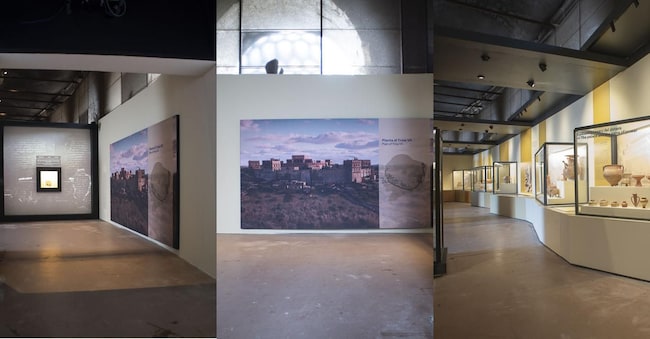
Troy and Rome. Myths, legends and stories of the ancient Mediterranean: this exhibition, housed within the Flavian Amphitheatre, is a fascinating account of how two geographically distant worlds were linked in the past by trade and cultural exchanges, and of how Italia and Turkey still share a common history today. Epic poetry provides us with a significant part of this legendary narrative: Aeneas, having left the burning city of the Trojan princes, sets out in search of a new home, eventually landing on the Tyrrhenian coast of Latium. His descendants would go on to found the Eternal City. Through artistic and archaeological artefacts, compared with historical and literary sources, the exhibition brings to life an imagery – somewhere between truth and fascination – that speaks of shared roots: two different plants but both grown from the same stock, the same genetic makeup.
For the occasion, 221 works have been on loan from 19 Turkish museums; these are joined by numerous artefacts from Italian museums, bringing the total to 300.
The tour is divided into four sections. It begins with Troy or Ilium (originally called Wilusa) and a topographical reconstruction of the archaeological site. Several phases of urban development have been identified, ranging from the Bronze Age – with the city’s first settlement, Troy I (3000–2500 BC) – up to the 13th–14th centuries AD with Troy X. Historians identify the period of the so-called Ilios VII (1300–720 BC) as the time of the war against the Achaeans or the city’s destruction by natural causes.
Furthermore, the city and its flourishing are placed within a broader context: a study of the civilisations that inhabited Anatolia during the Hittite Empire, between the third and second millennia BC. An important document in this context is the cuneiform tablet from the Museum of Troy (Çamakkale), which records the treaty between the Hittite king and the king of Wilusa, Alaksandu: this is an agreement on protection and military intervention, which demonstrates that the city was a vassal state under the Hittite Empire.
Between history and mythology
The second section is devoted to the overlap between history and mythology. Among the exhibits, a refined marble high relief depicting the protagonists of the *Iliad* stands out. Hector is shown bidding farewell to Priam and Hecuba before his fatal duel with Achilles.

