
Udine, anti-waste and food solutions studied at the university
From the United project new legume flours - Water Pearl selects water-stress resistant, protein-rich crops

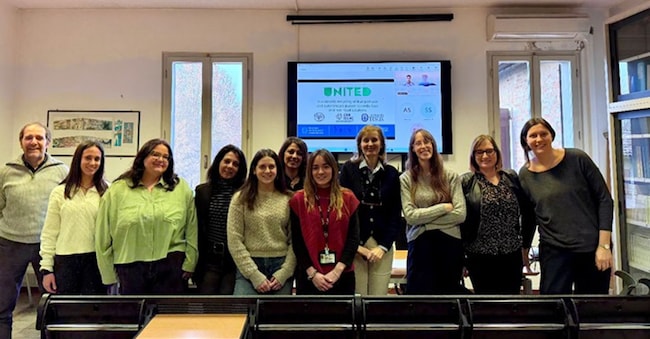
New life to 'out-of-gauge' fruit and vegetable by-products and legumes, raw materials considered waste, by transforming them into sustainable solutions for the food and non-food sector. This is the aim of the 'United' project conducted by the University of Udine together with the National Research Council and the University of Tuscia. A two-year research project supported by the Ministry of University and Research with approximately 270,000 euro.
First results
The project has already led to the development of new legume flours with a neutral taste, also suitable for the preparation of confectionery products without altering their sensory characteristics. The vegetable residues were then valorised with bioconversion processes to produce bacterial cellulose. This is an innovative material for possible applications in the cosmetics sector, such as sunscreens, and in food packaging. For the latter, 'absorbent pads' have been developed that extend the life of fresh produce and can eventually be disposed of in the organic fraction. Unlike commercially available pads destined for undifferentiated disposal.
In general, the project aims to exploit residues from fruit and vegetable processing with the aim of developing new food ingredients and innovative materials. In parallel, it works on the development of industrially applicable production processes, also taking into account consumer opinions. The study is part of the circular economy and aims to help reduce waste, promote more efficient use of agri-food resources and generate new opportunities for economic valorisation. It also pays particular attention to assessing the environmental and economic sustainability of the proposed solutions.
The project is coordinated by a research group of the Department of Agri-food, Environmental and Animal Sciences of the University of Friuli, headed by Lara Manzocco.
The Water pearl project
The national research project 'Water pearl', coordinated by the University of Udine and financed with 458,000 euro for four years by the 'Ager - Agrifood and Research' project, of which the Friuli Foundation is also a member, aims to select new broad bean and yellow pea crops that are resistant to water stress, rich in protein and with a high yield in flour processing. 'Water pearl' is among the three national projects selected by Ager with the call for innovations to strengthen the leguminous agricultural supply chains for an increasingly sustainable food supply.

