
In Udine first Italian model for access for young people with cognitive disabilities
A new standard for the right to study. University, FVG Region and Radio Magica together to succeed in creating a national protocol that can be replicated in all universities

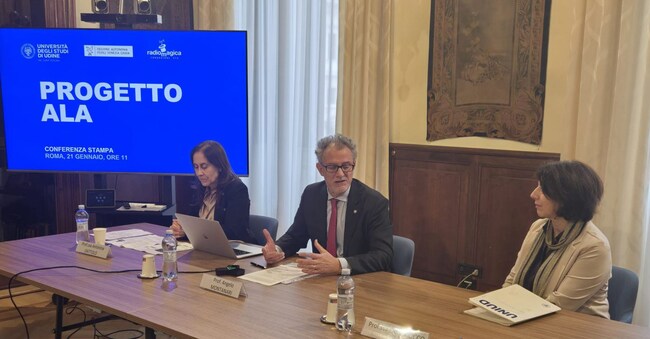
To define a new standard for the right to study, opening higher education to those who until now were excluded from the Italian university system: people with cognitive disabilities. This is the objective of the Accademia delle Libere Abilità (ALA), the pilot project of the University of Udine presented today in Rome. Unique in the national panorama, the project transforms higher education into an accessible right and offers a training pathway of excellence aimed at job placement.
The figures
There are 359,000 students with disabilities in Italy (4.5% of the school population), an increase of 26% in the last five years. While the number of students with disabilities in schools is growing, the educational path for many of them is abruptly interrupted after graduation. ALA reverses this trend, offering 30 young people an academic pathway structured in 7 disciplines, with a scientific method based on reasonable accommodation of content.
A model for Italy
The University of Udine's goal is to make ALA a replicable and scalable model. Thanks to the researchers' monitoring and the involvement of Professional Education students, the University of Udine is creating a "user manual" of best practices (from the use of Alternative Augmentative Communication to easy-to-read texts) to be made available to the national university system.
The alliance between Institutions and the Third Sector The project, supported by the Friuli Venezia Giulia Region (with an extraordinary fund of 250,000 euros) and the Radio Magica Foundation, demonstrates how the synergy between academic research and social policies can generate real innovation and labour inclusion in the cultural and tourism sectors. The aim is to turn today's exception into tomorrow's norm. The project challenges the prejudice that sees cognitive disability linked only to repetitive manual jobs. By training cultural operators, ALA shows that these young people can actively contribute, for example, to the tourism and museum sector (as already happens in the Unesco sites of Aquileia), transforming social support into economic and civil value'.
The Rector
'With the launch of the Academy of Free Abilities, the University of Udine is reaffirming the social function of research and higher education,' emphasises Rector Angelo Montanari. 'We have not limited ourselves to opening our classrooms, but have made our scientific knowledge available to build a rigorous method that makes culture truly accessible. The inclusion of students with cognitive disabilities is no longer a utopian goal, but a codified academic reality. We are proud to be pioneers of a cultural change that enhances talent in all its forms, transforming the University into an ecosystem capable of generating social innovation and new professional opportunities for all'.
The Minister
"I would like to thank the Friuli-Venezia Giulia Region, which supports the ALA project, the Academy of Free Abilities, the University of Udine, and the Radio Magica ETS Foundation, which are putting to good use extraordinary paths in favour of people with disabilities," explained the Minister for Disabilities, Alessandra Locatelli, in her video message. Our country is living a moment of great change with the disability reform, which puts the person at the centre with his abilities, talents, skills, and needs, and paths such as the ALA project show that the challenge we have before us is exactly this. We must work together and offer opportunities to give every person the chance to participate fully in the life of our communities'.
Brand connect


Newsletter Scuola+
La newsletter premium dedicata al mondo della scuola con approfondimenti normativi, analisi e guide operative
Abbonati