
Serata (Uif): ‘Fake invoices, tenders and the Superbonus: using the data to focus on prevention’
Increasingly close cooperation with the Guardia di Finanza, the Revenue Agency and Customs

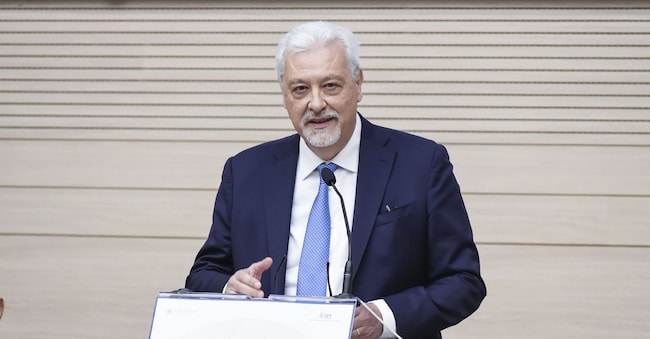
The fight against money laundering and tax evasion is increasingly taking a proactive approach. The traceability of transactions and the monitoring of the use of dirty money are the guiding principles of an increasingly close collaboration between the UIF (Financial Intelligence Unit), the Guardia di Finanza and the tax authorities. This forms a link between anti-money laundering efforts and the tax authorities (Revenue and Customs) and the Guardia di Finanza. An example? “Reports of suspicious transactions received in 2025 from professionals made it possible to identify a complex network of companies that offered entrepreneurs – presenting it as a safe and risk-free activity – participation in regional and national tenders, where the eligible expenditure would have been simulated through the circulation of funds originating from the issuance of false invoices. The evidence gathered thanks to the Agency’s collaboration made it possible to reconstruct the network of individuals involved and the extent of the phenomenon.” This account comes from Enzo Serata, Director of the Financial Intelligence Unit.
Fraud and tax evasion are on the rise: what measures should be put in place?
The main bodies involved in the fight against tax evasion are, of course, the Italian Revenue Agency and the Guardia di Finanza. The traceability of transactions plays a very important role in this context, and all the measures put in place to prevent money laundering and the financing of terrorism also serve to detect signs of predicate offences such as tax offences. The databases to which the Financial Intelligence Unit (UIF) has statutory access in order to supplement the information contained in reports and carry out financial analysis also include the Register of Financial Relationships and the Tax Register, both managed by the Revenue Agency.
Any new developments?
Cases have been identified in which financial training courses and advisory services were being offered to the Italian public by entities lacking the necessary authorisations via online platforms. In some cases, the services offered were linked to companies formally based in low-tax jurisdictions but which were, in substance, managed, directed and administered in Italia. These companies were found to be particularly opaque, not only regarding the content of their training programmes and advisory services, but also in terms of the tax compliance obligations associated with the location of their operations.
Is there still a lingering effect from the tax credit sell-off season, particularly from the Superbonus?
The regulations introduced during the pandemic concerning the transfer of tax credits arising from tax incentives have placed greater emphasis on anti-money laundering measures, partly with a view to combating fraud. The UIF’s annual report for 2025, for example, details cases of money laundering linked to the creation, use and circulation of fictitious tax credit claims. In particular, the artificial generation of such credits was identified; these were subsequently subject to multiple transfers involving newly incorporated companies operating in diverse sectors, frequently linked to frontmen or individuals under investigation by the judicial authorities. The experience of the Covid-19 pandemic and the Superbonus scheme has strengthened preventive measures and seen the UIF involved in the main working groups combating fraud involving public funds, including the COLAF at the Prime Minister’s Office and the network of anti-fraud representatives for the NRRP at the State General Accounting Office, with results that I consider positive.
Could the register of beneficial owners help to uncover illegal activities?
Italia has fallen somewhat behind, partly due to the legal disputes arising over certain aspects relating to access. Italia is now also bringing its legislation into line with the sixth Anti-Money Laundering Directive. The register is an important tool that can provide significant support for the prevention activities of obliged entities and public administrations, although managing it will not be straightforward, given the volume and complexity of the information to be collected and verified. From an operational perspective, it remains essential to ensure that, when fulfilling their customer due diligence obligations, regulated entities do not limit themselves to merely consulting the register; the adoption of a critical and proactive approach should be encouraged, as this is key to ensuring the quality and up-to-date nature of the database’s contents. Further benefits in terms of understanding beneficial ownership may arise from the interconnection of registers at European level in the near future, as provided for by the Sixth Anti-Money Laundering Directive.


