
UIV: temporary stop to the planting of new vineyards
According to the UIV, the measure is necessary in the light of a market trend that sees consumption, both in Italy and abroad, proceeding slowly

2' min read
2' min read
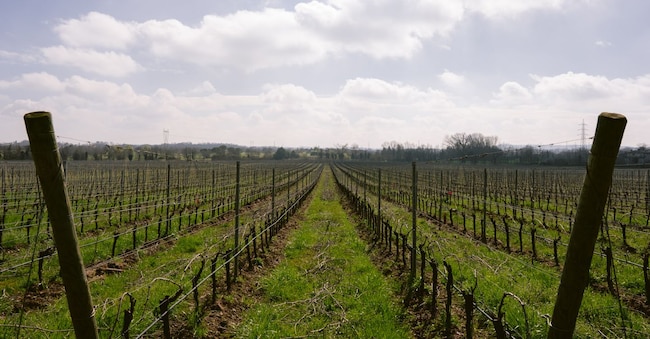
Stop for one year the granting of new planting authorisations that allow the enlargement of 1% of Italy's vineyard (about 6,500 hectares per year). This is the proposal voted on today by the Italian Wine Union (UIV) during the National Council of the main sector organisation, held in Puglia as a guest of the Rocca-Leverano Winery (Lecce).
This would be a transitional measure, the one proposed to stop for at least one year the granting of new planting authorisations (the licences that must be held together with the ownership of the vineyard in order to produce wine, ed.) as envisaged by the latest reform of the Wine CMO. According to UIV, the measure is necessary above all in light of a market trend that sees consumption, both in Italy and abroad, proceeding at a slow pace and - above all - stocks of unsold wine in producer countries still at very high levels.
UIV," commented President Lamberto Frescobaldi, "considers this transitional measure aimed at limiting wine-growing potential to be useful, on condition that a reform of wine-growing potential is started at the same time, as well as on the yield quantities (i.e. the quantity of grapes that can be produced from one hectare of vineyard depending on the characteristics of the final wine, ed. The market context imposes on us a sense of responsibility and revision policies: Italy today is the only major wine-producing country in the world that registers a growth in vineyards in the face of a drop in global demand of almost 10% in the last five years'.
"A one-year halt to planting authorisations," added the secretary general of the Italian Wine Union, Paolo Castelletti, "would also guarantee the technical time to initiate a momentum of discussion and review of the system with all the players involved, starting with the introduction of new priority criteria that should enhance the hills and mountains, and areas that produce wines that perform well on the market. At the same time, it would be an opportunity to clarify the data: today we know how much is allocated but not how much is actually planted, particularly on replanting. But we cannot passively wait for a top-down reform of our sector,' he concluded. The territories, starting with the wineries and the protection consortia, must act rationally on these issues and on a regional reorganisation of the designations. It is time to bring wine back to planet earth if we want to win the challenge of competitiveness and guarantee the right compensation for wine growers'.
According to the estimates of the UIV Observatory, at the end of the wine year (next 31 July)the stock level will be around 42-44 million hectolitres of wine and must, the equivalent of about an entire grape harvest. It is necessary to take corrective action, the tools are there.


