
UK banks in government crosshairs over new taxes, London down Natwest
There is widespread concern in the City that the executive will consider increasing taxes on profits to plug a budget 'hole' estimated by economists to be at least £20 billion

3' min read
Le ultime da Radiocor
***Bce: Lagarde mette in guardia dai rischi mercati per il debito imprese IA
Bce: Lagarde, salari non hanno reagito a shock energia, prospettive economia incerte (RCO)
Wall Street: apre in calo con balzo greggio, Dj -0,79%, S&P -0,56%, Nasdaq -0,6% (RCO)
3' min read
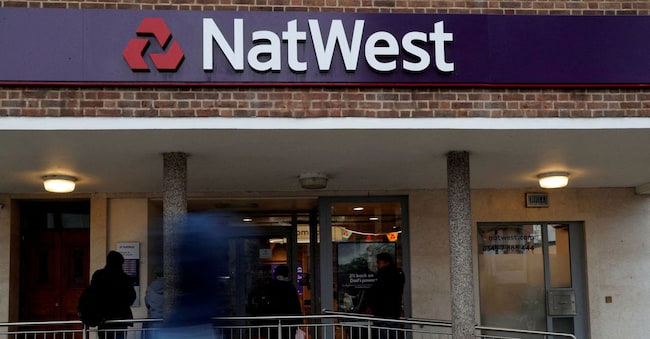
(Il Sole 24 Ore Radiocor) - Banks in bad shape at the London Stock Exchange (FT-SE 100 ) on growing fears that the British government will tighten taxation on institutions to put the ailing public accounts back on track. Thus, Natwest, Lloyds Banking Group and Barclays lost ground.
According to the 'Financial Times' there is widespread concern in the City that a tax increase on bank profits or a new tax would be considered by the government to help plug a budget 'hole' estimated by economists to be at least £20 billion as the Autumn Budget is being finalised. However, the banking sector has warned that such measures would end up damaging the government's growth agenda. The fact remains that, as one 'senior banker' quoted by the FT commented, 'banks are politically an easy target. Nobody likes them'. Another City source recalls that Deputy Prime Minister Angela Rayner suggested to Chancellor of the Exchequer Angela Reeves last May that corporation tax on banks should be raised from 28% to 30%. An increase of the existing taxation on banks according to one observer could bring about 3 billion from the government coffers. Seen from the Labour Party's point of view, it would also, as one observer notes, show that the government wants to make sure that 'fiscal pain' is shared.
Adding fuel to the fire has come a report by the think-tank Ippr (Institute for Public Policy Research) that the British Treasury should impose a new levy to tax banks on the billions of pounds they receive asinterest from the Bank of England on the reserves they hold with the BoE. This is a legacy of the Quantitative Easing programme, launched in 2008-2009 during the financial crisis, which led the central bank to buy hundreds of billions of government bonds from the banks, remunerated at the official interest rate, which now - at 4% - is much higher than in the past. According to the Iprr, this is a subsidy to the banks at taxpayers' expense, with a final cost estimated at £22 billion per year. The think-tank estimates that raising taxes on the profits of the big banks could pump £8 billion a year into the public purse and would give the Treasury more leeway to meet budget criteria. 'What started as a programme to support the economy is now a huge burden on public finances,' said Carsten Jung, associate director for economic policy at Ippr.
The British government is currently not confirming anything. On the contrary, a spokesman for the Treasury said that the best way to strengthen public finances is to accelerate economic growth and that 'tax and spending changes are not the only levers' to resort to. A spokesman for UK Finance, the trade association for the financial sector, pointed out that banks paid almost GBP 45 billion in taxes last year, including a surcharge on corporation tax and a specific tax on the banking sector. "Adding a new tax would make the UK less competitive internationally and would run counter to the government's aim of supporting the financial sector to stimulate growth and investment across the economy," the spokesman said. The fact remains that calls for an overhaul of the current system of interest payments to banks are nothing new. Paul Tucker, former deputy governor of the Bank of England, had already suggested in 2022 that the government review it. Any decision by the Chancellor of the Exchequer will however depend on the size of the fiscal 'hole' that will emerge from the Office for Budget Responsibility forecasts, which have yet to be prepared. And at the UK Treasury it is hoped that the deficit will be less than the fateful £20 billion.

