
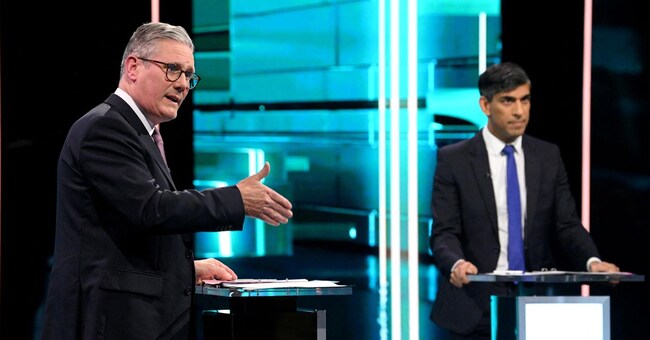
UK elections, tough TV clash between Sunak (underdog) and Labour's Starmer
A televised debate cannot turn the fortunes of the Conservative party back 20-25 points in all the polls, but less than a month before the 4 July elections it can help narrow the gap between the two main parties

3' min read
3' min read
LONDON - Rishi Sunak has pulled out his claws: in the first live television debate last night, the British Prime Minister, who is trailing badly in the polls, went on the attack, accusing the leader of the opposition, Labour's Keir Starmer, of wanting to raise taxes 'by two thousand pounds a year for every household'.
Starmer rejected Sunak's 'fanciful' accusations and repeatedly mentioned that after 14 years of a conservative government, citizens are poorer, the economy is weaker and taxes are higher, but he was less aggressive than the premier. In a hot poll done by YouGov immediately after the debate, Sunak was considered a 'winner' by 51% of respondents, while 49% preferred Starmer's more subdued performance.
A televised debate - a novelty 'imported' from the United States only a few years ago - cannot turn the fortunes of the Conservative party 20-25 points behind in all the polls, but less than a month before the 4 July elections it can help narrow the gap between the two main parties.
Sunak and his staff have decided that the Tories' strength is their promise to cut taxes (even though the burden of the IRS is now the highest in decades) and Labour's Achilles' heel is their promise to invest more in public services, especially schools and hospitals. 'Labour will raise taxes, it's in their DNA. Your job, your car, your pension - Labour will tax everything,' said the PM, repeating numerous times the figure of a two thousand pound increase for every household if Labour wins the election.
A 'fictional figure' according to Labour, which is also disputed by independent experts this morning, because it is based on an alleged 'black hole' of £38.5 billion in public spending increases promised by Labour, divided by the number of households in Britain, which according to the Tories would be covered by tax increases (which Labour denies).

