
Corruption scandal: Yermak, Zelensky's right-hand man, resigns
The president loses his most powerful man amid US pressure for a deal with Moscow, while the investigation into the maxi energy scandal tests Kyiv's anti-corruption credibility

Key points
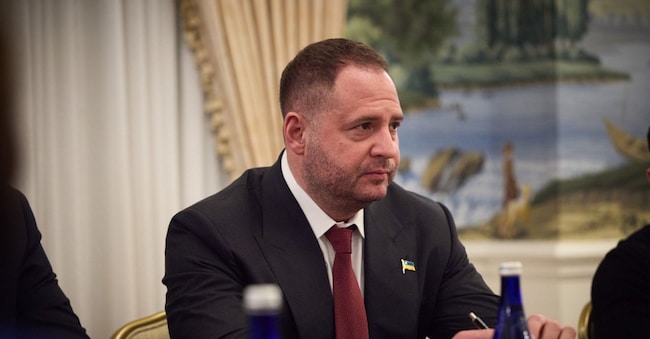
The resignation of Andrii Yermak, until yesterday the most influential right-hand man of Volodymyr Zelensky, comes at the most delicate moment of the war and peace talks. The Ukrainian president's chief of staff, principal architect of the negotiations with Washington, left office after anti-corruption investigators searched his flat inside the presidential complex in Kyiv, as part of a wide-ranging investigation into the energy sector. Yermak confirmed the checks, said he was fully cooperating and, at the moment, is not formally under investigation.
Behind the raid is the joint investigation by the National Anti-Corruption Bureau (NABU) and the Anti-Corruption Prosecutor's Office (SAPO) known as "Operation Midas", which aims to dismantle an alleged kickback scheme in the state nuclear giant Energoatom. According to investigators, a group of officials controlled the company's contracts by demanding bribes of between 10 and 15% of the value of the contracts, intimidating or cutting off suppliers who refused to pay. The operation, prepared over more than a year of investigative work, resulted in dozens of searches, the seizure of millions of dollars and about one thousand hours of wiretaps. It is the largest corruption investigation since the beginning of the Russian invasion and has already deeply shaken public opinion as the country faces blackouts and missile attacks on its energy infrastructure.
At the centre of the scandal is the name of businessman Tymur Mindich, Zelensky's long-time partner in the production company Kvartal 95 and an influential figure in the intertwining of media, politics and business in Ukraine. Investigators consider him to be the alleged director of the bribe system, a role he allegedly exercised by placing trusted men at the top of the energy sector and in companies linked to public procurement. Mindich left Ukraine a few hours before the first raids and is now reported to be abroad. At least eight people have been indicted, while two ministers have resigned in recent weeks. The personal connection between Mindich and Zelensky makes the dossier politically explosive, although the president is not currently implicated in the charges.
Faced with this storm, Zelensky chose to sacrifice his most powerful collaborator and announce a 'reset' of the presidential office. In an evening video message, he warned that Russia is only waiting for 'mistakes' and internal divisions to weaken the Ukrainian front, insisting on the need to preserve national unity while US pressure grows on Kyiv to reach a peace agreement. The president explained that he did not want to leave "any pretext" for those inside and outside the country who question the will to fight corruption, and presented Yermak's resignation as a responsible choice to avoid distractions from the military front. The restructuring of his staff, he added, should serve to 'focus all energies on defence and victory'.
Yermak's departure also forces a redrawing of the team leading the negotiations with the US and other partners on the future shape of the war. Zelensky announced that the negotiating mandate would be shared between Chief of Staff Andrii Hnatov, Foreign Minister Andrii Sybiha, and Secretary of the National Security Council Rustem Umerov, flanked by the top intelligence leadership. Hnatov, a Marine general, is one of the symbols of the military 'new generation' brought to the top after 2022, while Umerov - himself mentioned in the energy investigation but not indicted - is considered a bridge-man between defence, finance and relations with the Muslim and Turkish-speaking world. The choice of a technical-military triumvirate seems to be designed to reassure Western allies about the continuity of the Ukrainian line at the negotiating table.

