
Ukraine, EU summits in Kiev empty-handed: Orban blocks sanctions and aid
Nothing done on the 20th package of punitive measures against Moscow after the stop to the 90 billion loan to Ukraine. Letter from Costa, who will be in Kiev today with von der Leyen. to the Hungarian premier: respect the decisions taken in December.
from our correspondent Beda Romano
 Aggiungi Il Sole 24 Ore
ai preferiti su Google
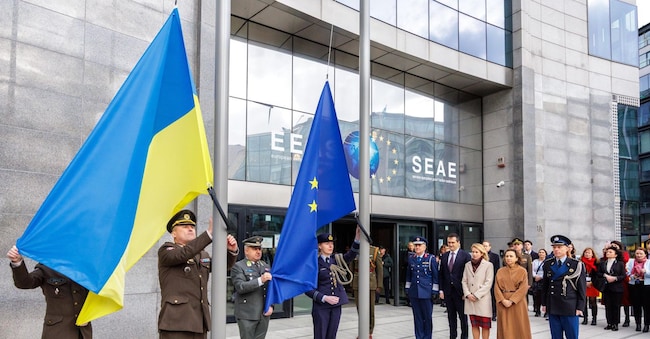
BRUSSELS - It was with ill-concealed annoyance and resentment that Hungary's European partners welcomed yesterday Budapest's decision to block a new sanctions package against Russia, as well as a EUR 90 billion European loan. In the EU's intentions, the sanctions measures were to be launched today at the latest, when EU leaders will be in Kiev to attend official demonstrations in the fourth year of the Russian invasion of Ukraine.
"We are contacting at different levels our Hungarian colleagues (...) so that they proceed with this package of measures," High Representative for Foreign and Security Policy Kaja Kallas said yesterday at the end of a meeting of foreign ministers in Brussels. On the 90 billion loan front, the former Estonian premier suggested the possibility of returning to the idea of using frozen Russian assets to support Ukraine (although the possibility now seems remote).
The tensions with Budapest have to do with the non-arrival of Russian oil in transit from Ukraine due to war damage to the pipeline. Foreign Minister Péter Szijjártó had pre-announced the veto in a tweet on Sunday on X. "Until Ukraine resumes oil transit (...) through the Druzhba pipeline, we will not allow important decisions in favour of Kiev to go ahead." Prime Minister Viktor Orbán added yesterday that Hungary "will not be blackmailed".
The Hungarian Prime Minister had informed European Council President António Costa of his country's position in a letter sent in recent days. In a reply sent yesterday, rather dry in tone and without any expression of camaraderie, the latter urged Prime Minister Orbán to respect the decisions of the European Council taken last December, and thus to avoid jeopardising the principle of sincere cooperation between member states.
At yesterday's ministerial meeting, the exchange between the foreign ministers was very heated, according to some participants. The head of Ukrainian diplomacy Andrii Sybiha, who also attended the meeting, assured his counterparts that the damage repair work had begun and that alternative routes for oil transportation had been proposed to Budapest. Minister Szijjártó retorted that Hungary will maintain its veto until the oil transit is resumed.


