
Ukraine, so war with robots becomes reality
Kiev relies on drones, scouts and robot dogs for the riskiest missions, but the dream is a real army of humanoids
by Lello Naso
3' min read
3' min read
We forget the trench warfare of the collective imagination constructed by so many films, television series and the tales of grandparents, great-grandparents and great-great-grandparents. From Saving Private Ryan to Band of brothers, the epic of the Piave and Caporetto. The trench warfare in Ukraine is becoming more and more, day by day, an essay in technology, not even the most advanced available on the market. Because the Russian and Ukrainian armies are certainly not the most modern on the planet.
Ukraine, which does not have the financial means to buy foreign technology, has launched a domestic programme for the construction of autonomous ground vehicles, encouraging start-ups with the ambitious goal of creating automaton soldiers. At the moment, however, drones, scouts, and robot dogs are home-built and widely used on the front line, especially for the most problematic missions, those in which a soldier's life, the most precious asset for an increasingly understaffed army like the Ukrainian one, is put at risk.
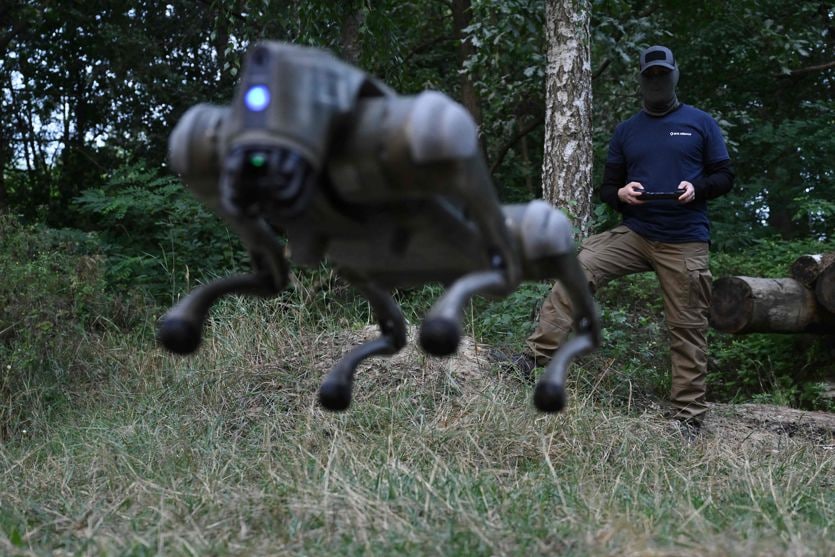
Features and use of robot dogs
Robotic dogs are used by many armies around the world, but only for guarding air and ground bases. On the other hand, Ukrainian soldiers of the 28th mechanised division, on social channels, showed, almost live, how they are sent on frontline missions. A typical act of communication warfare, or propaganda, to show, especially on the home front, the efficiency of the army. In villages controlled by Russian forces, robot dogs are sent for intelligence-gathering activities on the positioning of enemy forces. This makes it possible to minimise the risks in the operations of the assault units that are used in ground combat to conquer territory.
The robot dogs are equipped with advanced data collection technologies: sensors, cameras and chips that can scan the terrain in which they move to avoid obstacles and process the collected data in advance to send it in real time to the command centres of the departments. The mechanical parts of the robot dogs are also designed to operate in the roughest terrain. The four legs allow the dogs to climb and overcome obstacles in the terrain much more effectively than the classic robots with wheels, the rovers, which are also used in space missions.
Because of these characteristics, robot dogs are also used in logistical operations, for transport for example, or in medical missions. The dogs can locate and reach the wounded on the ground, give them a virtual first examination (and in some cases even take samples) and send the data to remote doctors. Who, in turn, can decide the necessity, usefulness and, above all, the priority of interventions. Always with the same aim: to save as many soldiers as possible.


