
Ukraine, the United States, China: a key summit on relations between the EU and the rest of the world gets underway
Against this backdrop, negotiations are underway on the 2028–34 budget, a key tool for tackling these challenges. On the eve of the summit, 22 German associations called for a ‘more substantial’ budget
from our correspondent Beda Romano
 Aggiungi Il Sole 24 Ore
ai preferiti su Google
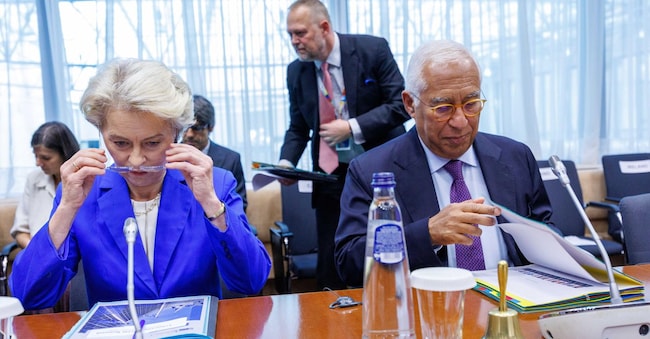
BRUSSELS – The European Council summit on Thursday 15 and Friday 16 October will focus heavily on the European Union’s relationship with the rest of the world: from relations with the United States and China to the war in Ukraine; not to mention enlargement and the migration crisis. The debate is set to be heated. In the background loom the negotiations on the 2028–2034 budget. To what extent will the current crises influence the talks? Surprisingly, 22 German associations have called for a ‘more substantial’ budget.
International instability is now a reality. It matters little whether US President Donald Trump’s latest remarks are linked to the mid-term elections; his attitude poses a serious threat to transatlantic relations and, above all, to Europe’s position on Ukraine. Not only is the White House calling into question its support for Kyiv in the war against Russia, but, in defiance of the sanctions against Moscow, it has also signed an agreement with the Kremlin on diesel supplies.
More aid for Kyiv?
Increasingly isolated in the Russian war in Ukraine, and moreover the victim of repeated hybrid attacks, the European Union must step up its aid to Kyiv – for the time being, the 27 Member States have pledged 90 billion euros for 2026–2027. EU estimates suggest a shortfall of a further €75 billion. A national diplomat argues: ‘The matter is urgent, and should be resolved this year because next year the nationalist and anti-Ukrainian front could be stronger’. In 2027, elections will be held in Spain, France and Poland, as well as in Italia.
On the trade front, leaders will discuss relations with China, following the recent initial agreement on quotas for hybrid cars. The latest figures confirm Europe’s huge trade deficit. Compared with last year, the deficit rose in September by 251.8 per cent in France, by 201.7 per cent in Germany, and by 52.3 per cent at European level. In the draft conclusions of the summit, the 27 Member States have mandated Brussels to develop new trade defence instruments ‘as a matter of urgency’.
Attention turns to a recent Franco-German letter in which Paris and Berlin proposed making the current anti-coercion mechanism easier and quicker to implement. Diplomats emphasise that the initiative has been well received amongst Member States. There is more. The European Commission has announced new measures to promote diversification, with a view to reducing dependence on China, and to foster solidarity in the event that a member state is particularly affected by a third country.


