
Ukraine: Crimea declares a state of emergency. Zelensky authorises a plan to pressure Moscow into ending the war
Today, the Ukrainian president also confirmed a prisoner exchange with Russia

“We are continuing to bring home Ukrainians held captive in Russia. Today, 160 military personnel were released. All had been held captive since 2022,” Ukrainian President Volodymyr Zelensky stated on X. “Among those released today are servicemen from the Ukrainian Armed Forces, the State Special Transport Service, the National Guard and the Border Guard Service. They defended Ukraine in Mariupol and at the Azovstal plant, as well as on the fronts in Donetsk, Luhansk, Kharkiv, Zaporizhzhia, Kyiv, Chernihiv and Sumy,” added Zelensky.
State of emergency across Crimea
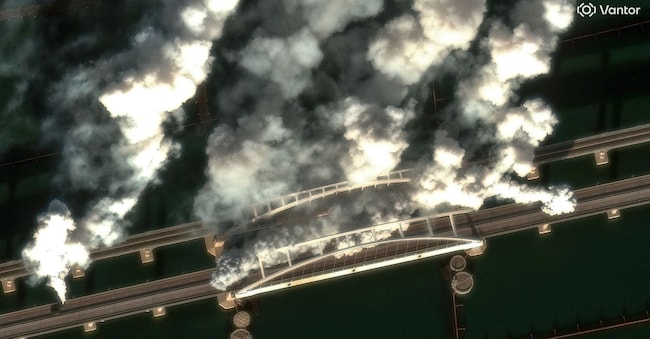
Meanwhile, the authorities installed by Moscow in Crimea have declared a state of emergency following days of raids by Kyiv’s forces against the Black Sea region and its supply lines, which have led to the suspension of electricity supplies in several areas, a suspension of fuel sales to residents and the closure of children’s summer camps. “This state of emergency will remain in force until the situation improves,” said the governor of Sevastopol in a video posted on Telegram. Frequent power cuts in Sevastopol have also caused problems with the water supply. The same measure, and for the same reasons, was announced by the governor of Crimea, Sergei Aksyonov. “The state of emergency should simplify and streamline the process for claiming compensation for damage to property,” he said.
Zelensky approves strategic operation to pressure Moscow into ending the war
Volodymyr Zelenskyy has approved a ‘strategic influence operation’ devised by the SBU (the Ukrainian secret service, ed.) lasting 40 days, with the aim of ‘forcing Russia to end the war’. The details of the operation remain classified. A few hours after the Ukrainian President announced his approval of the operation, during the night, forces from Kyiv launched hundreds of drones against various Russian regions. In the Tula region, according to the Telegram channel Astra, the Azot chemical plant in Novomoskovsk and the power station in the regional capital were hit. Fires broke out at both sites. The governor, Dmitry Milyaev, announced that 157 drones had been shot down and admitted that the Novomoskovsk plant had sustained damage. One woman was injured. But Moscow was also hit, Mayor Sergei Sobyanin announced. At least 47 drones were shot down overnight in Moscow and the rest of the region. Among the targets struck by Ukrainian drones that were not intercepted by Russian forces were the Polvavskaya oil depot in the Krasnodar region and two refineries in Ufa. The Ministry of Defence in Moscow has claimed to have destroyed 660 Ukrainian drones in 12 different regions of the country, including occupied Crimea.
Zelensky: ‘Alpha Unit leads the way in drone attacks’
“For months now, the SBU has been demonstrating a high capacity to protect Ukrainian positions on the front line through the use of various types of drones. The ‘Alpha’ Special Operations Centre is leading the way in terms of results achieved in eliminating personnel and equipment belonging to the occupying forces,” Zelenskyy said yesterday. The Alpha unit is specifically responsible for long-range operations. Raids against critical energy infrastructure deep within Russian territory are aimed at systematically targeting the economic resources available to the Kremlin to sustain its military campaign, officials in Kyiv explain. The situation has worsened significantly in the territories occupied by Russia, where, as a result of these operations by Kyiv, ‘insurmountable’ problems have arisen regarding fuel, military logistics and, above all, in Crimea, the day-to-day administration of the region. The Russian administration of the Black Sea region has explicitly admitted that it is unable to resolve the problems caused by the medium- and long-range raids carried out by Ukrainian forces against refineries and supply lines.

