Ukrainian art resists war
The scene in the country is active thanks to many remaining authors. They are now exhibiting at biennials, exhibitions and galleries

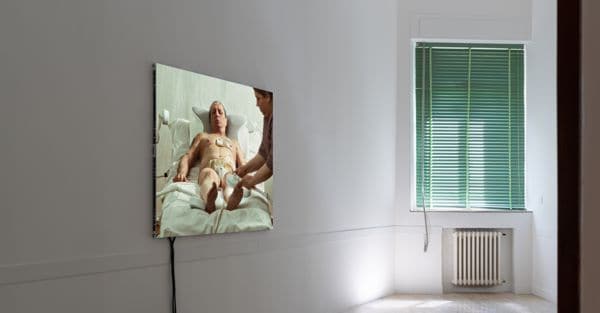
The message that Ukraine sends to the world from the exhibition that opened in Venice during the preview days of the Biennale and organised by the Pinchuk Art Center in Kiev is one of subdued joy, as the title "Still Joy" says, of resilience and resistance to the war against Russia, which began back in 2014 and became a "full-scale invasion" in 2022. There are paintings by Kateryna Aliinyk, class of 1998, depicting the changing landscape in the Donbas (from Jednostka Gallery, which will bring it to Gallery Weekend in Warsaw in September, prices 2.500-16,000 euros); there is the reality, but also the dreams of the inhabitants of Mariupol in the video by Piotr Armianovski (no gallery, prices 5-8,000 euros); there are the rave parties in Kiev filmed by Roman Khimei and Yarema Malashchuk, among the most interesting Ukrainian artists of the moment. The duo is also included in the Inbetween Art Film Foundation's "Calicula" exhibition, with a video installation set in an imaginary future where the war is over and elderly Russian soldiers regret (or hide) their responsibilities, while the Museo Nacional Thyssen-Bornemisza in Madrid is devoting an exhibition to them until 21 June. In Italia, they have already been exhibited during Artissima by Recontemporary with 'You Shouldn't Have Seen This', a multi-channel installation showing the sleep of Ukrainian children kidnapped by the Russians and then freed (by Galerie Poggi, prices EUR 2,500-40,000).
The war 'co-authored' the works
"War for Ukrainian artists is not just a theme, it is so inherent in every aspect of life that it becomes a 'co-author' of the works," said Sofia Baldi Pighi, an Italian curator who made two study trips to the country in 2024-25 thanks to a European call for proposals. "Also very much felt is the desire to archive, so that the country's memory and identity are not erased.
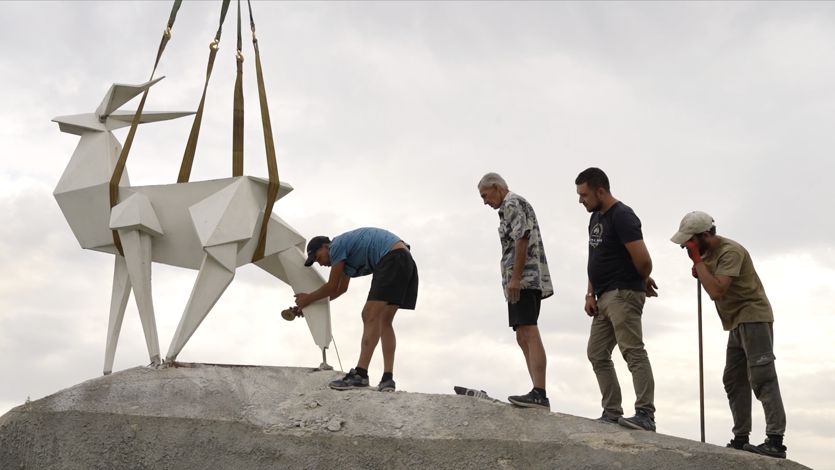
The conflict is also central to the presentation of the Ukrainian Pavilion at the Biennale (unlike other pavilions of countries at war, which have ignored the issue). In particular, Zhanna Kadyrova, born in 1981, tackled the theme of the fragility of the security guarantees enshrined in the Budapest Memorandum of 1994, through the story of the evacuation of an origami-shaped deer statue from the Donbas to Venice. The artist has been working with Continua since 2012, which has just dedicated a solo exhibition to her in San Gimignano. Her career is growing rapidly: in the coming months she will have exhibitions in Spain, Germany, the Netherlands and Korea.
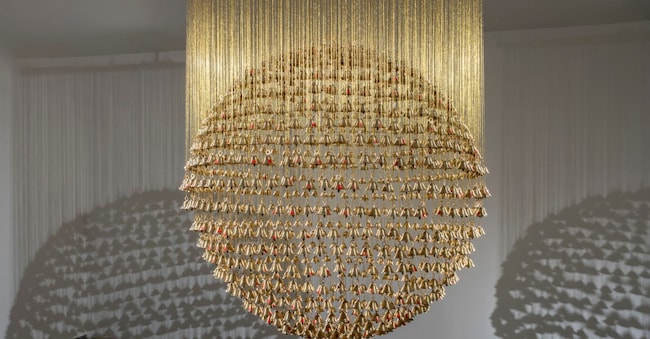
Other recognised artists include Alevtina Kakhidze, born in 1973, already exhibited at Base in Milan, where she transformed war testimonies into a lyrical work of sound, colour and light, and Nikita Kadan (1982), who speaks of political memory and Soviet heritage (at Galerie Poggi, prices €2-120,000) and will curate the next Baltic Triennial in 2027 with Natalia Sielewicz (another Ukrainian curator,Vasyl Cherepanyn, will curate the Berlin Biennale, also in 2027).
Artists in the Country
'It is important that established artists like them have chosen to stay in their homeland, even though they had the possibility of leaving,' commented Sofia Baldi Pighi, 'because they keep the cultural scene alive and are an example of strength for emerging artists who cannot leave the country. Because of compulsory conscription, many are at the front, but the art scene, especially in Kiev, which is safer than in other cities and countries, continues to be alive. It is important that we continue to talk about them, especially in the south of Europe'. In the countries further north, such as Germany and Poland, the issue is very much felt and there are many initiatives to help the country, Ukraine, also in art. On 10 June, a new chapter of the Kiev Biennial, which has become a nomadic initiative, opens at the KW in Berlin. The National Museum in Warsaw, for example, hosted the Kiev Biennial last winter and many galleries have turned their attention to Ukrainian artists. For example, Gunia Nowik Gallery in Warsaw represented the Odessa painter Sana Shahmuradova Tanska (1996), exhibited last year at Art Basel Statements (prices EUR 10-16,000) and Alina Kleytman (1991), from Kharkiv and now based in Turin, who works with sculpture and video to explore the physical and psychic limits of the body and will be presented this year at Liste, as well as having a solo show at Kunstverein Friedrichshafen (prices €5-15,000).