Eastern Europe

Ukrainian drones bring war to the heart of Russia, 1,600 km from the border

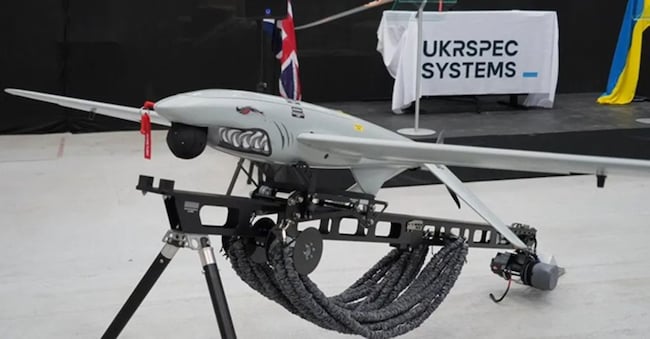
The new weapons at Kiev's disposal can regularly hit targets deep inside Russian territory, reaching the Ural Mountains and communities where most people considered war a distant problem

3' min read

Translated by AI
Versione italiana

3' min read

Translated by AI
Versione italiana

Ukrainian drones regularly strike targets deep into Russian territory, reaching the Ural Mountains and communities where most people considered the war a distant problem.

A residential skyscraper in Ekaterinburg, a city of over 1.5 million inhabitants, was hit on 25 April, the first damage suffered by the city since the large-scale invasion of Ukraine in 2022. Since the beginning of April, authorities have temporarily suspended operations at the local airport for five different days to deal with drone threats.

Loading...

"It was a shock," said Vladimir, a 35-year-old businessman from Ekaterinburg, who preferred not to reveal his full name for security reasons. "Although there have been no casualties, people have finally realised that the city is no longer so out of touch with the war."

The attack has a special symbolic significance for Ekaterinburg, long considered to be beyond the reach of the war. The city, known as Sverdlovsk in Soviet times, is located on the eastern slope of the Ural Mountains, some 1,700 kilometres from the Ukrainian border, and during World War II served as a rear base when factories were relocated there for security reasons, as it was considered to be out of reach of attacks from Europe.

Until this year, Russia's civil aviation authority, Rosaviatsia, had not reported any drone incidents near the airport.

Mosca, drone ucraino colpisce grattacielo residenziale di lusso

Drone attacks are becoming increasingly important

With the war along the front lines essentially at a stalemate, drones are taking an increasingly central role. Both belligerents now strike at opposing cities with hundreds of remotely piloted aircraft every day.

Ukraine, in particular, is becoming more effective in its campaign, hitting Russian refineries, fertiliser plants and ports used for energy exports, thus reducing the Kremlin's revenues and limiting its ability to benefit from the price increase due to the conflict in the Middle East.

Kiev's strategy

Kiev plans to expand its long-range attacks, as announced by Ukrainian President Volodymyr Zelensky in a social media post on 29 April. Ukraine now has the ability to strike Russia at distances greater than 1,500 kilometres, he said.

This makes a quarter of Russian territory - where over 70% of the population of 146 million live - accessible to Ukrainian drones.

Recent attacks suggest that Kiev is already putting this strategy into practice. On the same day the drones struck Ekaterinburg, Ukraine struck several Sukhoi Su-57 and Su-34 aircraft at the Russian Shagol airbase in the Chelyabinsk region, as announced by the Ukrainian General Staff earlier this month. Russia did not comment on the attack, while the local governor claimed that the drones had targeted an infrastructure.

Ucraina, droni marini di Kiev colpiscono due petroliere russe: il video

Even 'Tankograd' is under attack

Chelyabinsk, in the Southern Urals near the border with Kazakhstan, is located about 1,500-1,700 kilometres from Ukraine. The regional capital has a population of around 1.2 million and, like Ekaterinburg, was a mainstay of Soviet heavy industry during World War II, earning the nickname 'Tankograd' after much of the Soviet tank industry was relocated there. It remains an important centre for metallurgy, military and aerospace industries.

The city has become a frequent target for Ukrainian drones since the beginning of April, according to data on flight suspensions at the local airport, reported by Rosaviatsia.

Refineries also affected

Last week, drones also caused a fire and damaged a primary processing unit at Lukoil's Perm Permnefteorgsintez refinery in the Perm region, another Ural area, about 1,500 kilometres from the border. The day before, a pumping station near the plant had also been hit. Parts of Perm were shrouded in black smoke, and residents spoke of 'black rain'.

In 2025 Perm had recorded only a few drone incidents, but this year authorities have already had to close the city airport for several hours in about 15 days to repel drones. Seven of these stoppages have occurred since the beginning of April.

It must be said that Ukrainian drones have been regularly targeting the Orenburg region on the southern border of the Urals for over a year, but it is closer to the Ukrainian border, even though it is still 1,200 kilometres away.

Last year, drones were also detected in the Tyumen oil region in Siberia, some 2,000 kilometres from the border, but this seems to have been an isolated incident and remains the maximum distance reached by a Ukrainian drone.

So far, the Kremlin has reacted in a restrained manner to the attacks in the Urals. Russian President Vladimir Putin receives regular briefings, including on the Kiev attacks and measures taken in response by the Russian authorities, his spokesman Dmitry Peskov told reporters after drones struck a compound in Yekaterinburg.

In addition to the economic damage, the long-range attacks risk influencing public opinion at a time when the Russians are already suffering from the war and its consequences.

Copyright reserved ©
Loading...

Brand connect

Loading...

Newsletter

Notizie e approfondimenti sugli avvenimenti politici, economici e finanziari.

Iscriviti