
Ukraine: the negotiating team comprises EU institutions, NATO and five countries (including Italia)
The other countries will be Germany, France, Poland and the United Kingdom. It remains to be seen whether Russia, which had requested a single representative, will accept this format
from our correspondent Beda Romano
 Aggiungi Il Sole 24 Ore
ai preferiti su Google
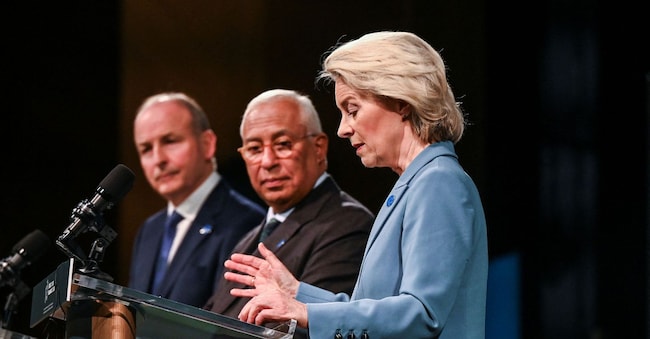
DUBLIN – After much back-and-forth, the European Union has decided that, in the forthcoming diplomatic talks between Ukraine and Russia aimed at finding a solution to the war that broke out in 2022, it will be represented by four member states, the European Council and the European Commission. It remains to be seen whether the Kremlin will be satisfied with this solution. A new round of negotiations could take place as early as two weeks’ time, again in Abu Dhabi.
The four member states are Germany, France, Italia and Poland. They will be joined by representatives of the President of the European Council, Antonio Costa, and the President of the European Commission, Ursula von der Leyen, as well as representatives from the United Kingdom and NATO. “We are fully committed to supporting the ongoing process and hope that it will yield concrete results,” Mr Costa himself explained at a press conference following a European summit here in Dublin.
Prior to the European announcement, Dmitry Peskov, President Vladimir Putin’s spokesperson, had asked the EU to be represented by a single figure: ‘If the Europeans have someone who is authorised to speak (on their behalf, ed.), and if they wish to speak, then we will do so’. Also speaking from Moscow, the Deputy Secretary of the Russian Security Council, former President Dmitry Medvedev, went on to add that “no one has yet invited the EU to the negotiations on the conflict”. It remains to be seen to what extent the Russian position is tactical.
From a European perspective, the solution announced may seem excessive, but it reflects the complexity of the European Union as well as the various strands of negotiation (from enlargement to security guarantees), each led by different actors within the broader EU framework. President Costa gave assurances that the Union would speak with ‘a clear and united voice’, and that there would be ‘a team effort’. He then noted that Kyiv and Washington are represented by several people (the United States has two envoys).
From this perspective, High Representative Kaja Kallas’s self-nomination, submitted yesterday ahead of the meeting, came to an abrupt halt. President Costa explained: ‘The Treaties are very clear. The President of the European Council represents the European Council and represents the Union in matters of the common foreign and security policy at the level of Heads of State or Government, whilst the President of the European Commission represents the Commission, and the Commission represents the Union externally in Community matters. So it is clear what the Treaties stipulate, and we abide by them.”


