Music

Umbria Jazz: a success that continues and goes from strength to strength

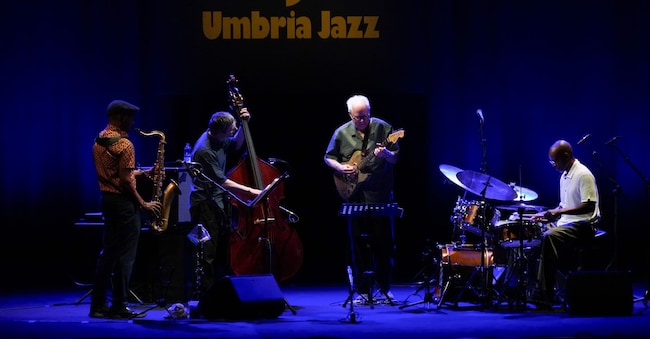
Il Bill Frisell Trio e Greg Tardy si esibiscono al Teatro Morlacchi durante Umbria Jazz a Perugia, in Italia, il 9 luglio 2026. (Reuters)

3' min read

Translated by AI
Versione italiana

3' min read

Translated by AI
Versione italiana

With Italy dotted with festivals in every corner and covering every type of performance, maintaining a central role and a distinct identity is no small feat: not least because both public and private organisations, particularly in the summer, put on an impressive array of events, all vying for an audience hungry for music, books, cinema and literature.

Umbria Jazz is one of the oldest institutions, an event with which locals, tourists and an entire region identify – a brand that has brought music and more to half the world, ever since its first, adventurous edition in 1973.

Loading...

Over time, this has become a cornerstone of the season’s soundtrack – a festival concept that offers, in layers, a variety of moods, sounds, characters and rather diverse show ideas.
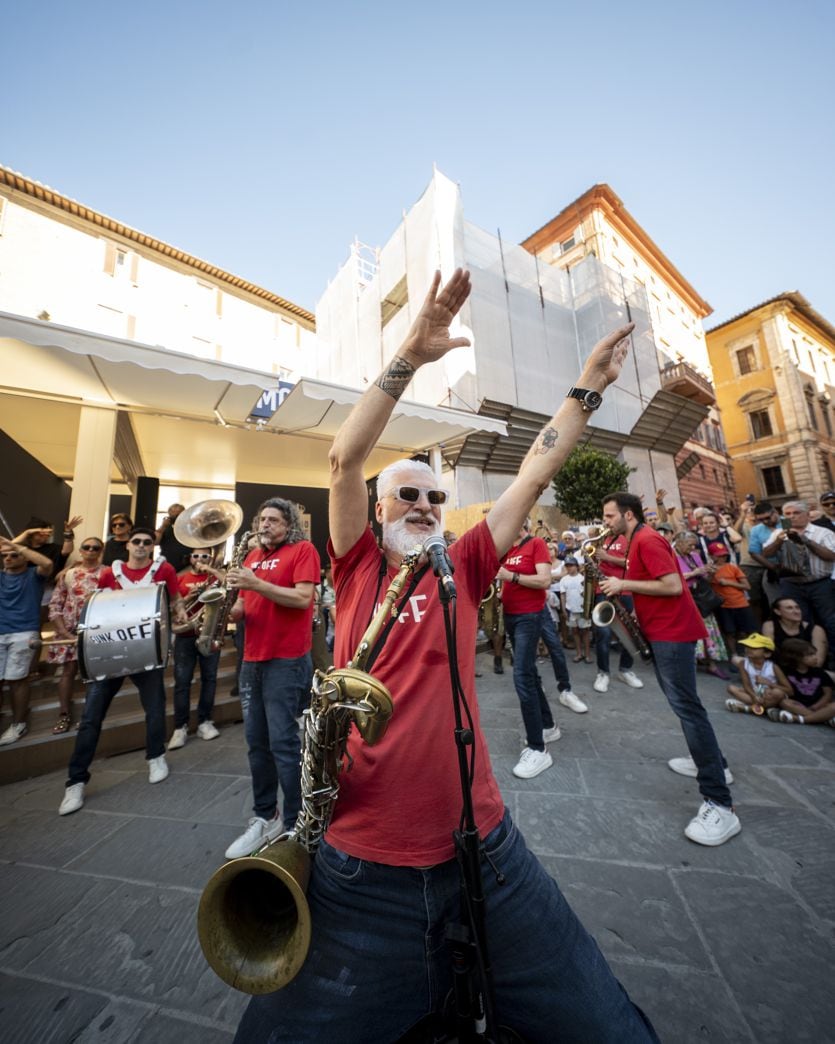
Funk Off

For this 2026 edition, the organisers are claiming victory for a number of reasons: the number of tickets sold – 46,000 – takings of over three million euros – and, above all, the sheer number of concerts, including free ones, and the number of spectators involved across the city of Perugia, which was awash with music for ten days, from morning until late at night. The format of such a well-attended and complex festival must, by its very nature, take into account the tastes and needs of many, if not all. This is why the ‘jazz’ label has, over time, necessarily had to encompass a broad spectrum of artists – something that is, incidentally, the case at the majority of major international festivals.

And whilst top-tier mainstream acts such as Sting and Zucchero are booked to meet box-office demands – and are greeted with triumphant sell-out crowds – this year’s Umbria Jazz has also welcomed Gilberto Gil, the last of the great Brazilian singers, Elvis Costello, a refined singer-songwriter who is never trite, a young up-and-comer from the latest wave of electric blues, Christone Kingfish Ingram and then Laurie Anderson: in other words, the most credible pioneer of electronic multimedia, who, through lyrics, sounds and projections, recalled and referenced her heroes, Ginsberg and Dylan, Buddha and Lou Reed, Gertrude Stein and William Burroughs, “Language is a virus”, before bringing the performance to a close with a short Tai Chi lesson, shared with the audience.

And yet, despite this polyphonic blend of musical elements, jazz in all its various guises remains the central focus, creating a listening experience that rewards enthusiasts and brings comfort to the artists themselves. Above all, in the festival that concluded on Sunday 12th, we can highlight the sets by Charles Lloyd, the legendary saxophonist and flautist representing a tradition that blends spirituality and free jazz; that of Steve Coleman’s Five Elements (though there are only four on stage), with their formidable, torrential flow of wind instruments and rhythms, and also The Beat, a sort of reincarnation of King Crimson, now in the hands of two exemplary soloists as superhuman as guitarist Adrian Belew and bassist Tony Levin. ‘Made in Italy’ jazz has also reaffirmed the quality of bands with undeniable appeal, from Stefano Bollani’s All Stars, Enrico Rava, Paolo Fresu and Friends, to the reunion of Perigeo, long since disbanded but seen here in excellent form, recalling, they too, their performance way back in 1973.

With a programme spread across numerous venues, all within a few minutes’ reach, Perugia successfully blends its reputation as a city of art with a powerful wave of sound, to the extent that even casual visitors – those who happen to be passing through – will take away a few musical fragments to cherish.

In 2026, a year in which Umbria Jazz marked the centenaries of the births of John Coltrane and Miles Davis, as well as that of Dario Fo – whose painting was chosen for the festival’s poster – it is worth reflecting on the future, with a generation of artists growing older and struggling to find successors worthy of their legacy. Emblematic in this regard is the case of Jon Bastiste, a singer and multi-instrumentalist capable of filling the Arena Santa Giuliana: not yet forty, he has already amassed awards and accolades, moving with ease from Monk to Beethoven, from ‘Volare’ to soul hits, from the traditions of his native Louisiana to virtuoso piano solos. He reaps applause, oooohs of amazement and plays to the crowd, because he knows full well that everything is part of the show. Is this the future, or is it already the present of ‘nouvelle cuisine’?

Copyright reserved ©
Loading...

Brand connect

Loading...

Newsletter

Notizie e approfondimenti sugli avvenimenti politici, economici e finanziari.

Iscriviti