
UN humanitarian aid worth 23 billion dollars: here’s what companies wishing to contribute need to know
Seminar on procurement procedures for goods and services at the Farnesina. Tajani: ‘Italia is a model to follow on Gaza’

Key points
Twenty-three billion dollars. This is the total value of United Nations procurement in 2025, with the largest contracts relating to the health, logistics and engineering sectors, followed by management services for humanitarian operations. The agri-food sector stands at around 1.6 billion. In this context, Italia is the UN’s 19th largest supplier by value of goods, with a total of contracts from the United Nations system amounting to approximately 345 million dollars in 2025 and around 8,000 suppliers registered on the dedicated UN portal. The main sectors are services (management and transport), followed by goods in the medical and healthcare field. The main recipient agencies are the FAO (89 million), the WFP (55 million) and IFAD (35 million), followed by the UNDP (26 million) and UNICEF (15 million).
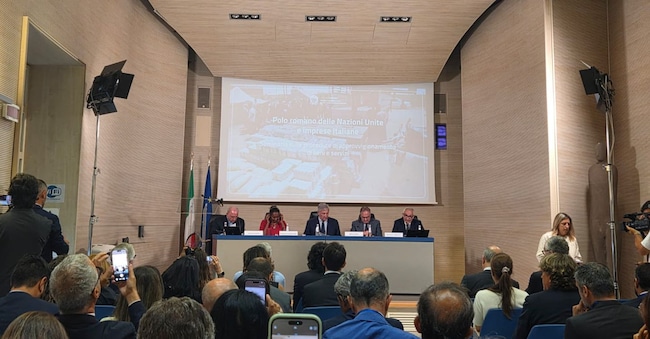
These figures were presented at the meeting held on Tuesday 14 July at the Farnesina, entitled ‘The United Nations Rome Centre – Seminar on Procurement Procedures for Goods and Services’. The meeting provided an opportunity to explore in greater depth how Italian companies can collaborate with the FAO, the WFP and IFAD.
Tajani: ‘Italia sets an example on Gaza’
“Italia’s humanitarian and diplomatic commitment to major international emergencies – from Gaza to Sudan, is being strengthened through ever-closer cooperation between institutions, UN agencies and businesses,” emphasised Foreign Minister Antonio Tajani, speaking at the meeting. “We have sent an important signal that Italia does not look the other way, that Italia also stands by those populations who suffer the most, including those caught up in forgotten wars,” added the head of the Foreign Ministry. The Deputy Prime Minister strongly defended the results of Italy’s humanitarian initiatives, emphasising that “we have truly been an exemplary model in Gaza”, describing it as “the project that has received the most support, even at an international level” thanks to the ability “to engage with both the Israelis and the Palestinians”. A model that now extends to sub-Saharan Africa through the ‘Italy for Sudan’ programme, launched by the government ‘to bring relief to populations who are victims of a forgotten war’. Tajani recalled that “in Sudan, I believe we have been the country that, more than any other, has taken action to bring relief to people who are victims of a forgotten war. We have spoken about this, and we have also played a leading role in many other initiatives for this country, which deserves our support – above all, the women and children who are victims of this war, which continues to create so many refugees and risks triggering migration flows not only towards Europe but also within the African continent, in addition to causing thousands upon thousands of deaths. ‘Our task, therefore, is to work for peace, to build peace and to help those who are victims of war. We have done so and will continue to do so through our international cooperation,’ he concluded.
The FAO and WFP strand
Turning to the figures for cooperation within the United Nations and looking at the details, the total value of FAO procurement is expected to amount to 614 million dollars in 2025, with expenditure mainly in the transport sector and on the purchase of agricultural inputs. Italia is among the organisation’s main suppliers, with a total value of contracts amounting to approximately 89 million (followed by Afghanistan and South Sudan). As for the WFP, the total value of procurement amounts to $3 billion, the bulk of which is spent on logistics ($1.2 billion), followed by food products.
Below are some guidelines that may be useful to organisations interested in collaborating with the FAO, the WFP and IFAD:


