
Unicredit secures ECB approval for the ‘Danish compromise’. What has changed and why is it important for banking risk management?
A benefit of 52 basis points. From the reporting for the third quarter of 2026 onwards, the bank explains, ‘insurance holdings may be treated by applying a risk weighting rather than being deducted from regulatory capital’

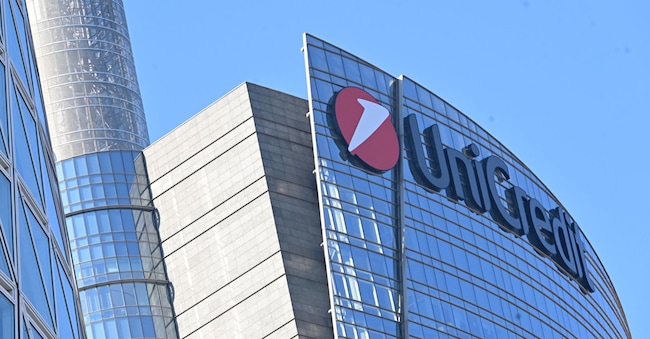
Unicredit has obtained authorisation from the European Central Bank to apply the Danish compromise methodology when calculating the group’s consolidated capital ratios. A decision that is worth 52 basis points of CET 1 for Piazza Gae Aulenti, but which adds another piece to the complex mosaic of the Italian financial landscape, given the growing weight of insurance holdings in the various projects currently underway.
The news was announced by the bank led by Andrea Orcel, who added that, as from the reporting for the third quarter of 2026, the bank explains, ‘insurance holdings may be treated by applying risk weights rather than being deducted from regulatory capital’. This will guarantee ‘an estimated benefit of around 52 basis points on the CET1 ratio, based on the situation as at the second quarter of 2026’.
Figures aside, the granting of authorisation comes as no surprise. UniCredit has, in fact, been working for some time to secure favourable prudential treatment for its insurance holdings. As early as September 2024, when it announced the in-house integration of its life bancassurance activities in Italia, the group had factored into its assessments the future recognition of its status as a financial conglomerate and the application of the Danish Compromise. And in June 2025, once the in-house integration had been completed, the bank announced that it would formally apply for recognition under the Danish Compromise. This intention has, moreover, been reiterated over time by CEO Andrea Orcel.
The 52 basis point improvement in the CET 1 ratio is a significant boost, particularly in view of the impact on capital resulting from the full consolidation of the stake in Commerzbank, which is expected to be around 200 basis points.
However, the issue of recognising the Danish Compromise is of particular significance today, not least in light of UniCredit’s current and future moves regarding its stake in Generali, of which it currently holds 8.8 per cent. With the ECB’s approval of the new treatment, the stake in Trieste’s share capital could, in the long term, become much less burdensome from a capital perspective, and this is happening just as the Lion is finding itself increasingly at the centre of the various trajectories of this high-stakes game. At present, UniCredit’s stake in the Italian insurance group is classified as a financial investment and is excluded from regulatory benefits, as it is below 10 per cent, but further developments may emerge over time.
After all, the range available at Intesa Sanpaolo’s bid for MPS – which controls 13.2 per cent of Generali via Mediobanca – sees the recognition of the Danish Compromise as one of its cornerstones. Intesa has already made it clear that the stake would be held ‘as an equity investment, not a controlling interest, without any interference in Generali’s governance’ and would continue to be accounted for using the equity method. For its part, Intesa, unlike UniCredit, is already classified as a financial conglomerate, and therefore sees the process of regulatory approval as straightforward.


