Banking risk

Unicredit, EU letter sent to Italy: obligations on Banco Bpm offer violate rules

The Italian government 'in a collaborative and constructive spirit will respond to the clarifications requested, as it has already done in the courts before the TAR'.

by Mo.D.

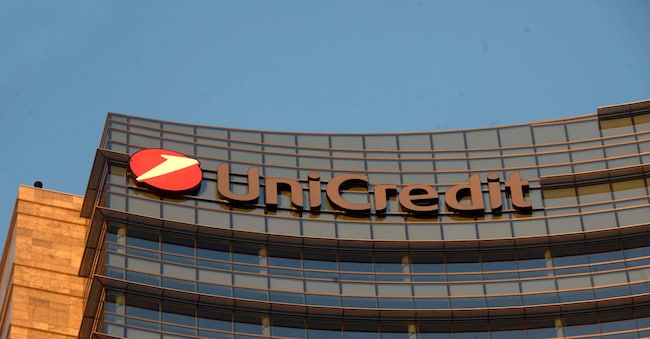
SEDE UNICREDIT TOWER UNICREDIT, GOVERNO TEDESCO RINUNCI ALL’ACQUISIZIONE DI COMMERZBANK - FOTO ARCHIVIO

5' min read

5' min read

The European Commission's letter to Italy has been sent and highlights the critical aspects of the decree on Unicredit's bid for Banco Bpm. The European body, according to a statement by the European Commission spokesperson during the usual daily briefing in Brussels, has sent a letter to the Italian government in which it expresses its preliminary opinion on the decree issued by the Prime Minister's Office on 18 April 2025 (the so-called 'Golden Power'). The latter imposes certain obligations on the merged entity resulting from the acquisition of Banco Bpm that 'could constitute a breach of Article 21 of the EU Merger Regulation and other provisions of EU law'.

'The contents of the letter are confidential,' added spokesman Thomas Regnier in response to a further question, 'and the ball is now in the court of the Italian government.

Loading...

Meanwhile, the share price ofBanco Bpm in Piazza Affari gained more than 4%, while Unicredit was trading around parity. The shares moved up immediately from the start after the ruling of the Lazio Administrative Court on 12 July.

The European Commission's flagship

.

From a competition perspective, the Commission approved the transaction under the EUMR, subject to conditions, on 19 June 2025. Separately, Italy issued a decree imposing obligations on UniCredit upon completion of the acquisition of Banco Bpm, based on national legislation authorising the Italian authorities to examine investments in companies active in certain sectors of strategic importance, including the banking sector ('Golden Power').

According to Article 21(4) of the EU Internal Market Regulation, Member States may take appropriate measures to protect legitimate interests, provided that they are compatible with the general principles and other provisions of EU law and that they are appropriate, proportionate and non-discriminatory. This obligation is subject to scrutiny by the Commission, in particular to safeguard its competence under the EU Internal Market Regulation and to avoid fragmentation of the Single Market.

On 26 May 2025, the Commission sent a request for information to Italy for a better understanding of the decree. Italy replied on 11 June 2025. After having carefully assessed Italy's reply, the Commission preliminarily concludes that the decree might infringe Article 21 of the EU Internal Market Regulation.

Public security constitutes, among others, a legitimate interest and is explicitly mentioned in Article 21(4) of the EU Internal Market Regulation, but the Commission's preliminary view is that the justification of the conditions is currently lacking in motivation and that the Commission should probably have reviewed the decree before implementation. The preliminary assessment also notes that the decree may be incompatible with other provisions of EU law, including those on the free movement of capital and prudential supervision by the European Central Bank.

The preliminary assessment invites Italy to submit its comments. At the same time the Lazio Regional Administrative Court partially annulled the decree on 12 July. Now, based on Italy's response to the preliminary assessment and the Italian court ruling, the Commission will assess the next steps.

The government's response

.

For its part, the Italian government responded in a note to the news of the European Commission's preliminary assessment. "With regard to the EU Commission's letter on the application of special powers to UniCredit's bid for Banco Bpm, the Italian government, in a collaborative and constructive spirit, will respond to the clarifications requested, as it has already done in the courts before the Regional Administrative Tribunal (TAR) in the terms and with reasons already deemed legitimate by the administrative judges," Palazzo Chigi said in a statement.

Matteo Salvini, Vice-President of the Council and Minister of Infrastructure and Transport, commented on the issue: 'I think the EU has more important things to deal with, such as dealing with the US. So instead of busting the Italian government's chops about beach resorts, beaches, mopeds, electric cars and banks, let it deal with a few serious things and do them well. Salvini concluded: 'The dossier is on the table of Minister Giorgetti, who has worked perfectly so far, and the banking and credit system is a strategic asset for the country. So Italy can and must regulate as it sees fit without anyone from Brussels allowing itself to intervene'.

"The European Union takes care of what it has to take care of and this is also a matter for the European Union," said Foreign Minister and deputy prime minister Antonio Tajani, when questioned - on the sidelines of an Enel Foundation event - on the golden power contested by Unicredit and on the statements by Lega Nord leader Matteo Salvini. As for the possibility of rewriting the Dpcm after the TAR ruling, Tajani added: "Everything will be seen. You know what my position is. Minister Giorgetti is in charge of it'.

The oppositions' attack

.

The first comments came from the opposition benches. "The combination of the Lazio Regional Administrative Court ruling and the letter from the European Commission represents a clear and unequivocal rejection of the government's action on the UniCredit-Bpm case. It is a defeat across the board, particularly for Minister Giorgetti, who had wanted and defended an intervention that turned out to be, as we had denounced from the outset, illegitimate, unjustified and totally disproportionate,' Antonio Misiani, the Democratic Party's economic chief, said in a note, concluding: 'The government would do well to take note of the reality and withdraw its golden power. What has happened certifies the failure of the completely improper activism with which the executive has intervened in the Italian banking risiko, without a strategic vision, but only for power logics. It is time to change course: stop this drift, return to the seriousness of the rules and respect for the European order'.

"Italy has applied golden power against an Italian bank, Unicredit, by helping a French bank. The problem is not Europe rejecting Italy. The problem is the government that does not respect the market,' stresses senator Raffaella Paita, leader of the Italia Viva group in the Senate, while +Europa deputy Benedetto Della Vedova observes: 'Today, in addition to the TAR ruling on Saturday, there is the letter from the European Commission. As we had predicted since last November, Meloni and Giorgetti's choice to put the golden power on UniCredit's takeover of Bpm turned out to be not only illogical, wrong and damaging for Italy, but also in violation of Italian and European regulations. Meloni and Giorgetti,' he added, 'abandon their ambition to act as bankers by instrumentally using golden power for political purposes, do not drag the country into a losing confrontation with the European Union, and limit the damage, for the government and for Italy, by immediately withdrawing golden power and letting the reorganisation of the banking sector follow market logic.

The Crèdit Agricole move

On the French front, meanwhile, Crèdit Agricole has made a move, announcing its intention to request authorisation from the European Central Bank to exceed the threshold of 20% of Banco Bpm's capital. The French group, which currently holds 19.8 per cent of the Italian bank, specifies that the board of directors approved the request for authorisation from the ECB with the aim of strengthening its investment but without wishing to 'acquire or exercise control over Banco Bpm', keeping its stake below the mandatory takeover threshold.

Copyright reserved ©
Loading...

Brand connect

Loading...

Newsletter

Notizie e approfondimenti sugli avvenimenti politici, economici e finanziari.

Iscriviti