Banks

UniCredit, the Tar partially upholds the Golden Power appeal

The court's decision on the government's special powers: the time constraint on the loan/deposit ratio and the requirements on the project finance portfolio are to be reviewed. The government: 'The system confirmed'. BancoBpm: "Orcel to provide clarity on Ops".

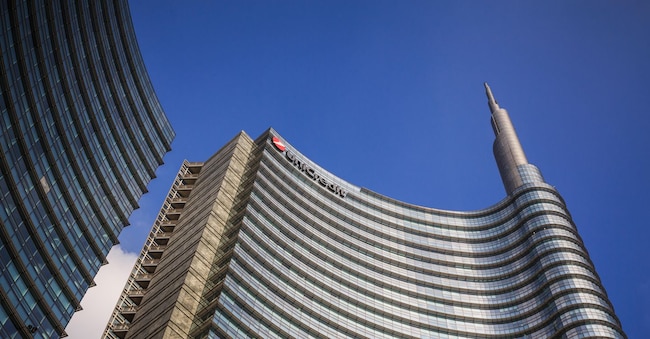
E8GBYT The Unicredit Tower (Torre Unicredit) , Milan, Italy

4' min read

4' min read

The Lazio Regional Administrative Court partially upheld the appeal with which Unicredit challenged the legitimacy of the 'golden power' exercised by the government for the takeover bid on Banco Bpm. The decision is contained in a complex ruling already provided with grounds.

There are two specific points of acceptance: the one requiring that 'Banco BPM and UniCredit in Italy will not reduce the loan/deposit ratio for a period of five years, with the aim of increasing lending to domestic households and SMEs', exclusively with reference to the time profile; and the one relating to maintaining the level of the project finance portfolio.

Loading...

On the other hand, there is no emphasis on two other aspects of the golden power, which call for 'maintaining the current weight of Anima's investments in securities of Italian issuers' and set the timetable for the exit of Unicredit's financial activities in the Russian Federation.

According to sources in the Mef, 'the government welcomes the ruling, which largely confirms the legitimacy and therefore the structure of the Golden power, particularly in its qualifying points, the obligation for UniCredit to divest its assets in Russia within nine months and the maintenance of Italian securities in Anima'. According to the same sources, 'economic security is thus recognised as an element of national security: a fundamental principle that underlies the Golden power in question and will be increasingly important in the future'.

BancoBpm's reply

"Banco Bpm takes note of the Lazio Regional Administrative Court's ruling recognising the correct action of the government and, in particular, confirming the substantial legitimacy of the prescriptions contained" in the dpcm on 'Golden power', exercised by the government regarding Unicredit's ops on Banco. This is how Banco Bpm commented in a note on today's ruling by the Administrative Court, which partially upheld Unicredit's appeal.

"In fact, the ruling only intervened on the time profile of the prescription on the loans/deposits ratio and requested that a time horizon be set with respect to the prescription regarding the maintenance of the project finance portfolio level, fully confirming the prescriptions regarding the weight of Anima Holding's investments and the cessation of all activities in Russia," adds the bank led by Giuseppe Castagna.

"In light of the aforementioned ruling, Banco Bpm hopes that UniCredit will clarify its intentions with regard to an Ops - which will close on 23 July more than eight months after its announcement - which, as a result of the passivity rule, has severely limited the bank's strategic flexibility at a key time for the domestic credit sector, generating serious uncertainty for shareholders, customers and employees".

The affair

.

The judgement of the TAR was triggered by an appeal against the Prime Ministerial Decree of 18 April 2025, with which the government had exercised its 'Golden power' on Unicredit's Ops on all the ordinary shares of Banco Bpm, a transaction announced to the market on 25 November 2024.

UniCredit complained of the imposition by the Prime Minister's Office of prescriptions that were 'extremely burdensome, certainly not proportionate and in many respects uncertain in their content, as well as such as to envisage a sort of surveillance by the Government of UniCredit's autonomous industrial policy'.

The loan-to-deposit ratio

.

With regard to the first point of the appeal for partial acceptance, the Regional Administrative Court held that "the respect for the principles of proportionality and reasonableness... leads us to believe that the preliminary assessment that led to the requirement 'not to reduce for a period of five years the loans/deposits ratio practised by Banco BPM and UniCredit in Italy, with the aim of increasing loans to domestic households and SMEs' contains, exclusively with reference to the time profile, elements that support the acceptance of the complaints in this regard deduced".

According to the judges, 'the assumption that the setting of a five-year time-limit is proportionate in order to 'mitigate the risks to national security which could arise if UniCredit, following the completion of the transaction, decides to apply immediately also to Banco BPM the lower deposit/loan ratio practised in Italy by UniCredit' is not reasonable'.

Ultimately, for the Regional Administrative Court, 'it is not illogical to consider that the definition of the duration of the limitation period should follow, rather than precede, the completion of the analysis of the data on the basis of which a business plan will be drawn up to ensure the maintenance of the loan/deposit ratio'.

The judges therefore held that the "partial upholding of the appeal follows, as a conforming obligation, the renewal of the assessment with regard to the time value contested in the case". It is also requested in the definition to contemplate "also suitable (and hopefully virtuous) modes of interlocution between the public authority and the plaintiff".

Project finance

With regard to the requirement that "imposes on the Offeror not to reduce the level of UniCredit's and BBPM's current project finance portfolio, without, however, introducing any limitation on its duration, as opposed to the five-year reference period for the deposits/loans ratio", the Regional Administrative Court held that "in light of the imposition (also) on UniCredit, also for an indefinite period of time, of the maintenance of the level of the project finance portfolio, the exercise of direct state intervention on UniCredit's business policy is in fact configured: which, far from limiting itself (as would have been unexceptionably possible) to foreshadowing the maintenance of the levels of BBPM's current market presence, has otherwise (and undoubtedly with more extensive expansive latitude) 'conditioned' its credit policy for the sector (project finance) now under consideration".

The other points

.

Instead, the other aspects of the Golden Power are not touched, again with ample justification. Not touched is "the prescription by which UniCredit was required to 'maintain the current weight of Anima's investments in securities of Italian issuers' and to 'support the development of the company'". In addition, "the complaints relating to the requirement that UniCredit 'cease all activities in Russia (funding, lending, placement of cross-border loan funds) within nine months from the date of the present measure' are not admissible".

Copyright reserved ©
Loading...

Brand connect

Loading...

Newsletter

Notizie e approfondimenti sugli avvenimenti politici, economici e finanziari.

Iscriviti