
UniCredit has three years to complete the Commerz-Hvb merger
Orcel aims to appoint shareholder representatives to the Supervisory Board. In 2027, UniCredit could replace or remove the current Commerz top management

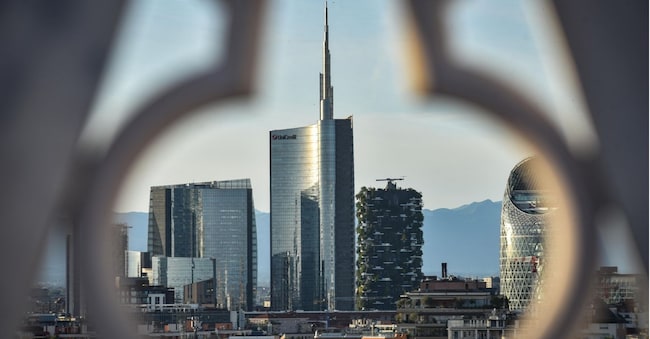
FRANKFURT - UniCredit stated yesterday that, given its stake is already well above the 30% threshold and with ‘adequate shareholder support’, it would be in a position to appoint all shareholder representatives to Commerzbank’s Supervisory Board, which in turn would be responsible for appointing the Management Board. In other words, at the next annual general meeting – to be held in 2027, should it take place after the settlement of the public exchange offer following ECB authorisations – UniCredit could decide to replace or remove the current top management of Germany’s second-largest bank, the board that has so far opposed with all its might the ‘transformation’ plans announced by CEO Andrea Orcel.
“Strengthened and transformed”, UniCredit has announced that it will be able to proceed with the merger of Commerz with HypoVereinsbank: a transaction for which German takeover law now requires a 75% majority at the general meeting, rather than a simple majority. Commerz is a listed German company and therefore the national laws on public limited companies (AktG) regarding voting weights at general meetings apply. The 75% supermajority is required by German merger law, Section 65(1). Once appointed, the ECB will intervene to authorise them and assess them against the ‘fit and proper’ requirements.
The “new structure” at the helm of Germany’s second-largest private bank would enable UniCredit to press ahead with “the implementation of a strategy geared towards creating long-term value, strengthening Commerz, particularly in the German domestic market, and positioning it competitively for the future”. UniCredit insists, and reiterates in the press release, that Commerz will first and foremost (i.e. prior to any merger with HypoVereinsbank) be “strengthened and transformed”. It is precisely this kind of language that the German bank’s top management disputes, defending their business model tooth and nail, to the extent of making it a precondition – alongside an adequate premium in the public offering – for sitting down at the table with Orcel. Commerzbank CEO Bettina Orlopp stated yesterday, when questioned at a conference in Frankfurt, that it is not ideal, in the case of a systemically important institution, to announce the replacement of the management team in order to implement one’s own stand-alone strategy.
The prospect of a new structure at Commerz, with UniCredit taking control of the Supervisory Board and Management Board, has been branded “eine klare Drohung” – a genuine threat – in Frankfurt’s financial circles. This has come as a shock to the federal government as well, Commerz’s second-largest shareholder with a stake of just under 13%. As is well known, and as has been debated on several occasions at shareholders’ meetings of Germany’s second-largest private bank, the government entered into an agreement with Commerz at the time of the costly bailouts during the Great Financial Crisis: Berlin has the right to appoint two government representatives to the Supervisory Board (chaired by former Bundesbank President Jens Weidmann and including Sabine Lautenschläger-Peiter, a former member of the ECB’s Executive Board, both of whom are famous for their opposition to the then ECB President Mario Draghi). For almost two decades, the two members appointed by the government have been elected: one’s term expires in 2027 and Lautenschläger’s will expire in 2029. According to well-informed sources, if UniCredit were to vote in favour of the Supervisory Board members representing the government, it would not have the majority required to proceed with the transformation, as the government – which has so far opposed UniCredit’s move regarding Commerzbank – would vote against it. All this is hypothetical: it remains to be seen what will happen at Commerz in a year’s time. And what will happen in two or three years’ time regarding the merger that would create a German and European champion.


