
UK, historic cession of the Chagos Islands to Mauritius. In return it retains the Diego Garcia base
The British government cedes control of the Chagos Islands to Mauritius in exchange for the military island-base of Diego Garcia, strategic in the world geopolitical framework

3' min read
3' min read
From our correspondent
NEW DELHI - Anyone who has ever conducted a negotiation knows that the easiest way to get what you want is to offer the other party something they can do without.
Diego Garcia stays at UK for 99 years
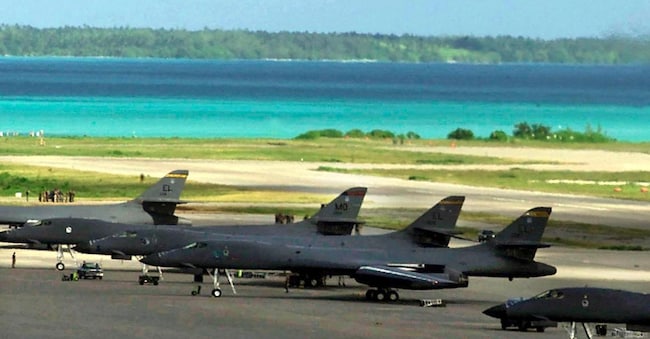
The rule was masterfully applied by the British government, which on Thursday ceded control of the Chagos Islands to Mauritius. The quid pro quo is one that Downing Street and the White House could not do without. Its name is Diego Garcia and it is the island-military base in the heart of the Indian Ocean that, according to the pact signed between London and Port Louis, for the next 99 years will continue to be a sort of gigantic aircraft carrier - capable of taking off bombers, not just fighter planes - strategically located in one of the most crucial quadrants of the world geopolitical chessboard. It was from Diego Garcia that American B-52s took flight during the wars in Afghanistan and Iraq. And it is from the waters surrounding it that the traffic of goods, gas and oil transits, making the route between the Far East and the Middle East the most important, delicate and studied of the Asian century.
A long history
.The story that led to the cession of the Chagos is an old one. It has its roots in the era of decolonisation, when - in 1965, three years before Mauritius' independence - the United Kingdom, realising the future importance of that handful of islands, turned the Chagos (including Diego Garcia) into the British Indian Ocean Territory, thus separating their fate from that, inevitable, of the soon-to-be free Mauritius. The following year, the 'lease' contract with the United States was signed and, starting in the 1970s, the deportation of the inhabitants began in order to make room on the archipelago's main island, Diego Garcia, for a military base.
Change of approach
.The agreement signed on Thursday marks a change of approach on the part of the British government, whose line has always basically been that the original inhabitants of the archipelago can never return. Over the years, however, pressure has been mounting. First it was the turn of some African states. Then even the United Nations, in 2019, pronounced itself on the issue, with a non-binding resolution arguing that the UK should relinquish control of the islands and allow the inhabitants to return. Last year, Human Rights Watch called the affair 'a crime against humanity perpetrated by a colonial power against an indigenous population' Not exactly a medal to hang on one's chest, especially at a time of such a profound re-examination of the original sins of Western powers.


