
AI challenge for 400 students at the University of Florence
Hackathon closes Alma-Deh project on innovative teaching. Competition with the aim of creating a communication campaign using AI to promote the critical use of artificial intelligence among one's peers.
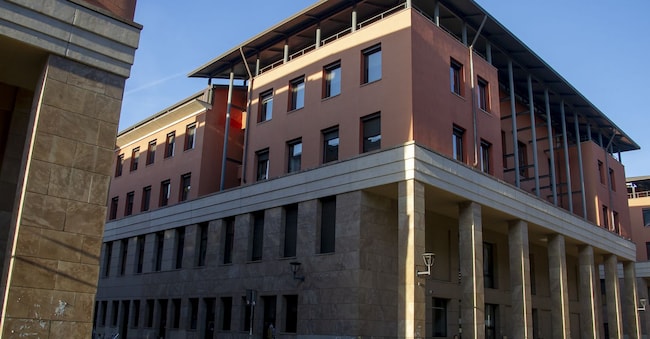
More than 400 students from the University of Florence took part in a large hackathon today at the Palazzo degli Affari with the aim of creating a communication campaign using AI to promote the critical use of artificial intelligence among their peers.
The competition
The competition, entitled 'Studying with AI. Dalle scorciatoie all'uso critico', constituted the final event of the Alma-Deh (Advanced Learning Multimedia Alliance for Inclusive Academic Innovation, Digital Education Hub) project, a national initiative financed by the Next Generation Eu programme within the Pnrr [Mission 4, Component 1, Investment 3.4 'Didactics and advanced university skills' Sub-Investment Digital Education Hubs (Deh)]. The project involved, together with the University of Florence, 12 other Italian universities and an academy of Advanced Music Education (Afam), united in an ambitious project: to create a Digital Education Hub that makes high-quality education accessible to all.
Two days
The two-day event, entitled "The Future enters the Classroom", had kicked off yesterday in the presence of the Rector Alessandra Petrucci, with the conference "Artificial Intelligence at the University: Experiences and Perspectives of the Alma-Deh Project" dedicated to an in-depth examination of the issues addressed during the project. Today, after the welcome speeches by the didactics pro-chancellor Ersilia Menesini and the didactics innovation delegate and Alma-Deh/Unifi scientific officer Maria Ranieri, the activities were opened by the inspirational talk held by Silvia Benevenuta, AI trainer and science populariser. This was followed by the hackathon, which continued until the afternoon.
Project Alm@-Deh
The two-day event is also an opportunity to present the results of the activities conducted by the University of Florence within the Alm@-Deh project and which have so far produced, in various capacities, over 7,000 enrolments, inside and outside the university community. Among the main ones, the rich catalogue of online courses with free access available to all citizens on the Ipazia platform: 14 webinars on the topics of artificial intelligence and innovative didactics, accessible live or on demand; 11 Massive Open Online Courses (Mooc) and 8 mini-Moocs on topics related to the five scientific-disciplinary areas (biomedical, scientific, social sciences, technological, humanities and education), accessible to students, citizens and professionals. A special section of Ipazia is dedicated to Training for Digital Education and is designed for all those involved in education, while "Digital Champions" is the webinar cycle that enables the sharing of experiences, methodologies and digital tools applied to different disciplines and subjects.
"The Alma-Deh project," said Rector Alessandra Petrucci, "has represented an extraordinary opportunity for the University of Florence to accelerate a series of initiatives, projects and reflections that had already been underway for some time on the themes of digital didactics, the conscious use of artificial intelligence and the dissemination of high quality education to all citizens, in a free and open form.
The Mooc on AI
During the event, Maria Ranieri presented one of the products of the project: the Mooc, freely usable by all, entitled Critical Literacy Paths on Artificial Intelligence. Through the interdisciplinary contribution of experts, the course aims to educate users on the risks of cognitive delegation and the importance of a responsible use of tools such as chatbots. 'The objective,' commented Maria Ranieri, 'is to explain, in terms accessible to everyone, the complexity of the impact that artificial intelligence is having on our way of working and, in general, on society. Today, we need to be aware that generative AI responses may reflect biases and prejudices contained in the data. This is not just a technical problem: creating a culture of artificial intelligence requires reflection not only on how the machine works, but on the ethical, social and legal consequences of its use'.

Brand connect


Newsletter Scuola+
La newsletter premium dedicata al mondo della scuola con approfondimenti normativi, analisi e guide operative
Abbonati